

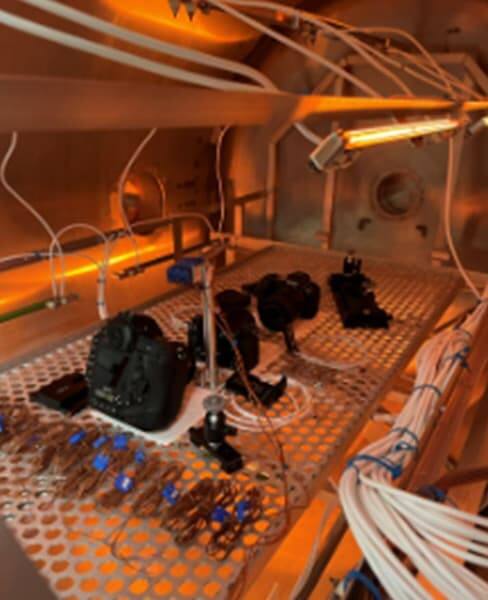
NASA has quietly tested three off-the-shelf cameras for use in space, and the results were mixed: the Canon EOS R5 and Nikon D6 held up, while the Nikon Z7II stumbled under extreme temperatures. The agency found the test documents in its technical archive, and the trials themselves were carried out in 2022.
The big takeaway is simple: consumer gear can go surprisingly far if you treat it properly first. NASA used standard retail units, not custom-built hardware, then pushed them through a vacuum chamber with temperature swings meant to mimic space conditions. That is a smart reminder that the line between ”pro” and ”spaceworthy” is often thinner than marketing would like.
How NASA tested the Canon EOS R5 and Nikon D6
Before the main test, the equipment was kept for several days at about 50 °C to flush out volatile substances that could become a problem in vacuum. After that, the cameras were exposed to low pressure and rapid temperature changes, while control happened remotely over Wi-Fi and Bluetooth. For agencies and research teams, that setup matters as much as image quality: a camera that freezes at the wrong moment is just expensive space luggage.
- Canon EOS R5: worked stably from -30 °C to +40 °C
- Nikon D6: matched the Canon in overall reliability
- Nikon Z7II: stayed functional in vacuum at room temperature, but lost connection at low and high temperatures after video recording
Why Nikon Z7II fell behind
The Z7II did not die outright, which is the sort of small mercy engineers appreciate and mission planners ignore. But once a camera starts dropping the connection in harsh thermal conditions, it becomes a liability for anything that needs predictable remote control. Canon and Nikon’s pro DSLR showed the more boring trait that wins in aerospace: consistency.
NASA also checked CFexpress memory cards from Lexar, SanDisk, ProGrade, and Sony for radiation resistance, and SanDisk came out best in that specific test. That fits a familiar pattern in space hardware procurement: the names on the box may be familiar, but only a few products survive the kind of abuse that makes Earth’s worst weather look polite.
What this means for space cameras
The agency is not exactly about to outfit a Mars mission with random off-the-shelf bodies, but the results show why proven flagship cameras keep getting a seat at the table. The open question is whether future mirrorless models can match the ruggedness of older pro bodies without giving up the convenience that made them so tempting in the first place.