

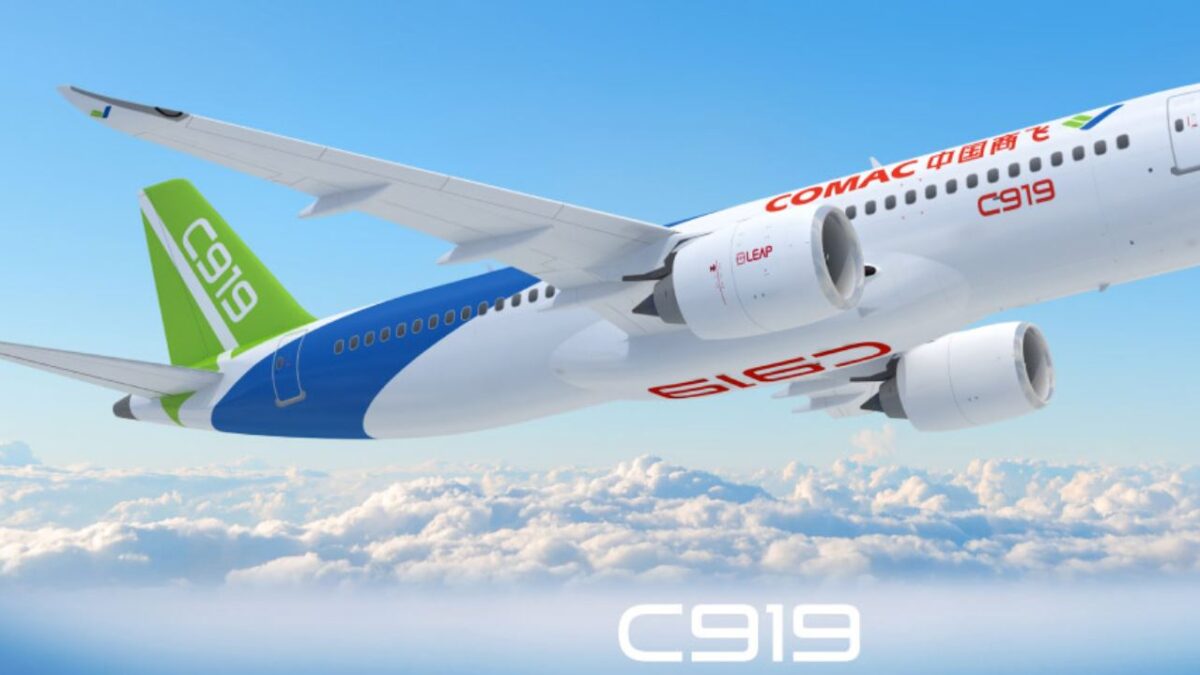
China Southern Airlines has pushed its Chinese-made COMAC C919 fleet past a major milestone: the carrier now has 11 aircraft in service, and those jets have already logged more than 11,000 flights carrying 1.55 million passengers. It is a clear warning shot at Airbus and Boeing, because this is no longer a test program hiding in plain sight – it is an airline operation with real routes, real schedules, and real passengers.
The latest addition arrived at Guangzhou Baiyun International Airport with the registration B-659X. As of June 12, the airline said its C919s had completed more than 5,300 flights this year alone, which is the sort of utilization manufacturers love to brag about and competitors quietly watch. The aircraft have been working regular commercial services from Guangzhou to Beijing Daxing, Xi’an, Hangzhou, Ningbo, Nanjing, Wenzhou, Taiyuan, and Hefei, plus services from Changsha to Beijing Daxing and Xi’an.
China Southern C919 routes keep expanding
China Southern said the route network will expand further as more aircraft are delivered and put into service, with flight frequencies increasing too. That is exactly how an airline turns a domestic airliner program into something bigger than a national vanity project: more airplanes, denser schedules, and enough reliability data to make the fleet feel ordinary.
The C919, built by COMAC, is China’s narrow-body, medium-haul passenger jet and is designed to compete with the Airbus A320 family and Boeing 737. That rivalry still has a long way to go, but the numbers here are already useful: the aircraft is moving from symbolism to scale, and scale is what makes rival programs nervous.
C919 flight and passenger totals
- Aircraft in China Southern’s fleet: 11
- Total flights as of June 12: more than 11,000
- Total passengers carried: 1.55 million
- Flights completed this year: more than 5,300
The obvious question now is how fast China Southern and COMAC can keep feeding the fleet. If deliveries continue and dispatch rates stay high, the C919 will start looking less like a newcomer and more like a fixture – which is exactly the kind of problem Airbus and Boeing never asked for.