

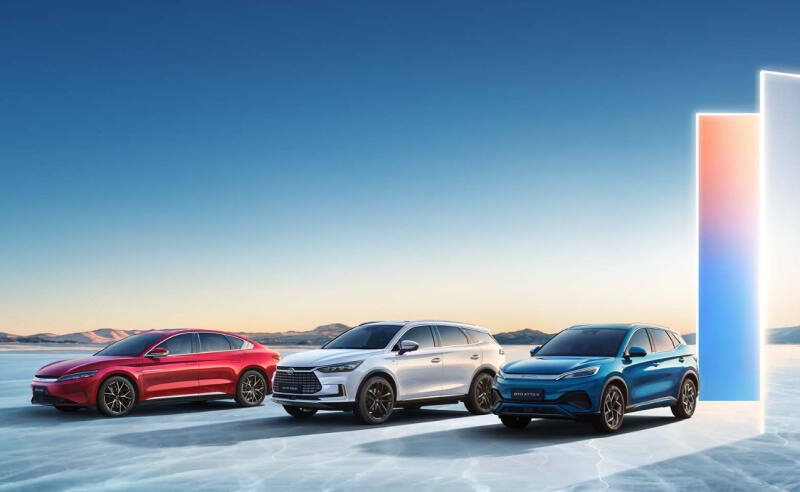
BYD is back in the race for the electric-car crown, and this time the numbers point to a clean pass. The Chinese company delivered 557,090 battery-electric vehicles in the second quarter, enough to move ahead of Tesla’s estimated 396,500 and reclaim the global EV sales lead it briefly lost earlier this year.
The swing tells a bigger story than one quarterly tally. Tesla had regained the top spot in the first quarter after BYD’s domestic sales cooled, but BYD’s export push is now doing the heavy lifting. In June alone, the company sold 403,472 vehicles across all powertrains and models, with about 43% going overseas.
BYD’s export push is changing the scoreboard
BYD first overtook Tesla in the fourth quarter of 2024 and held a solid lead into 2025 before Tesla pulled ahead again in the first quarter by roughly 48,000 vehicles. That back-and-forth reflects a market where China remains the volume engine, but it also shows how quickly export momentum can offset softness at home. For a brand that spent years being seen mainly as a domestic giant, that is a meaningful shift.
It also helps explain why BYD keeps pushing outside China. Overseas sales are now too large to treat as a side business, especially as competition from Geely and Xiaomi gets sharper and the local price war keeps margins under pressure. Export growth is not just nice to have; it is the cushion.
Driver-assistance tech is the new battleground
Price cuts still dominate headlines in China, but BYD is trying to avoid racing straight to the bottom. Instead, it has leaned into technology upgrades, including what it described in late May as the most powerful autonomous-driving chip in China, while also ramping up production of next-generation batteries.
- BYD second-quarter battery-electric vehicle deliveries: 557,090
- Tesla second-quarter deliveries, estimated: about 396,500
- BYD June total sales across all models: 403,472
- Share of June sales outside China: about 43%
A softer Chinese market is still the risk
The catch is that the world’s biggest EV market is hardly roaring. Sales of new-energy vehicles in China, including battery-electric cars and plug-in hybrids, fell 7.5% in May from a year earlier, according to the China Passenger Car Association. That kind of slowdown is exactly why BYD’s international expansion matters so much: if China wobbles, the company needs other markets to keep the growth story alive.
Tesla, meanwhile, is still fighting on two fronts: defending its scale while trying to justify premium pricing in a market that has become brutally price-sensitive. The next quarter will tell us whether BYD’s lead is a one-off rebound or the start of a more durable advantage built on exports, batteries, and less reliance on one country’s demand cycle.