

Britain is getting a private push toward fusion power. Type One Energy, Tokamak Energy, and AECOM have formed the UK Infinity Fusion Consortium to develop what they say would be the country’s first privately backed fusion power station, built around the Infinity Two stellarator and aimed at commercial viability rather than another round of lab-scale promises.
The headline number is 400 MW, which is large enough to sound serious and small enough to remind everyone that fusion still has to clear the boring part: engineering, supply chains, and financing. The consortium says it wants to use existing technologies, private capital, and a British manufacturing base to move faster than the usual public-sector research treadmill.
What each company brings to Infinity Two
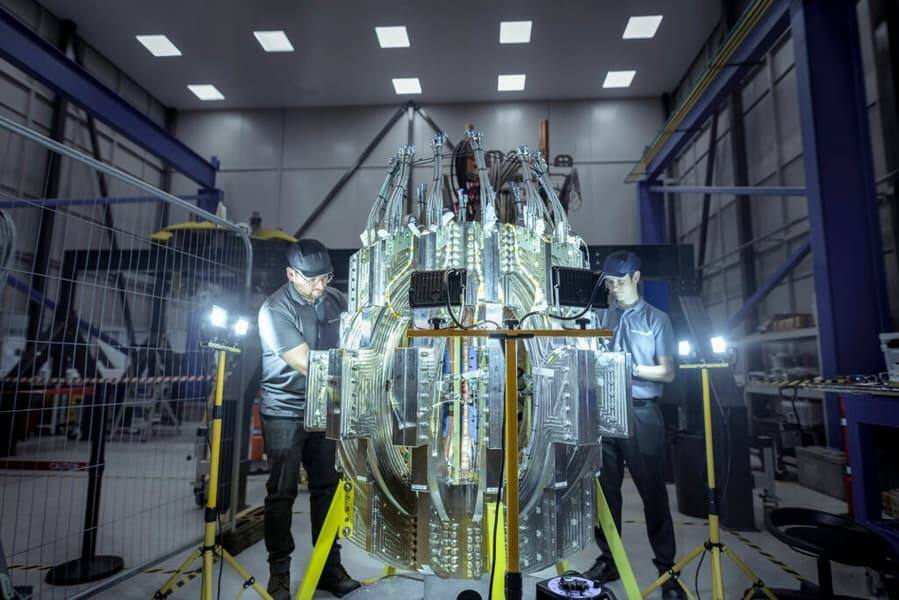
Type One Energy is supplying the stellarator design, AECOM is handling engineering and infrastructure, and Tokamak Energy is contributing high-temperature superconducting magnet technology plus UK manufacturing capacity. That mix is telling: fusion projects increasingly look less like science experiments and more like industrial coalitions trying to de-risk everything from magnets to civil works before a turbine ever spins.
- Infinity Two: 400 MW stellarator project
- Type One Energy: reactor design lead
- AECOM: engineering and infrastructure delivery
- Tokamak Energy: superconducting magnets and UK production
The UK wants fusion to move from grant to grid
The consortium is also leaning on a wider British supply chain, including builders, equipment makers, financial partners, and future power buyers. That matters because fusion has long had a habit of attracting dazzling engineering talk and then stumbling over procurement, permitting, and price tags; the private model is an attempt to make the business case before the rhetoric outruns the hardware.
The project is being positioned as a private complement to the government-backed STEP Fusion programme, which itself has a 2.5 billion-pound support package behind it. In London, officials are already presenting the consortium as evidence that public funding is starting to turn into actual infrastructure rather than just policy documents with good intentions.
A US project is the template, not the destination
There is a transatlantic reference point here too: the consortium says it is drawing on the TVA Infinity Two project at Bull Run in Tennessee, where a similar stellarator is planned for commercial operation by 2034. That timeline is a useful reality check. Even with momentum, fusion’s next milestone is not ”cheap electricity tomorrow” but proving that a private industrial stack can actually deliver one of these machines on schedule.
If the British effort works, the win is bigger than a single plant. It would give the UK a credible route from fusion research to commercial deployment, and a head start in a market where the countries that master magnets, engineering, and financing will probably set the pace. If it stalls, it will join the familiar list of fusion projects that looked less impossible than they were.