

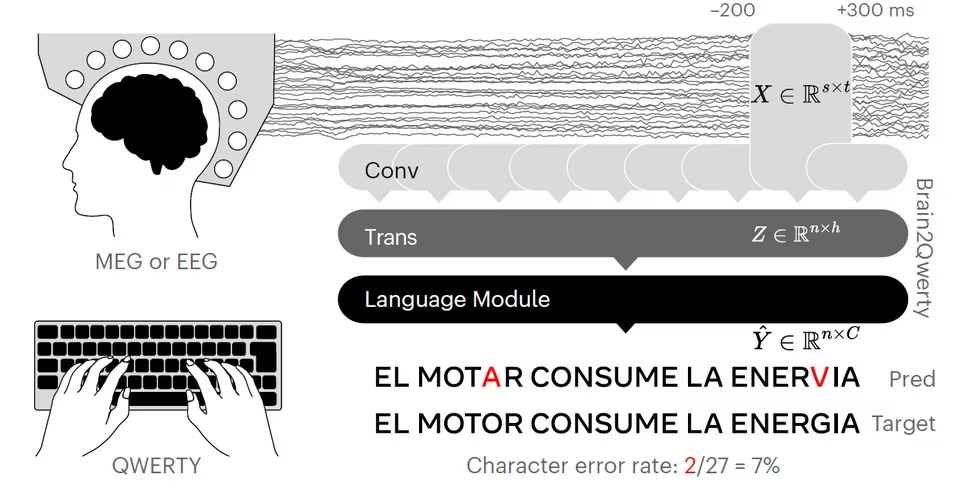
French researchers have demonstrated that it’s possible to recover text typed on a keyboard solely from brain signals-without the need for invasive implants. Their system, called Brain2Qwerty, combines magnetoencephalography (MEG), electroencephalography (EEG), and a neural network model to decode typing patterns. MEG provided the best results, achieving a 29% average character error rate, while EEG’s accuracy lagged behind with a 65% error rate.
The study, published in Nature Neuroscience, was led by Jarod Levy’s team at Meta AI in Paris. They tackled a longstanding challenge in brain-computer interfaces (BCIs): the most accurate typing systems typically require surgery to implant electrodes directly on or inside the brain, which delivers high-quality signals but carries significant risks and limits user access.
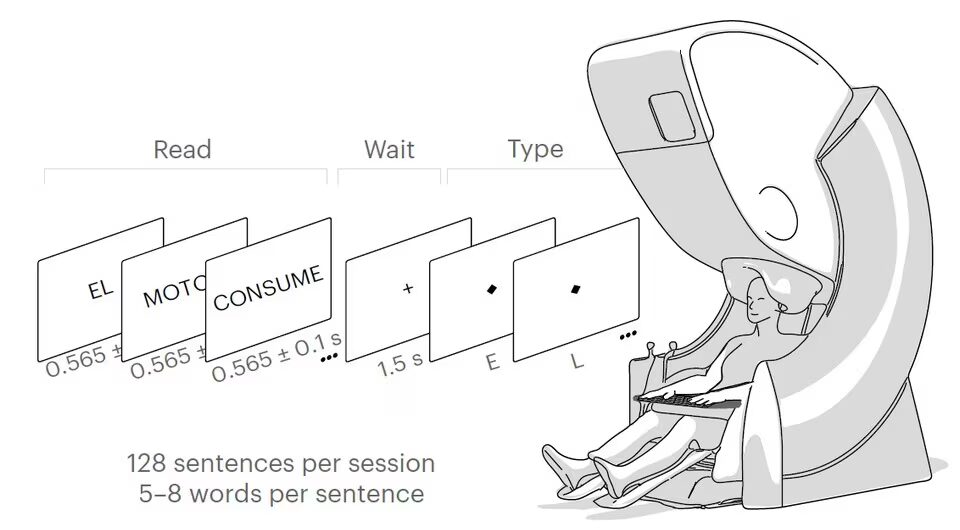
The experiment involved 35 healthy native Spanish speakers. Participants were shown short one-word phrases and then asked to type the full sentence from memory on a standard QWERTY keyboard. While they typed, their brain activity was recorded using either EEG or MEG, and each keystroke was precisely synchronized with the neural data.
Brain2Qwerty first segmented the continuous brain signal around each keystroke, extracting spatiotemporal features. Then, a transformer neural network analyzed the sequence of characters within the sentence. At the final stage, a language model corrected errors and produced coherent text output.
The difference between the two brain recording methods was stark:
- MEG yielded an average character error rate of 29%, with the best performers reaching 18%.
- EEG resulted in a much higher 65% error rate, making it currently impractical for smooth communication.
The researchers noted that the system frequently confused neighboring letters, suggesting it was decoding motor commands linked to finger movements rather than predicting words contextually.
Brain2Qwerty advances in noninvasive neural interfaces
Brain-computer interfaces for communication have progressed rapidly in recent years, but most breakthroughs rely on invasive implants. In 2023, two independent US teams unveiled implant-based speech interfaces that translate brain signals into text and synthesized speech at conversational speeds. Noninvasive methods, by contrast, still struggle to deliver comparable performance.
Noninvasive BCIs suffer from weak and noisy signals. EEG is affordable and widely available but has a major drawback: the skull distorts the electrical signals it records. MEG captures magnetic fields, which are less affected by bone, offering cleaner data. However, MEG requires bulky, stationary scanners, keeping it mostly a lab tool rather than a practical device.
What sets this study apart is its ability to reconstruct sequences of characters in a typing-like scenario, not just isolated commands or a limited word set. By also leveraging a language model to restore context, the system moves closer from a demonstration of brain decoding to a potential assistive text input method.
Still, Brain2Qwerty’s output is only available after a full sentence is typed-not in real time. Additionally, the model was trained on healthy subjects who physically pressed keys, unlike the target users of BCIs-people with paralysis or ALS who can only imagine movements. This gap between lab results and clinical usability is a common hurdle for neural interfaces.
The next step for the team is to develop a real-time streaming version and test the system with patients. If successful, MEG-based interfaces could fill the middle ground between slow but noninvasive EEG and precise but highly invasive implants. Advances in sensor technology are also promising: several startups and research groups are pursuing compact magnetometers that could one day replace large MEG scanners with wearable helmets. The true clinical potential will be revealed after rigorous trials.
*Meta owns the AI team behind this project; the company is banned and designated an extremist organization in Russia.