

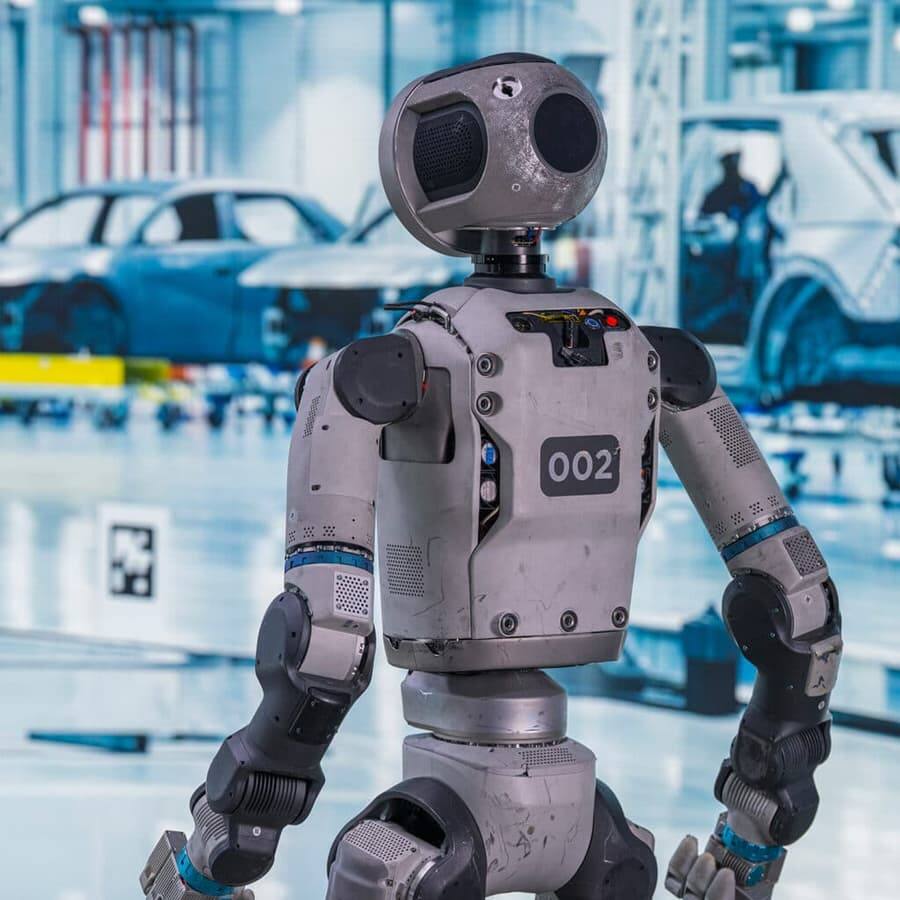
Hyundai Motor Group is preparing a much bigger bet on humanoid robots than most carmakers would ever dare say out loud: up to 25,000 Boston Dynamics Atlas units could end up working across Hyundai and Kia plants, with American factories the first target. The company also says it wants to be able to make up to 30,000 Atlas robots a year by 2028, which is a fairly loud hint that this is not a science project for the brochure rack.
Atlas is headed for Hyundai and Kia assembly lines
The plan was disclosed at an investor meeting organized by JPMorgan Chase, according to The Korea Times. Hyundai has not yet named the specific plants or given a firm rollout timetable, but the direction is clear: humanoids are moving from demos and lab clips into factory planning documents.
That puts Hyundai ahead of the usual cautious automaker script. Most factories still rely on fixed robotic arms for welding, lifting, and repeatable tasks, while humanoids are only now being pushed as a more flexible layer of automation. If the company pulls this off, it could pressure rivals to revisit their own labor-heavy processes much faster than they planned.
Why Hyundai wants humanoid robots instead of fixed robots
Atlas is designed to move through a plant, handle tools, and do jobs built for human workers, which is the whole point of going humanoid in the first place. Conventional industrial robots are brilliant at one thing and terrible at adaptation; humanoids are slower and less mature, but they can potentially fit into existing workflows without rebuilding an entire production line around them.
- Planned deployment: up to 25,000 humanoid robots
- Production target: up to 30,000 Atlas robots a year by 2028
- Initial focus: Hyundai and Kia plants in the United States
Hyundai is also localizing robot parts in the US
The robot push is not just about assembly lines. Hyundai also wants to localize production of key Atlas components in the United States, starting with actuators, the joints-and-muscles hardware that gives a robot its range of motion. The company says it could make more than 300,000 of those actuators a year.
That detail matters because the real bottleneck in robotics is often not the headline machine but the supply chain behind it. By making critical components in the US, Hyundai is signaling that it wants cost control, faster deployment, and less dependence on a distant manufacturing chain.
The factory robot race is getting crowded
Hyundai’s move lands in a market where every major robotics player wants the same prize: the first profitable humanoid that can survive real industrial work. The winners will be the companies that can keep robots useful, durable, and cheap enough to deploy in volume, not just impressive enough to dominate a keynote.
If Hyundai really does start filling its plants with Atlas robots, the next question is simple: which other carmaker decides it can no longer wait?