

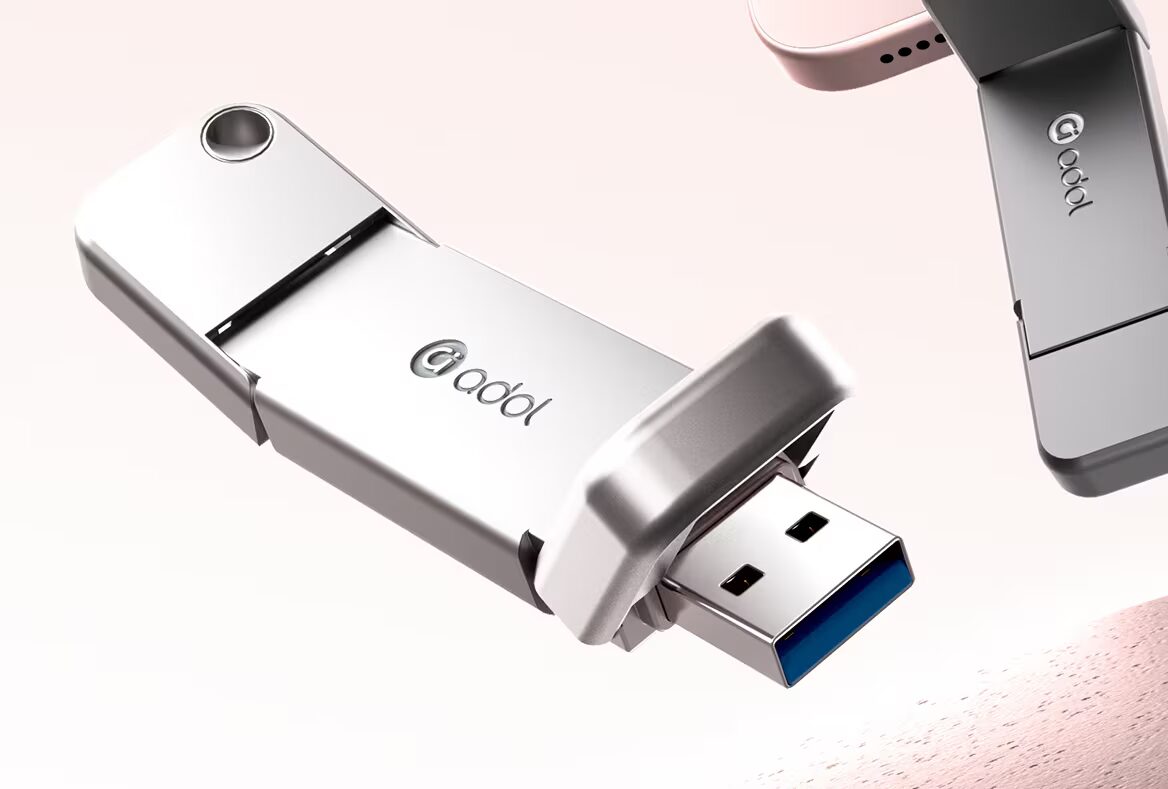
Asus has unveiled the Adol High Speed Solid State USB Drive PM310 in China, a compact SSD shaped like an oversized flash drive featuring both USB-A and USB-C connectors. Designed to simplify file transfers between older PCs and modern smartphones, tablets, and laptops, the PM310 offers up to 500 MB/s read speeds and storage options ranging from 128 GB to 1 TB.
This device targets a niche between typical USB flash drives and full-fledged external SSDs. Asus aims to address a common real-world scenario: many desktop PCs and older laptops still rely on USB-A ports, while mobile devices and newer ultrabooks have fully embraced USB-C. In bridging this gap, Asus isn’t pushing top-tier speeds-competitors like Kingston’s DataTraveler Max and Samsung’s T7 external SSDs deliver roughly double the throughput at around 1,000 MB/s.


Asus Adol PM310 specifications and features
The PM310’s design is straightforward and symmetrical, with a USB-A connector on one end and USB-C on the other, eliminating the need for adapters. The metal body includes a flip cover that protects the ports when the drive is not in use.
- USB 3.2 Gen 2 interface
- Up to 500 MB/s sequential read speed
- Storage capacities: 128 GB, 256 GB, 512 GB, and 1 TB
- Dimensions: 82 × 20 × 7.5 mm
- Weight: 42.9 grams
- Compatible with macOS, Android, HarmonyOS, iOS, and iPadOS
While the PM310 matches the performance typical for compact SSD-style USB drives, it doesn’t compete with larger external SSDs on speed. For instance, Colorful’s RP600X Pro recently arrived boasting up to 1,000 MB/s speeds and even Apple ProRes video support. But the PM310’s key advantage lies in its portability and ease of use: it can be carried just like a standard flash drive, without the hassle of a separate cable that’s easy to misplace.
The drive’s broad platform compatibility signals another trend in portable storage. Manufacturers increasingly position such dual-interface devices as universal storage solutions for phones, tablets, and laptops instead of just PC accessories. Apple’s shift to USB-C for iPhones has spiked demand for drives like these, as transferring large video files between mobile devices and computers without relying on cloud services has become more relevant.
In China, Asus priced the PM310 as follows:
- 128 GB model: 280 yuan (~$40)
- 256 GB model: 409 yuan (~$58)
- 512 GB model: 629 yuan (~$89)
- 1 TB model: 959 yuan (~$141)
Positioned above typical USB flash drives but below many external SSDs in price for similar capacities, the PM310’s success will hinge on how much consumers value the convenience of USB-A and USB-C ports combined rather than raw speed.
As USB-C adoption continues to grow but USB-A remains common, devices like the PM310 highlight ongoing transitional needs in data storage. Asus’s approach of integrating both connectors into a compact, flash-drive form factor offers a practical, if modest-performance, solution. The next challenge will be balancing this convenience with increasing consumer expectations for speed and multi-device compatibility amid a marketplace flooded with faster, albeit sometimes less flexible, alternatives.