
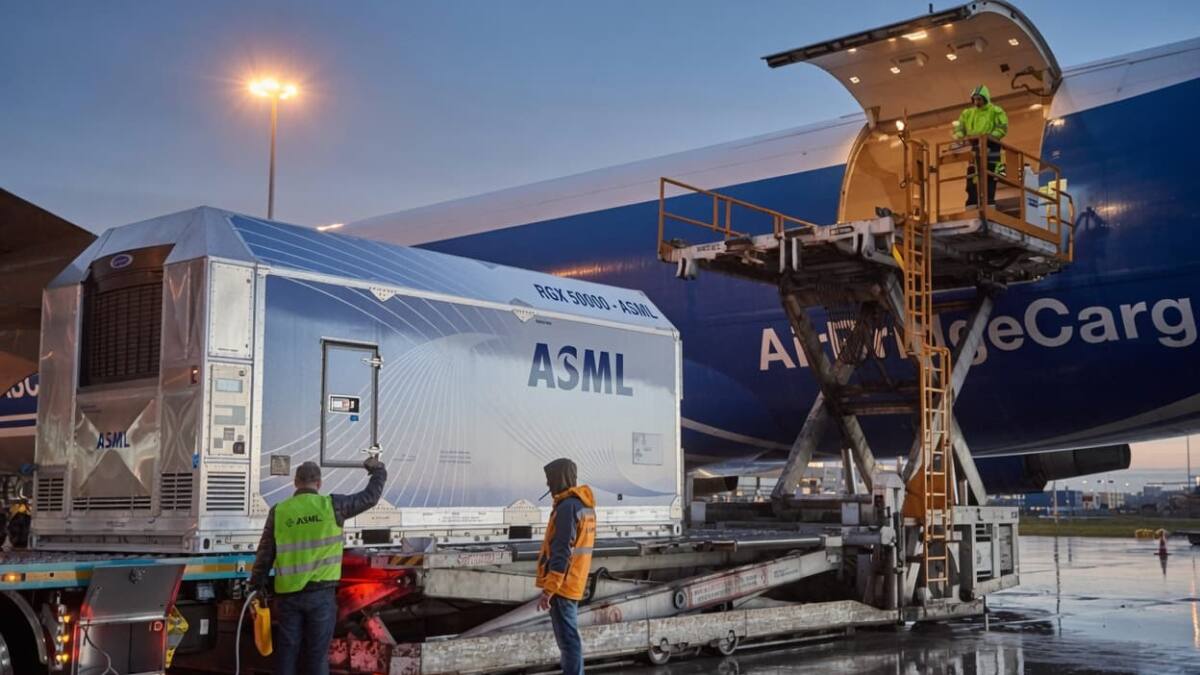
ASML says it knows exactly where every machine it has shipped ended up, and that none of its EUV lithography systems are in China. The Dutch supplier, whose tools sit at the heart of advanced chip production, is pushing back after fresh U.S. concerns that one of its most advanced machines may have been diverted to China despite export controls.
Chief executive Christophe Fouquet said the company can trace its equipment globally and that each system is either in active use, has been dismantled and returned, or is being monitored with the customer. The message is blunt: if someone is trying to reverse-engineer EUV gear in China, they are looking in the wrong place. ASML says it never shipped EUV equipment there in the first place.
No EUV machines in China
Fouquet’s strongest claim is also the simplest one: there are no ASML EUV lithography machines in China, and there never have been. That matters because EUV is the technology used to make the most advanced chips, and it is so tightly controlled that even the tooling around it has become a geopolitical flashpoint.
ASML says its China team was cut off from EUV technology, documentation, and training once restrictions took effect. In other words, this was not a case of a hidden loophole waiting to be exploited; it was a hard wall. The company says it built the wall early and kept it in place.
How EUV is so hard to copy
The company also highlighted just how long it took to build the technology in the first place. According to Fouquet, ASML was able to create EUV systems because roughly 80% of the needed technology had been accumulated over decades across the industry, while solving the core problem of generating EUV light took 20 years. That is a useful reminder for anyone imagining a quick knockoff.
- EUV lithography is essential for leading-edge chip production.
- ASML says it can track where every shipped machine is located.
- The company says no EUV tools were ever exported to China.
- U.S. export restrictions have blocked such shipments since the first Trump administration.
Washington keeps asking awkward questions
The latest concerns came after U.S. Commerce Secretary Howard Lutnick raised questions with ASML that one of its most advanced machines may have reached China in violation of export rules. ASML has denied that before, and it is denying it again. For a company that sells the machinery behind the world’s most advanced semiconductors, the burden is no longer just engineering; it is also proving where the machines are and where they are not.
That scrutiny is unlikely to fade. As long as chip controls remain a central part of U.S.-China tech policy, ASML will keep getting dragged into a story it did not start but cannot avoid. The real question now is not whether the company can build more advanced tools – it clearly can – but whether governments will keep narrowing the list of places where those tools are allowed to go.