

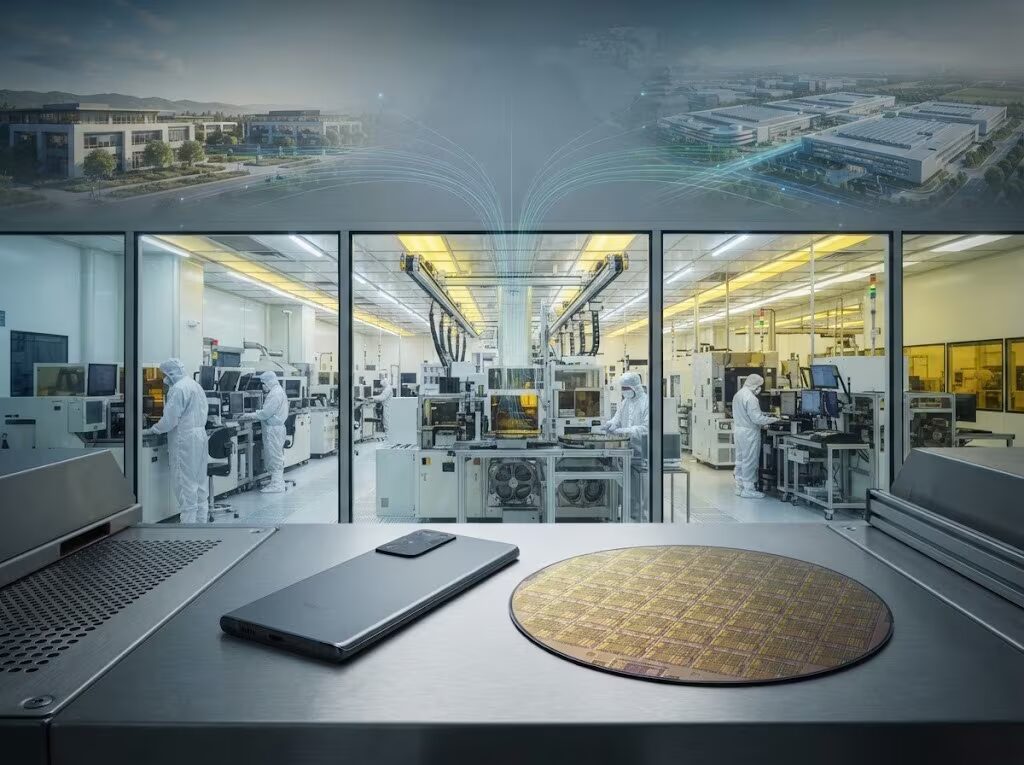
Apple has begun trialing DRAM chips from China’s ChangXin Memory Technologies (CXMT) for devices destined for the Chinese market, while simultaneously seeking formal approval from US regulators for broader use of CXMT memory. This move is delicate: Apple is exploring new suppliers just as Washington tightens restrictions on China’s semiconductor sector.
DRAM is a critical memory technology powering smartphones, tablets, laptops, and servers-without it, these devices cannot function effectively. CXMT has emerged rapidly from a local Chinese player to a global contender. Financial Times ranks it as the fourth-largest DRAM manufacturer worldwide, while SemiAnalysis projects CXMT’s market share could rise from about 11% last year to 15% by 2028, supported by new production lines in Hefei, Shanghai, and Beijing.
For Apple, integrating CXMT memory represents a supply chain hedge in China-the company’s key external market. For CXMT, securing Apple as a client boosts its reputation ahead of a massive initial public offering in Shanghai targeting at least 29.5 billion yuan (around $4.3 billion), potentially one of the largest tech IPOs in China in recent years.
The global DRAM market has long been dominated by a tight trio of players: Samsung Electronics, SK Hynix, and Micron Technology. These giants have set pricing and technology development pace for years. The rise of CXMT at scale disrupts this oligopoly, even if its higher output volumes are still ramping up. Analysts note much of CXMT’s upcoming capacity is already earmarked for committed clients.
Apple’s history with Chinese memory suppliers
Apple previously tested the waters with Chinese memory suppliers. In 2022, it evaluated NAND flash chips from YMTC for iPhones sold in China. That effort quickly sparked backlash from US lawmakers, and YMTC subsequently fell under US export restrictions. Since then, Apple has been reminded that even sourcing components for China can swiftly turn into a geopolitical issue.
Things are more complicated with CXMT. Unlike YMTC, CXMT has not yet been blacklisted by the US government, although national security concerns have been raised. According to Financial Times, Apple is therefore pursuing explicit authorization from Washington to expand CXMT’s presence in its supply chain. It isn’t quietly expanding purchases, hoping to fly under the radar.
The backdrop includes China’s aggressive push to build a self-reliant semiconductor industry, reducing dependence on imported memory and logic chips-especially for AI and server applications. Industry observers compare this to China’s solar panel and electric vehicle sectors, where heavy state support rapidly ramped production, lowered prices, and shook up global competition.
That said, rapid growth in Chinese DRAM fabs doesn’t immediately mean turmoil for the global market. Memory production is notoriously hard to scale efficiently without yield losses, and major customers typically secure future supply well in advance. But the very fact that Apple is testing CXMT chips signals the Chinese manufacturer has reached a level where it’s seen as a serious supplier-not just a backup option.
The outcome hinges on more than just chip quality or cost. The decision will ultimately be political. If Washington permits broader use of CXMT memory, Apple gains negotiation leverage with existing suppliers and more flexibility for devices sold in China. If denied, the situation risks repeating the YMTC scenario-only this time with the fourth-largest global DRAM producer on the line, elevating the strategic stakes.