

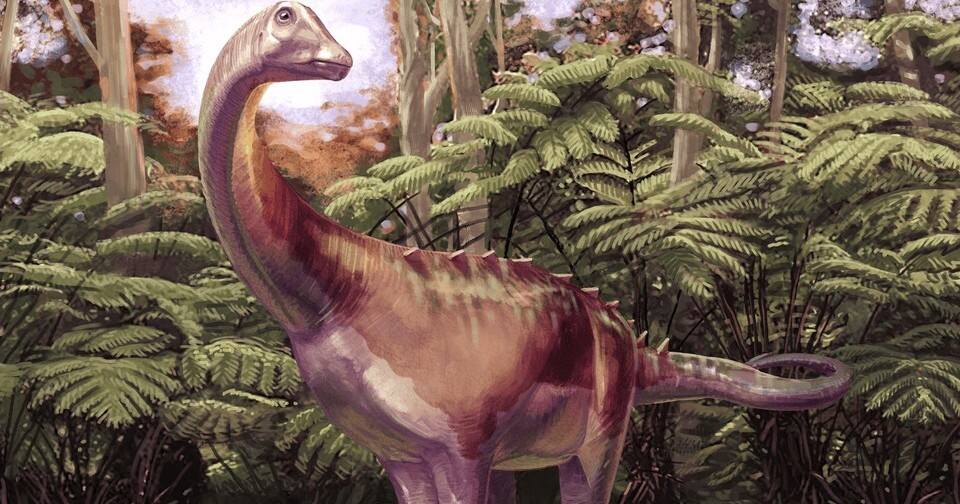
A vertebra dug up on James Ross Island in 1985 has turned out to be a lot more interesting than anyone thought: it belonged to a titanosaur, making it the first known non-bird dinosaur fossil from Antarctica to be identified by discovery date. The bone, catalogued as BAS D.8621.25, sat in a British Antarctic Survey collection for decades while researchers assumed it came from a marine reptile. A closer look with micro-CT has now pulled it into the dinosaur record, and into a much bigger story about how sauropods moved across Gondwana.
The Antarctic titanosaur fossil is tiny – one incomplete tail vertebra, about 80 million years old – but the implications are not. Antarctica’s dinosaur record is still sparse because fieldwork is brutally hard there, and only six non-bird dinosaur species have been described from the continent so far. That scarcity makes every bone do double duty: it identifies a creature and hints at a habitat that is mostly hidden under ice.
What the vertebra says about Antarctic sauropods
Paul M. Barrett and colleagues at the Natural History Museum in London concluded that the fossil is from a sauropod, specifically a titanosaur in the clades Lithostrotia and Eutitanosauria. They did not name a new species, which is sensible: one broken bone is a thin reed to build taxonomy on. The closest match they point to is a tail vertebra from Argentina, which suggests the Antarctic animal may have had relatives – or perhaps even a shared identity – with South American forms.
That fits the geography better than it might seem. In the Late Cretaceous, titanosaur relatives were widespread in South America, Australia, and New Zealand, all pieces of the old Gondwana puzzle. Antarctica likely acted less like a frozen dead end and more like a migration corridor, with climate models suggesting at least some northern parts of the continent could support sauropods, even if the population was probably small.
A longer dinosaur history than the label suggests
The James Ross vertebra has also reshuffled the local record books. Until now, the oldest discovered non-bird dinosaur fossil from Antarctica was thought to be Antarctopelta oliveroi, an ankylosaur found on the same island in 1986. This new identification pushes the title back by discovery date, not age, which is a neat little reminder that museum drawers can be as important as excavation sites.
There is a broader pattern here. Paleontologists have already linked Antarctica to dinosaur dispersal between South America, New Zealand, and Australia, and this fossil gives that idea one more hard data point. The continent was not a cul-de-sac. It was part of a moving network, and titanosaur bones – scarce as they are – keep showing up exactly where that network would predict.
What comes next for Antarctic dinosaur hunting
For now, BAS D.8621.25 remains an anonymous bone from an anonymous animal. But that anonymity is doing real work: it shows how much dinosaur history may still be locked in Antarctic collections, mislabeled or ignored until better imaging techniques catch up. The next surprise may not come from a dramatic new dig at all, but from another old specimen that someone finally bothers to scan.