

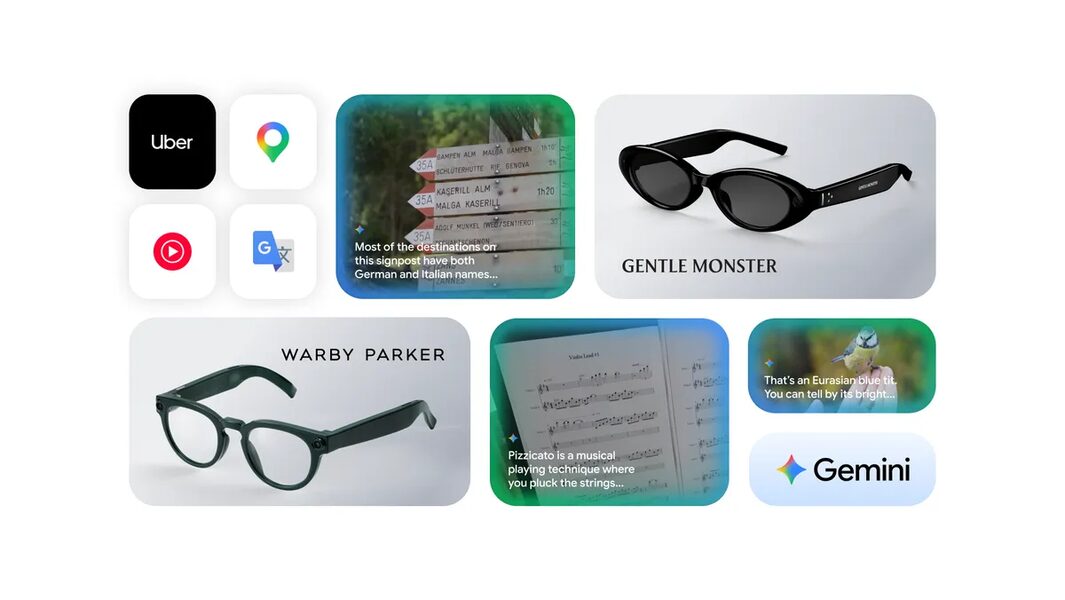
Google and Samsung have officially turned smart glasses back into a live category, this time with Android XR and Gemini doing the heavy lifting. The pair announced two versions at Google I/O 2026: audio-first smart glasses for voice tasks, and a later model with a built-in display for quick visual prompts without reaching for a phone.
The first pair is the simpler bet. Wake them with ”Hey Google” or a tap on the temple, then ask about what you’re looking at, get navigation cues, handle calls and messages, or play music through the built-in speakers. They also work with both Android and iOS, which is a sensible move if Google wants more than a tiny loyalist crowd.
What the first Android XR smart glasses can do
That audio-only model is clearly aimed at proving utility before style points. It handles the kind of low-friction tasks people already do with phones, but pushes them into a hands-free form factor that feels less awkward than earlier smart-glasses experiments. Meta has spent years trying to make this idea socially acceptable; Google is now trying the same play with more obvious software muscle.
- Voice activation with ”Hey Google” or a tap on the frame
- Questions about your surroundings
- Navigation guidance
- Calls, messages, and music playback
- Compatibility with Android and iOS
A display model is coming later
Google also teased a second version with a display, which should make the glasses far more useful for short text, prompts, and other glanceable information. That is the harder product to ship well, because augmented reality hardware has a long history of overpromising and underdelivering while asking people to wear a tiny science project on their face.
For now, the commercial plan is still narrow. The first batch is expected to reach select regions in autumn 2026, and Google says new models are on the way from Gentle Monster and Warby Parker. In other words, this is not just a spec demo for developers; it is also a fashion problem, a battery problem, and a ”will anyone actually wear these?” problem.
The real test is adoption, not the demo
Samsung brings manufacturing scale, Google brings Gemini and Android XR, and that combination gives this launch more credibility than most headset pitches. Still, the category has a habit of flattering engineers and ignoring ordinary humans. If the audio model feels useful in daily life, the display version has a chance; if not, the whole thing risks joining the long graveyard of clever eyewear ideas that looked better on stage than on the street.