

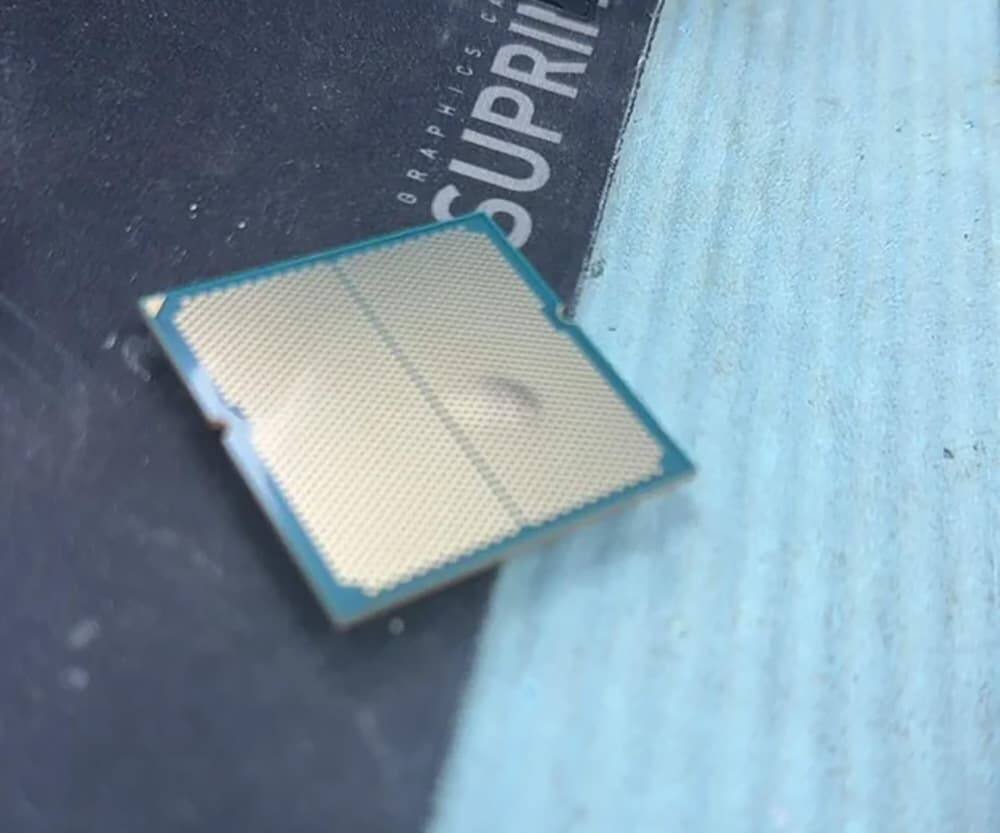
AMD has reversed course in a warranty dispute over a Ryzen 9 7950X3D that developed a swollen-looking backplate and stopped working after almost three years in service. After first rejecting the claim, the company agreed to replace the chip once the case spread online and Hardware Unboxed publicly pressed for a rethink.
The Ryzen 9 7950X3D warranty dispute is a reminder that support decisions do not happen in a vacuum anymore. A single Reddit post can sit quietly for days, then turn into a reputational problem once a large tech channel starts asking awkward questions in public.
What happened to the Ryzen 9 7950X3D
The owner said the PC shut down on 28 April 2026 while idle, after a loud pop came from the case. When the system was opened, the processor showed a visible bulge on the back side of the package, which immediately raised the question of whether this was user damage or a hardware failure inside the chip itself.
Gigabyte, which checked the motherboard, reported that the board passed inspection after BIOS fixes, socket checks, and more than 64 hours of stress testing with a similar processor and memory. The power supply also passed its tests, leaving the CPU as the main suspect rather than the rest of the build.
- Processor: Ryzen 9 7950X3D
- Failure date reported: 28 April 2026
- Motherboard testing: more than 64 hours
AMD’s first answer was a flat no
AMD initially dismissed the claim almost immediately after seeing photos of the damaged chip, saying the bulge counted as physical damage and therefore fell outside standard warranty coverage. That is the sort of response companies often lean on when the failure mode is ambiguous, but it also tends to look brittle when the rest of the hardware has already been cleared.
The backlash was predictable because the chip had been running in a normal desktop system for years, not overclocked in a lab or abused on a workbench. With Ryzen X3D parts carrying a reputation premium, a hard refusal over a defect that may have been electrical or thermal rather than mechanical was always going to invite noise.
Hardware Unboxed forced the rethink
The turning point came when Hardware Unboxed highlighted the case and warned AMD that the refusal could snowball into a public relations mess. Within hours, AMD reportedly contacted the channel and said it had changed its decision, agreeing to honor the warranty and send a replacement processor.
That quick reversal says as much about modern support escalation as it does about the chip itself. In the age of public callouts, companies can still decline a claim first and ask questions later, but they now do so with a live audience and the risk of being forced to walk it back.
What this says about premium CPU support
For buyers of expensive desktop CPUs, the real question is not whether rare failures happen – they do – but how quickly a vendor will distinguish between genuine abuse and an internal fault. AMD’s eventual fix was the right move, but the speed of the reversal suggests the company knew the optics were getting worse by the hour.
The next awkward case like this will probably follow the same script: a user post, a few rounds of diagnostics, then social media pressure if the answer looks too rigid. The only open question is how many consumers will need a public megaphone before the first support answer gets smarter.