

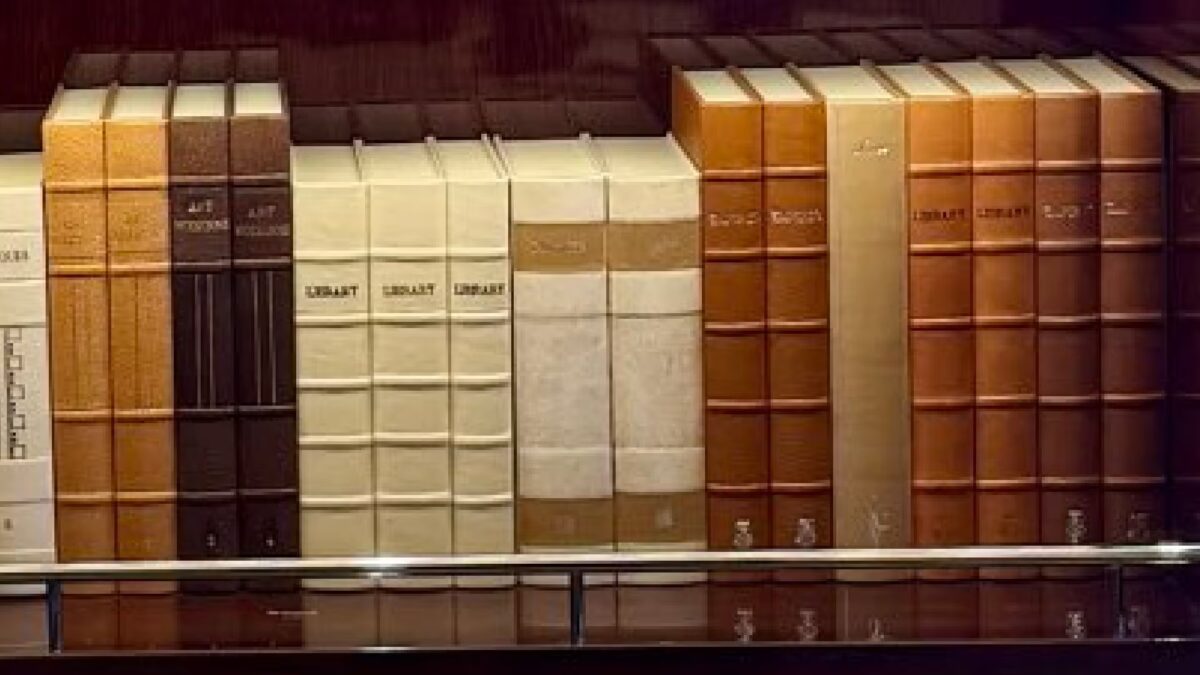
Photos taken inside the new Air Force One, shared by White House Press Secretary Karoline Leavitt on X, have sparked debate over whether AI was involved in their creation. The controversy centers on a set of book spines visible in the background, labeled with generic titles like ”Library,” ”Arts,” and ”Architecture.” While a Google-powered AI detection tool found no signs of synthetic generation, the possibility of image manipulation with other AI services remains open.
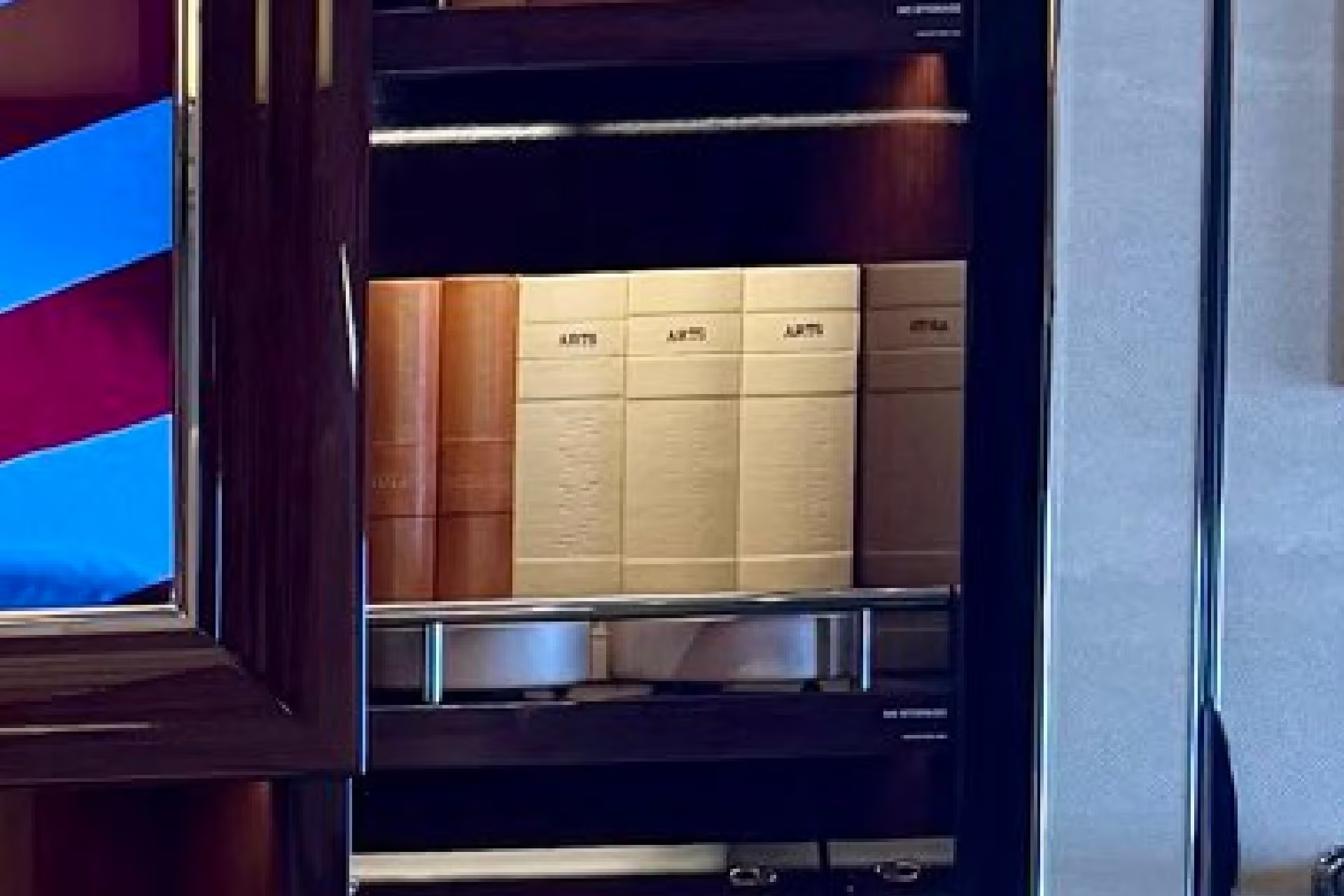
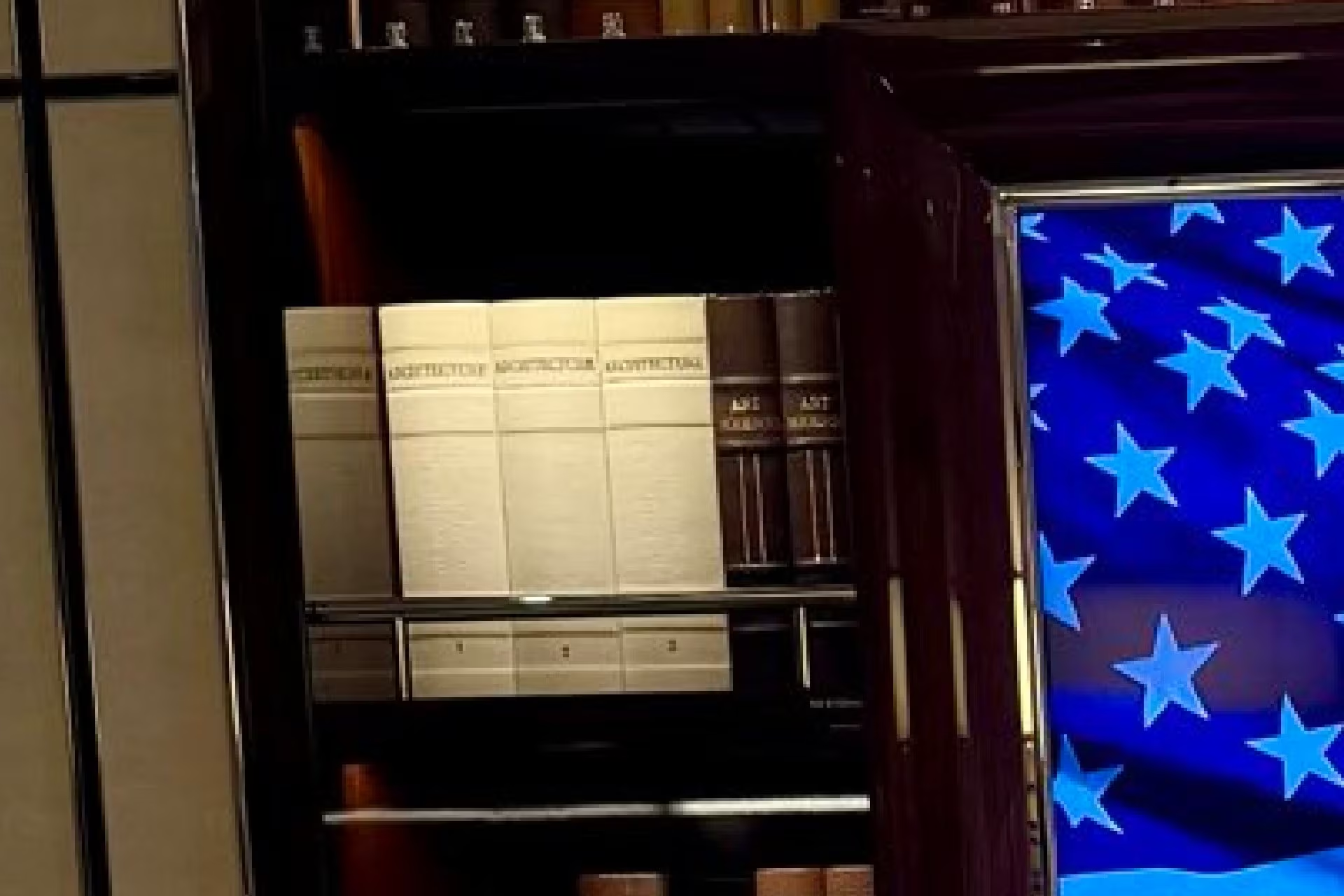
Close examination revealed several books sharing identical generic labels, fueling theories that the image might be AI-generated. According to Gizmodo, the photo was scanned using Google’s Gemini tool, which detects invisible SynthID watermarks embedded in content made by Google’s generative models. No such markers were found.
This result only confirms the image wasn’t tagged by Google’s AI tools-it doesn’t prove the photo’s authenticity nor exclude the use of other AI generators. Currently, no universal standard exists to reliably verify the origin of any digital image. However, an industry coalition called C2PA is pushing for a metadata framework embraced by companies like Adobe, Microsoft, and OpenAI to track photo and video provenance.
White House image controversies involving AI detection
Interest in these Air Force One photos rose after a recent incident involving former President Donald Trump. In late June, Trump posted a picture showing a large golden eagle supposedly affixed to the White House facade. Gemini analysis suggested AI involvement in that image, while independent photographer shots cited by CNN didn’t corroborate the eagle’s presence.
Given the heightened scrutiny, any unusual detail in official White House imagery now draws skepticism and technical examination. In the case of the presidential jet’s interior, the ”books” likely are decorative props-faux collections commonly used in hotels, showrooms, and VIP spaces to dress shelves without the hassle of real books. This approach also makes sense for an aircraft, where weight, maintenance, and uniformity are concerns.
The aircraft itself is at the center of a separate controversy. Reports indicate this Air Force One was gifted to Donald Trump by the Qatari government, prompting questions about the appropriateness of such a present for a sitting U.S. president. Meanwhile, the U.S. has been awaiting replacements for its aging VC-25A presidential planes. Boeing’s two new VC-25B jets have faced repeated delays, and their cost has ballooned past $4 billion, according to U.S. media and Congressional reports.
Leavitt’s photo was posted after a trip to North Dakota for the opening of the Theodore Roosevelt Library. So far, there’s no conclusive proof that the cabin photos were AI-generated. The simpler explanation-that the ”books” are decorative fakes-better fits the details visible in the close-ups.
As AI-generated and AI-edited content grows-Gartner predicts that by 2028, up to 40% of enterprise visual content will involve generative tools-political communication faces a new challenge. Even genuine images increasingly require defense against audience doubts over their authenticity.