

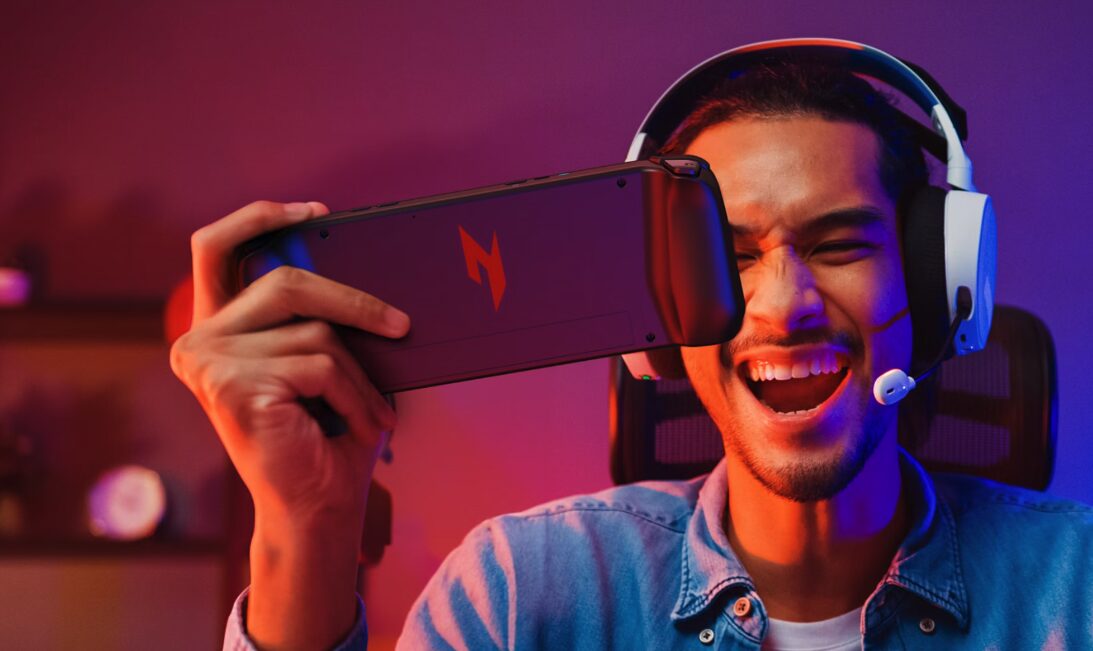
Acer has added a curious second act to its new handheld gaming push: the Nitro Blaze Link, a Linux-powered device that skips local game performance almost entirely and instead leans into cloud and home-network streaming. That makes it less of a mini PC replacement and more of a portable screen with serious controls, which is probably the smarter move for a company trying to avoid the overheating-and-battery headaches that plague full-fat handhelds.
The Nitro Blaze Link is a streaming-first handheld for players who already own a capable gaming PC or subscribe to cloud services. Acer says it focuses on Wi-Fi 6 game streaming, modest hardware, and comfort and portability rather than local game installation and storage-heavy libraries.
Nitro Blaze Link hardware and display
For a streaming-first handheld, the spec sheet is intentionally restrained. Acer says the Nitro Blaze Link includes 1GB of RAM and 8GB of internal storage, which would be laughable on a full local gaming machine but makes more sense here if most of the heavy lifting happens elsewhere. The device weighs 464 grams and measures 286.87 x 109.8 mm, so it lands in the same conversation as other large-format handhelds without trying to be a brick.
The screen is the part most people will actually care about. Acer fitted the Nitro Blaze Link with a 7-inch WUXGA touchscreen at 1920 x 1200 and a 16:10 aspect ratio, a sensible choice for modern games and menus alike. That taller panel gives streaming a little more breathing room than a basic 16:9 display, even if Acer is clearly saving its silicon budget for the more ambitious Predator-branded model.
Controls, sound, and battery life
Controls are fully loaded rather than stripped down. The Nitro Blaze Link includes the standard A, B, X, and Y face buttons, a D-pad, dual joysticks, bumpers, triggers, and a dedicated overlay widget button for quick settings adjustments. In other words, Acer understands that if you are streaming a PC game to a handheld, you still want it to feel like a proper gaming device and not a glorified remote.
Audio comes from dual 2W speakers, and there is a 3.5mm combo jack if wired headphones are more your thing. Power is handled by an 18 Wh battery, which Acer says should be enough for moderately lengthy gaming sessions. That sounds about right for a device that is mostly moving video around instead of running a game engine locally, though battery life will still live or die by brightness, network quality, and how hard you lean on streaming.
The bigger question is whether the market wants a handheld that admits what it is: a streaming terminal with buttons. There is precedent for that idea, and plenty of players already use remote-play apps on phones, tablets, and Windows handhelds. Acer is simply trying to package the habit into something more focused, cheaper to spec, and easier to sell beside the shinier headline-grabber.