

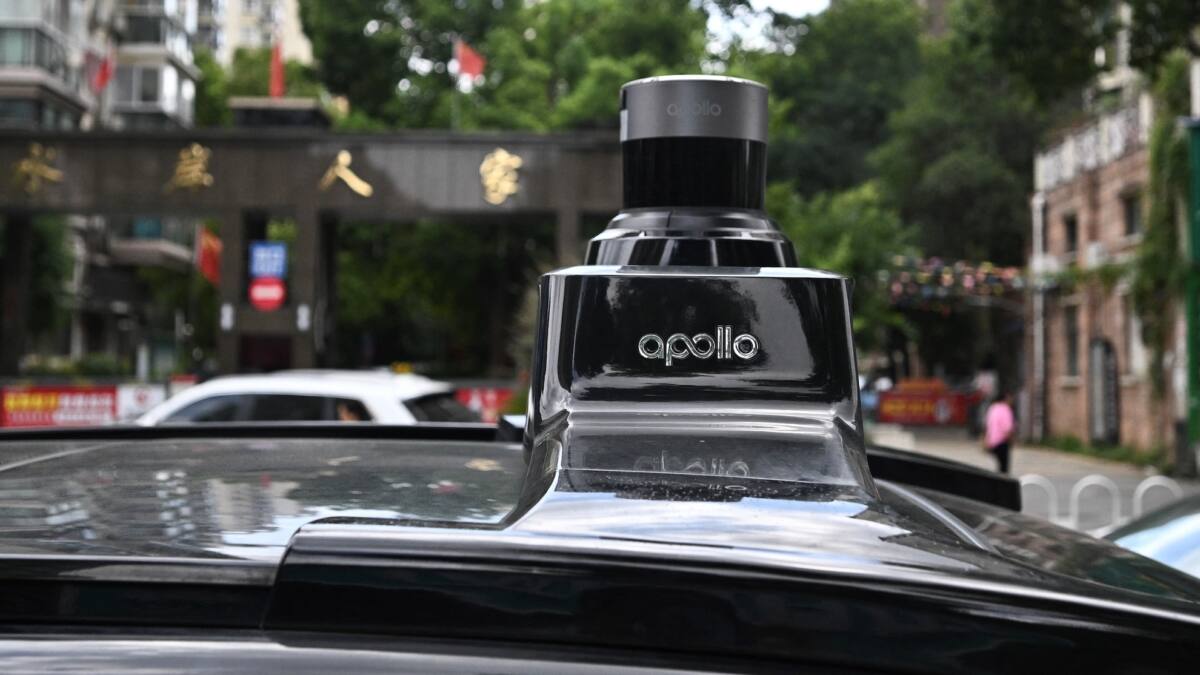
Baidu’s Apollo Go robotaxis were reported to have stalled across Wuhan, China, after what local police called a ”system failure” that affected at least 100 vehicles. Some riders were reportedly trapped for up to two hours, and the episode added fresh doubt to the robotaxi industry, which still looks impressive right up until the software stops behaving.
The outage appears to have frozen vehicles suddenly, including in risky spots such as a roadway fast lane, according to reports. Baidu has not said what caused the disruption, and police are still investigating. The company also did not respond to a request for comment, which is a familiar look for a sector that likes to promise autonomy and then goes quiet when the demo breaks.
What happened in Wuhan
Multiple media reports, along with videos and social posts, described robotaxis grinding to a halt across the city. Reuters said local police blamed a system failure, while Wired reported that some cars froze in dangerous positions rather than pulling over neatly like a polished product video would suggest. That distinction matters: a fleet that stops is one problem, but a fleet that stops in traffic is an entirely different kind of headache.
Baidu’s Apollo Go is one of China’s biggest robotaxi operations, and the company has been pushing beyond its home market. Last year, it said it planned to deploy more than 1,000 autonomous vehicles in Dubai over the next few years, a reminder that the stakes are now international even when the failure starts in one city.
Robotaxi reliability is still the product
This is the part the industry keeps relearning: autonomy is not just about getting from A to B when everything works. It is also about what happens when maps drift, sensors disagree, connectivity stumbles, or a backend system takes the whole fleet down at once. Competitors such as Waymo have faced their own embarrassments, including being stranded during a California power outage last December, which is a neat reminder that self-driving cars are still very much dependent on the boring old grid.
For city officials, the problem is public safety and traffic disruption. For operators, it is trust, and trust is expensive to rebuild after riders spend two hours sitting in a vehicle that can’t decide what to do next. The bigger issue is that every high-profile outage gives critics a fresh argument that robotaxi networks may be technically advanced, but operationally fragile.
Baidu’s global robotaxi push faces a reality check
- Operator: Baidu Apollo Go
- Reportedly affected vehicles: at least 100
- Location: Wuhan, China
- Reported cause: ”system failure”
- Worst-case rider delay: up to two hours
If Baidu wants to keep expanding abroad, the next test is not launch announcements. It is proving that one technical fault in one city does not become a public relations tour of every market it wants to enter. For robotaxis, boring reliability is the real innovation.