

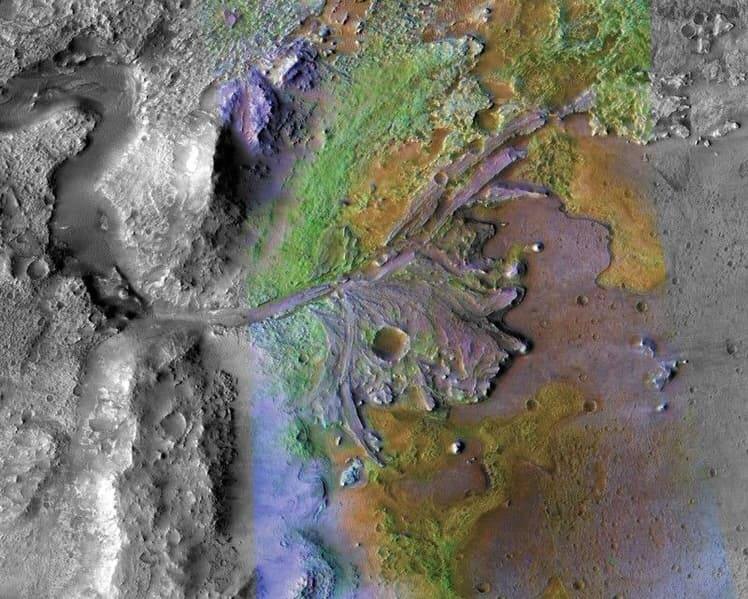
Mars rover Perseverance has mapped an ancient underground river delta within Jezero Crater using its RIMFAX radar. This is the first time such subsurface structures have been revealed with this resolution on Mars, showing thick sediment layers that indicate ancient flowing water shaped the landscape.
The radar data penetrated up to 20 meters beneath the Martian surface, revealing alternating dense and loose sediment layers. This layering suggests periods of river activity alternating with drought-like phases. The presence of inclined sediment beds is especially significant, characteristic of deltaic deposits formed where rivers once met standing bodies of water.
RIMFAX radar reveals subsurface river delta on Mars
Unlike traditional surface imaging techniques that cannot probe deeply, the RIMFAX radar reconstructs Mars’s geological and climatic history beneath the surface. These findings confirm that Jezero Crater hosted persistent rivers capable of building complex deltas, similar to those on Earth that preserve traces of ancient life.
Implications for past habitability and astrobiology on Mars
This discovery supports the idea that Mars once had habitable environments. The sediment layers suggest conditions suitable for sustaining life and raise hopes that organic compounds or biosignatures may be preserved within the delta deposits. Upcoming missions plan to drill into these layers to collect samples for biochemical analysis, aiming to find evidence of past life.
Understanding Mars’s hydrological and geological evolution
Perseverance’s subsurface radar breakthrough offers new insight into Mars’s water systems and climate changes. By mapping buried deltas, scientists gain essential clues about the planet’s hydrological evolution and geological processes that shaped its surface billions of years ago. This advances planetary exploration beyond surface observations into Mars’s sedimentary history.