

For years, activity trackers treated anything that wasn’t a run or a bike ride as a generic ”workout.” That made sense for solo endurance sports, where GPS and cadence tell most of the story. It left out the messy, social, and often indoor activities millions of people actually do – things like dance classes, pickup basketball, and court sports.
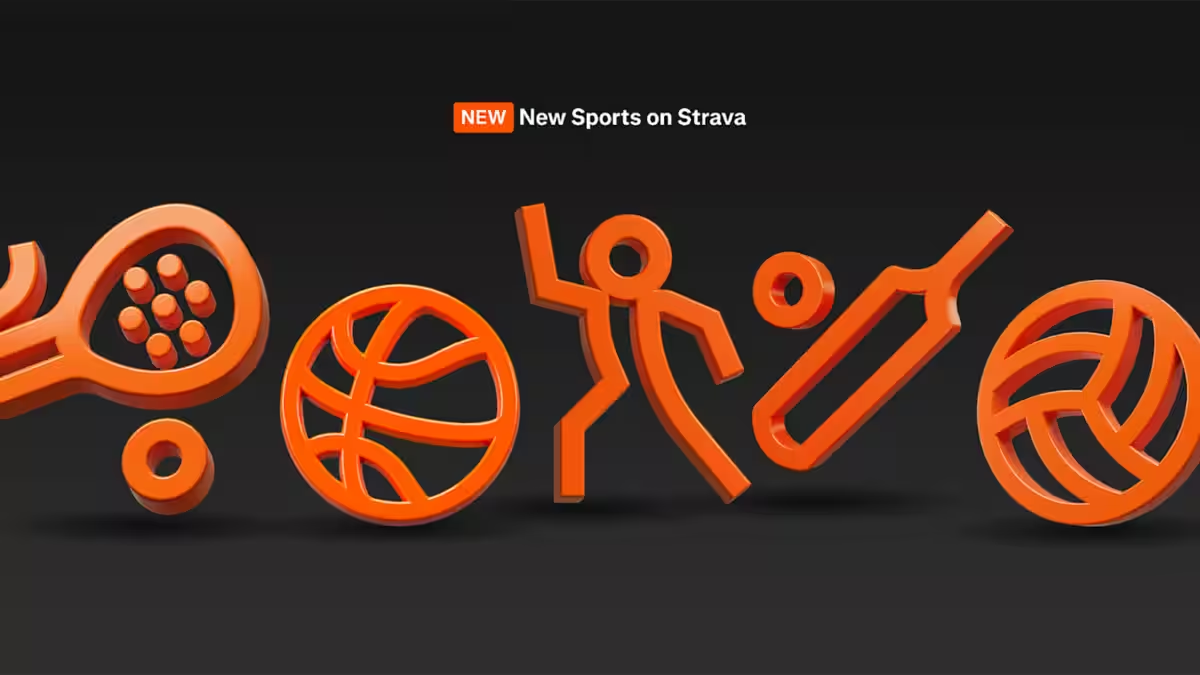
Strava has taken a small but significant step toward fixing that. The service is adding five new activity categories: Basketball, Cricket, Dance, Padel, and Volleyball. The company says the change will give its ”180M+ global users more accurate ways to log the activities they already love.” Previously those activities landed under the catch‑all ”Workout” label among the more than 50 sport types Strava already supports.
Why this matters beyond a new menu option
Labels matter. For a social fitness app, adding a sport is the first step toward community features, better shared metrics, and the data products that follow: leaderboards, badges, event discovery, even sponsorship opportunities. For padel in particular, this is sensible product thinking – the sport has exploded globally, with an estimated 30 million amateur players – and listing it makes Strava more relevant to a growing market.
But there’s a difference between naming an activity and giving users useful data about it. Dance classes and indoor team sports often defeat GPS and speed-based tracking. That means the new categories will likely default to time and heart rate unless Strava develops new algorithms that mine wrist sensors and phone accelerometers for meaningful signals. If the rollout stops at classification, many users will feel little practical benefit beyond a tidier activity log.
How rivals handle the messy stuff
Other players in the space have taken different approaches. Some focus on guided, studio-style workouts (where workout metadata is controlled by the provider). Others – the multisport device makers – give lots of activity presets but struggle to surface insightful metrics for sports that lack continuous GPS or steady cadence. The upshot: there’s no accepted standard for tracking performance in dance, court sports, or casual team play.
That opens an opportunity and a trap for Strava. Get the analytics right and the company can become the social hub for emerging sports and classes. Leave it at taxonomy and Strava simply reduces friction for logging an activity without changing how people train or compete.
Winners, losers, and the privacy angle
Winners: recreational athletes and social-sport communities. People who play padel weekly, attend dance classes, or join casual volleyball nets now have evidence of their activity in the same place they check runs and rides. That drives engagement and gives clubs and venues a clearer audience to reach.
Losers: companies that sell the idea that only traditional endurance metrics matter. And possibly users who expect too much from a simple label change. Team sports don’t map neatly to leaderboards or segment competitions the way running does; the social value is different.
There’s also a privacy wrinkle. Strava’s history shows that activity maps and shared data can surface sensitive locations and routines. Broadening the mix of tracked activities increases the volume of social, location‑based posts. Strava will need to keep nudging users toward sensible visibility settings and make it easy to opt out of public sharing for team practices or indoor classes.
What I expect next
Don’t expect a miracle overnight. The first release will likely be about classification and cleaner feeds. The next moves to watch for are (a) new metrics derived from heart rate and accelerometer patterns specific to these activities, (b) community features tailored to team and court sports, and (c) integrations with event organizers or local clubs. Monetization opportunities – sponsored events, premium analytics for specific sports – will follow if engagement rises.
In short: this is a welcome, overdue polish to Strava’s taxonomy. It reflects a broader trend: fitness apps are catching up to how people actually move. But for these additions to matter in users’ workouts and training, Strava will have to build analytics and social features that understand the messy reality of dance studios, pickup games, and packed indoor courts – not just a better dropdown menu.
Verdict
Adding Basketball, Cricket, Dance, Padel, and Volleyball is the right move. It’s low risk, potentially high reward, and a nod to the hobbyist majority of Strava’s 180M+ users. But classification is the easy part. The product test ahead is whether Strava can turn labels into insight and community utility without repeating familiar privacy missteps.