

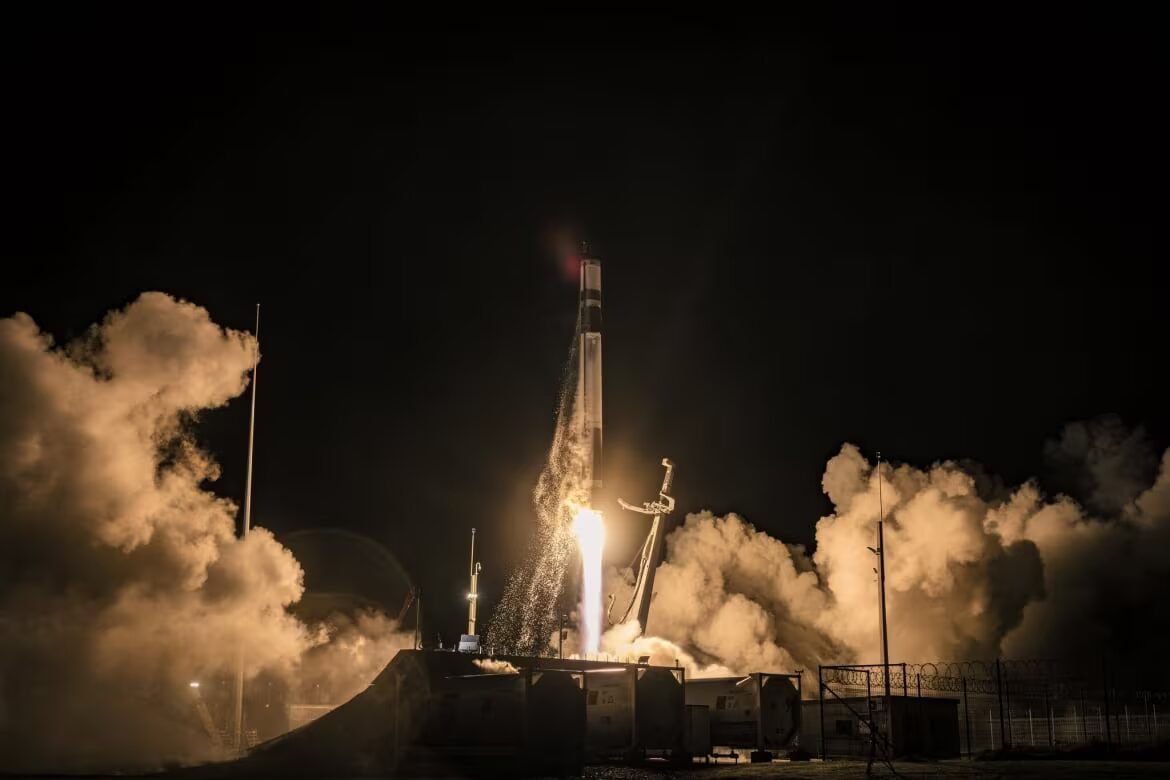
Rocket Lab kicked off 2026 with its strongest quarter yet, boasting over $200 million in revenue and signing 36 new launch contracts. But while demand for its reliable small launcher Electron is surging, its more ambitious medium-lift rocket Neutron faces another delay, now slipping its inaugural flight to the fourth quarter of 2026. This postponement raises questions about Rocket Lab’s ability to challenge SpaceX at the upper end of the launch market.
Unlike Electron, which has built a steady business with over 90 launches and remains the second most active orbital launch provider behind SpaceX, Neutron’s path is bumpier. The company originally planned Neutron’s debut for late 2025, then early 2026, before the latest push to late 2026. The delay follows a tank failure in January during hydrostatic testing of Neutron’s first stage – traced to a production flaw by an external contractor before automated manufacturing lines were fully operational.
Rocket Lab’s growing Electron business
Despite setbacks with Neutron, Rocket Lab’s existing launcher Electron remains its workhorse. The company signed 31 new contracts in Q1 2026 for Electron and its hypersonic variant HASTE, plus another five for future Neutron missions. Its backlog surpassed 70 missions, with total contract value around $2.2 billion. Quarterly revenue jumped 63.5% from last year, reaching $200.3 million.
Among its biggest customers is BlackSky, extending its Gen-3 satellite launches to 17 total missions since 2019. Defense contractor Anduril secured a $30 million deal for three hypersonic HASTE flights. In May, Rocket Lab inked its largest-ever deal: a confidential client reserved five Neutron and three Electron launches scheduled between 2026 and 2029. NASA also booked three Earth science missions for Neutron in 2027, carrying instruments like PolSIR and TSIS-2.
Electron’s track record sets Rocket Lab apart in the small launch sector, especially after the collapse of Virgin Orbit and delays at other startups. Consistency in flight cadence has become a critical factor for securing contracts, not just slick presentations.
Technical challenges delaying Neutron’s debut
Neutron’s setback centers on its complex first-stage tank and fairing design. The failed hydrostatic test exposed weaknesses in the tank’s hand-crafted composite structure. Rocket Lab has since built a new tank incorporating design tweaks to boost strength and moved production to automated lines. The company is now stress-testing the first stage for launch, re-entry, and landing loads.
An additional technical hurdle lies in the fairing’s ”petal” system, intended to open for second-stage separation and then close during first-stage recovery. Though innovative and weight-saving in theory, this mechanism adds complexity requiring extensive testing. Details on the Archimedes engine tests and landing system remain scarce.
Neutron is Rocket Lab’s pivot to the medium-lift segment dominated by SpaceX’s Falcon 9. That segment demands high launch cadence, reliability, and competitive pricing – areas where Falcon 9 sets the bar with frequent, reusable missions. While Electron targets smaller satellites, Neutron aims to tap the more lucrative payload range above 8,000 kg to low Earth orbit.
Rocket Lab’s financial footing is solid, boasting over $2 billion in liquidity and diverse revenue streams from satellite systems and space components. This cushion softens the blow of Neutron’s delays, unlike many smaller competitors who risk cash flow issues amid extended development cycles.
Future plans for Rocket Lab’s Neutron rocket
With five commercial Neutron launches already booked before its maiden flight, Rocket Lab is betting on customer confidence in its promised payload capacity and reusability. But converting that trust into regular launch cadence will be the true test. If Neutron finally flies by late 2026, 2027 will be a make-or-break year – the market expects more than a one-off success. Without sustained operational tempo, breaking SpaceX’s near-monopoly in medium-lift rockets remains a long shot.
Rocket Lab’s story is a reminder that scaling rocket technology, especially reusable designs with new materials and mechanisms, rarely unfolds on a smooth schedule. Yet strong demand for smallsat launches continues to drive growth. How Rocket Lab manages Neutron’s technical challenges and turns its backlog into regular flights will shape the competitive landscape for years to come.