

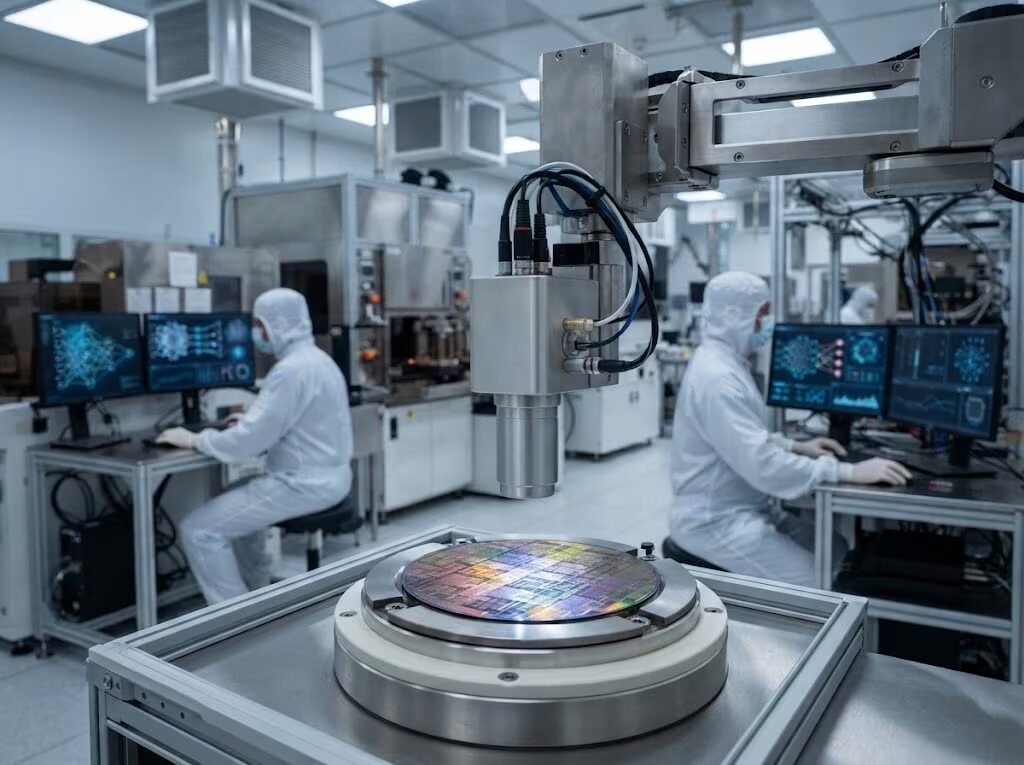
Meta is gearing up to start mass production of its custom AI chip, Iris, with manufacturing expected to kick off as early as September, according to Reuters. Iris will join the Meta Training and Inference Accelerator (MTIA) lineup, aiming to reduce Meta’s reliance on Nvidia and AMD GPUs that currently dominate the generative AI boom. The chip’s goal is to make training AI models for Facebook and Instagram more cost-efficient.
Internal Meta documents reviewed by Reuters reveal that Iris is designed to handle both AI training and inference workloads. Testing reportedly took about six weeks and encountered no major issues. If Meta sticks to its timeline, this would mark one of the company’s fastest pivots from chip prototyping to full production.
Meta is not working solo on Iris. The chip design involves Broadcom, while Taiwan Semiconductor Manufacturing Company (TSMC) will handle production. Simultaneously, Meta is scaling up its AI infrastructure aggressively-planning for roughly 7 gigawatts (GW) of AI processing power by 2026 and doubling that to 14 GW in 2027. The company could spend up to $145 billion on AI infrastructure this year alone, securing memory, storage, and fiber-optic components in advance from suppliers like Samsung Electronics, SanDisk, and Sumitomo Electric.
The big question is whether Meta can maintain this rapid cadence. The company expects to release new MTIA generations roughly every six months through 2027. That pace is faster than many AI accelerator makers, who usually update their hardware annually or less frequently. Meta’s chip efforts have stumbled before, with several early attempts failing to reach large-scale deployment. Iris will be the next important test of the strategy.
The push for in-house AI chips is not new-Google has long deployed its TPU accelerators across services and cloud platforms, Amazon Web Services is developing Trainium and Inferentia, and Microsoft is building its Maia chips. The underlying driver is straightforward: Nvidia still controls a dominant share of data center AI accelerators, and ongoing component shortages have driven up costs for memory and related electronics. Analysts at Morgan Stanley have dubbed this inflationary pressure ”chipflation.” If Meta succeeds in commercializing Iris at scale, it would join a select group of tech giants moving beyond reliance on third-party GPUs to owning their AI silicon.
Note: Meta is designated an extremist organization in Russia, and its activities are banned in the country.

Despite Meta’s ambitious plans, maintaining a six-month upgrade cycle for AI chips will be challenging given the complex semiconductor supply chain and previous setbacks. Success with Iris could carve out a new frontier in AI hardware development, potentially reshaping how hyperscale tech firms control their AI workloads. The industry should watch whether Meta’s push pressures Nvidia’s longstanding monopoly or spurs more in-house chip innovation elsewhere.