

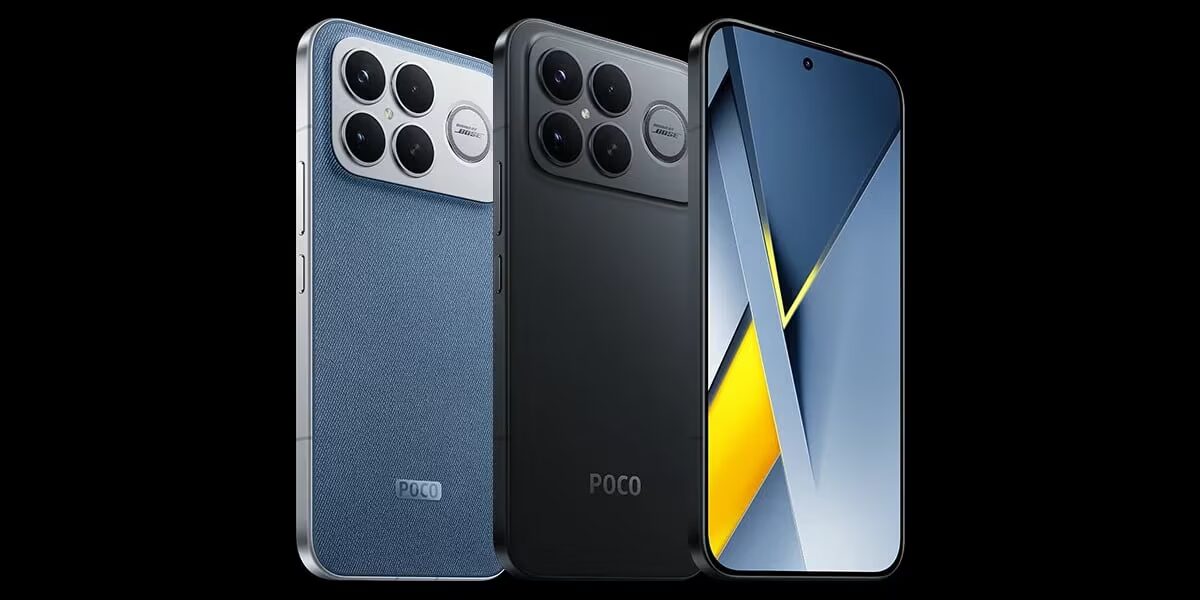
The Xiaomi 17T Pro aims squarely at the ”near-flagship” segment with strong specs like powerful hardware, a large screen, fast charging, and a camera that doesn’t reach ultra-premium price levels. But as soon as its price lands around $700-800, competitors offering better features in certain areas start to crowd the scene. We’ve picked five phones that outshine the Xiaomi 17T Pro in key aspects-whether it’s performance, battery capacity, camera quality, or software support longevity.
Poco X8 Pro Max battery and performance overview
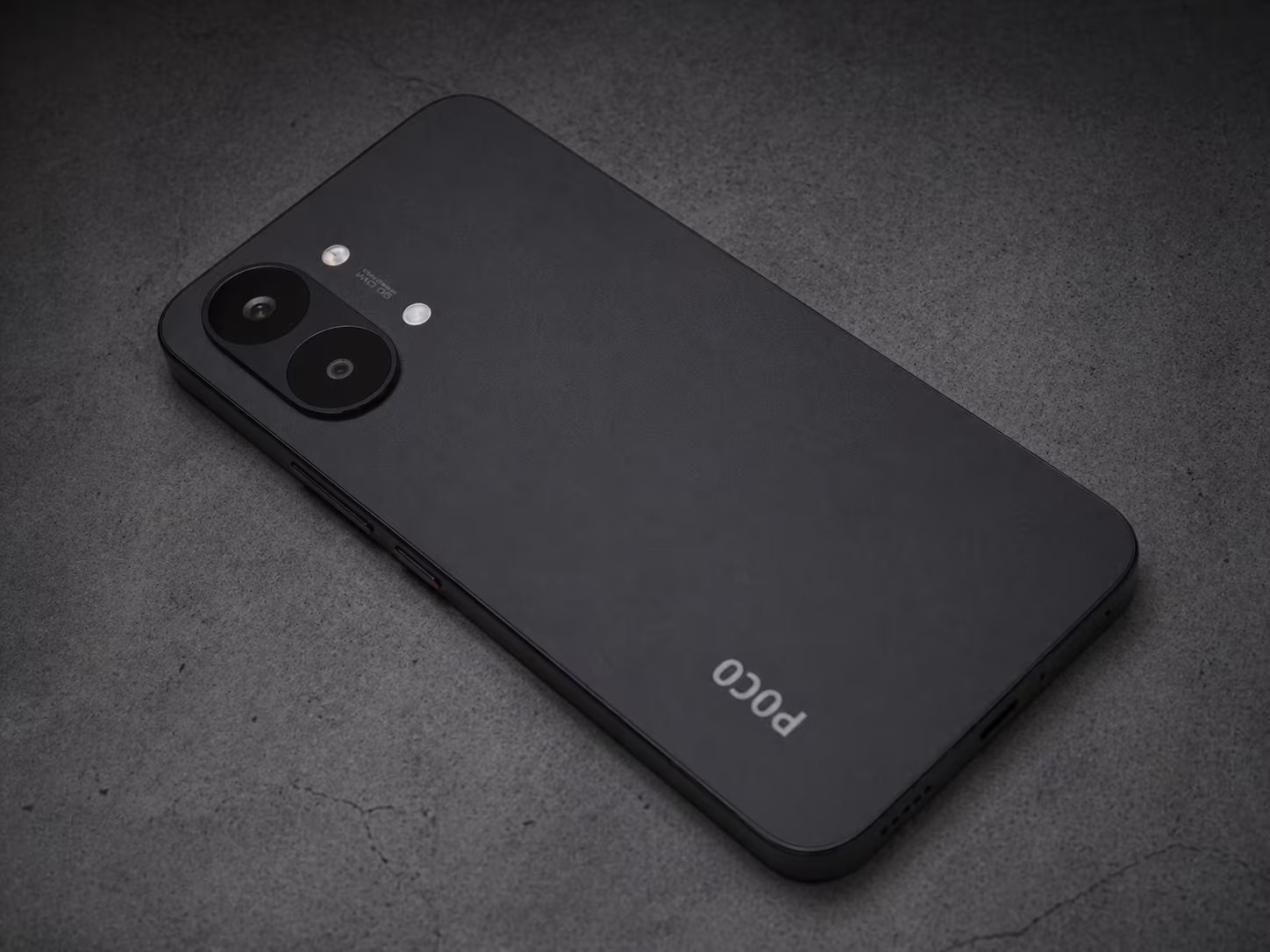
What catches the eye about the Poco X8 Pro Max is the ”Pro Max” branding-Poco’s first in this mold. But the bigger story is the value: priced between $414 and $485, it packs a MediaTek Dimensity 9500+ chip, a 6.83-inch AMOLED display, and a staggering 8500 mAh battery. For a phone with a relatively slim profile, that battery capacity is borderline absurd. While a handful of phones now offer 7000+mAh batteries using silicon-carbon tech, 8500 mAh remains rare even among Chinese brands.
Charging comes in at a solid 100W, and IP69K certification means it can withstand more than just rain-it’s rated against water jets under pressure. The tradeoff shows in the cameras: a 50MP main sensor is present, but there’s no dedicated telephoto lens. Still, when it comes to the combination of price, hardware, and battery life, this is one of the most aggressive offers here. If the Xiaomi 17T Pro feels good but pricey, the Poco X8 Pro Max cuts to the chase without fuss.
Samsung Galaxy S25 FE software and ecosystem advantages
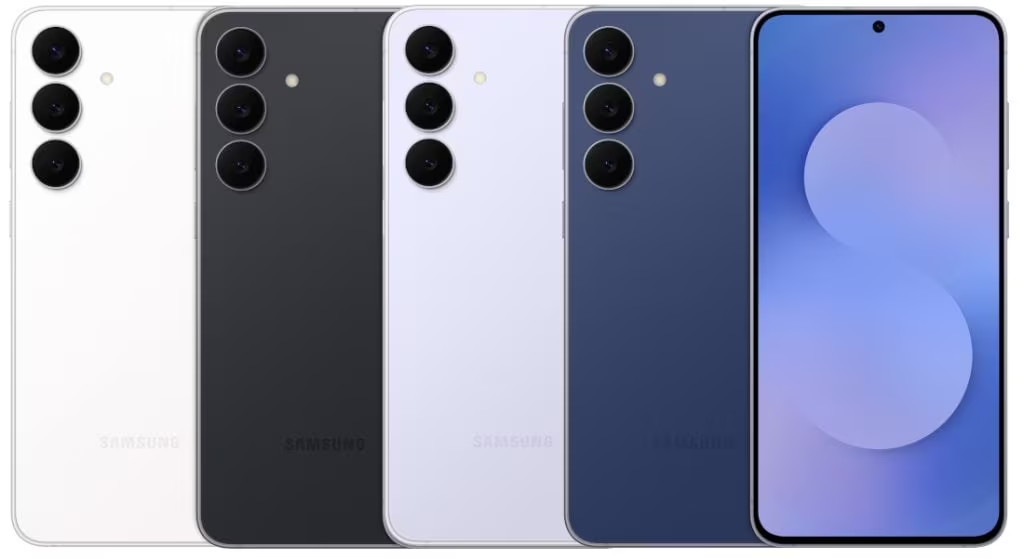
The Samsung Galaxy S25 FE doesn’t try to out-spec the competition but instead leans on Samsung’s hard-earned strengths: long software support, a polished ecosystem, and reliable software updates. For $649, buyers get an AMOLED panel, Samsung’s AI features, One UI interface, and seamless integration with Galaxy tablets, watches, and earbuds. For many users, this ecosystem continuity outweighs a few extra watts of charging speed.
The compromise is clear: its battery is smaller than the Xiaomi 17T Pro’s, charging is slower, and its zoom camera doesn’t aggressively challenge the 17T Pro’s capabilities. Yet Samsung’s history of extended software support remains a strong selling point. FE models often retain solid resale value and usability longer than their Chinese rivals. If you want a smartphone not for headline specs but for a smooth, dependable experience over three to four years, the Galaxy S25 FE is a sturdy pick.
Why Xiaomi 17T Pro faces stiff competition in the mid-range segment
The Xiaomi 17T Pro sits in one of Android’s most competitive price tiers. Beneath it lurk models like the Poco X8 Pro Max, boasting nearly absurd battery capacities, while above and alongside it are OnePlus, Honor, and Samsung devices each with their own strengths. Choosing among them boils down less to benchmarks and more to what matters most: gaming performance, battery life, camera capabilities, or software longevity.
Internationally, this segment is hotly contested because no brand offers a perfect all-around package at this price point. Xiaomi’s approach pushes the envelope on specs, while Samsung bets on polish and durability. Poco flips the battery-first script. Meanwhile, brands like OnePlus and Honor mix in unique features and software experiences to grab their slice.
Watch how these players recalibrate features and prices in the coming months. As chip shortages ease and battery tech evolves, expect even more aggressive offers that blur the lines between mid-rangers and flagship killers. The key tension will be whether Xiaomi can outpace feature specialists or if broader ecosystems and software support will ultimately win over buyers.