

Researchers at Queen’s University Belfast have uncovered a surprising hurdle in developing flow batteries-an emerging alternative to lithium-ion systems for large-scale energy storage. By distributing a simple, low-cost 3D-printed flow battery test cell to over 30 labs worldwide, they discovered that the same experiment yields widely different results across sites. This points to a pressing need for standardized flow battery testing protocols in the industry, beyond just design improvements.
As renewable power sources like solar and wind become more prevalent, the power grid increasingly depends on massive energy storage to balance fluctuations. Lithium-ion batteries currently dominate this space but suffer from expensive, sometimes scarce materials such as lithium and cobalt, along with safety concerns around fire risks, especially in large installations.
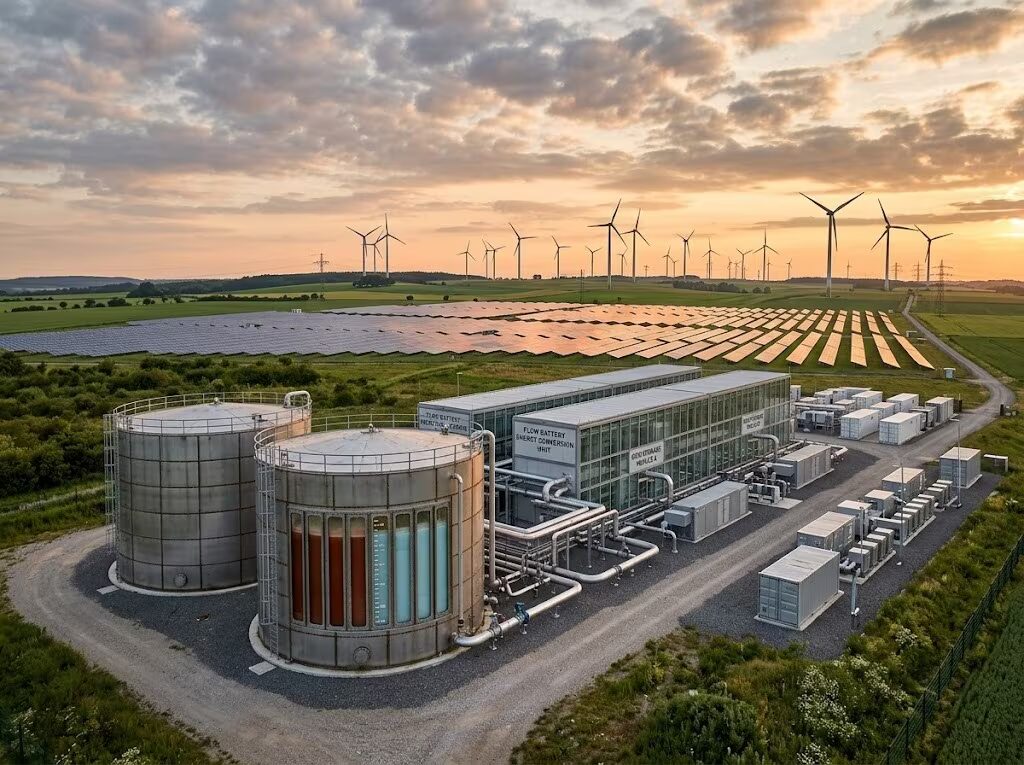
Flow batteries store electricity differently: energy resides in liquid electrolytes contained in external tanks and pumped through an electrochemical cell. This separation of energy storage (tank size) and power output (cell stack size) allows flexible scaling-adding more electrolyte for capacity or more cells for power. Many use aqueous electrolytes, reducing fire hazards common in lithium-ion systems. Some flow battery setups have operated reliably for over two decades, making their long-term ownership costs attractive for grid operators.
China hosts one of the largest operational vanadium flow battery projects-a 175 MW/700 MWh complex in Dalian-demonstrating commercial viability at scale. Companies like Invinity Energy Systems and ESS Tech are pushing vanadium and iron-based flow batteries commercially. However, flow batteries still represent a small fraction of the global energy storage market, where lithium-ion remains dominant, according to the International Energy Agency.
Why identical flow battery tests deliver different outcomes
The Belfast team’s approach was straightforward: replace costly bespoke test hardware with a 3D-printed flow battery cell anyone could replicate. This democratizes testing and accelerates experimentation with new electrolytes and materials. On paper, it seemed perfect-a cheap, reproducible test stand to drive flow battery innovation faster.
But the results were puzzling. Even repeated tests within the same lab produced varying performance metrics. Discussing this at a 2024 conference with MIT chemical engineering professor Fikile Brushett sparked a larger collaborative effort to trace the source of inconsistencies.
The updated 3D-printed cells were sent to multiple leading research groups worldwide. The assumption: identical cells tested under similar conditions should yield comparable results. Instead, performance differed significantly across labs despite using the same setup and protocols.
Expanding the study to more than 30 laboratories, the team compiled and published data for community analysis. While rigorous cross-lab validation is standard in fields like pharmaceuticals and biology, it remains uncommon in battery research, especially in early development stages.
The researchers identified a cluster of factors driving variability:
- Differences in cell assembly
- Variations in electrolyte preparation
- Different flow rates
- Equipment calibration discrepancies
- Measurement technique variations
Even slight procedural tweaks lead to widely different interpretations of material performance. A breakthrough electrolyte in one report might appear mediocre elsewhere, simply due to testing method differences.
The key takeaway: the flow battery sector urgently needs unified testing standards. Agreeing on consistent measurement protocols will allow scientists and engineers from Belfast to Boston to Shanghai to place data side-by-side with confidence. This could save the industry years of trial and error.
The impact could be profound. Flow batteries compete not only with lithium-ion but also with emerging sodium-ion solutions gaining traction, particularly in China. Standardized testing would help developers weed out weaker chemistries more quickly and reliably identify promising, affordable storage candidates for grid-scale implementation. This improvement could fuel a surge of commercial projects over the next few years, powering new data centers and renewable infrastructure.
Ultimately, this international collaboration highlights how innovation in energy storage hinges not just on new materials but on how those materials are tested and validated globally. The coming challenge is setting and enforcing these standards rapidly enough to keep pace with the growth in large-scale, sustainable energy storage.