

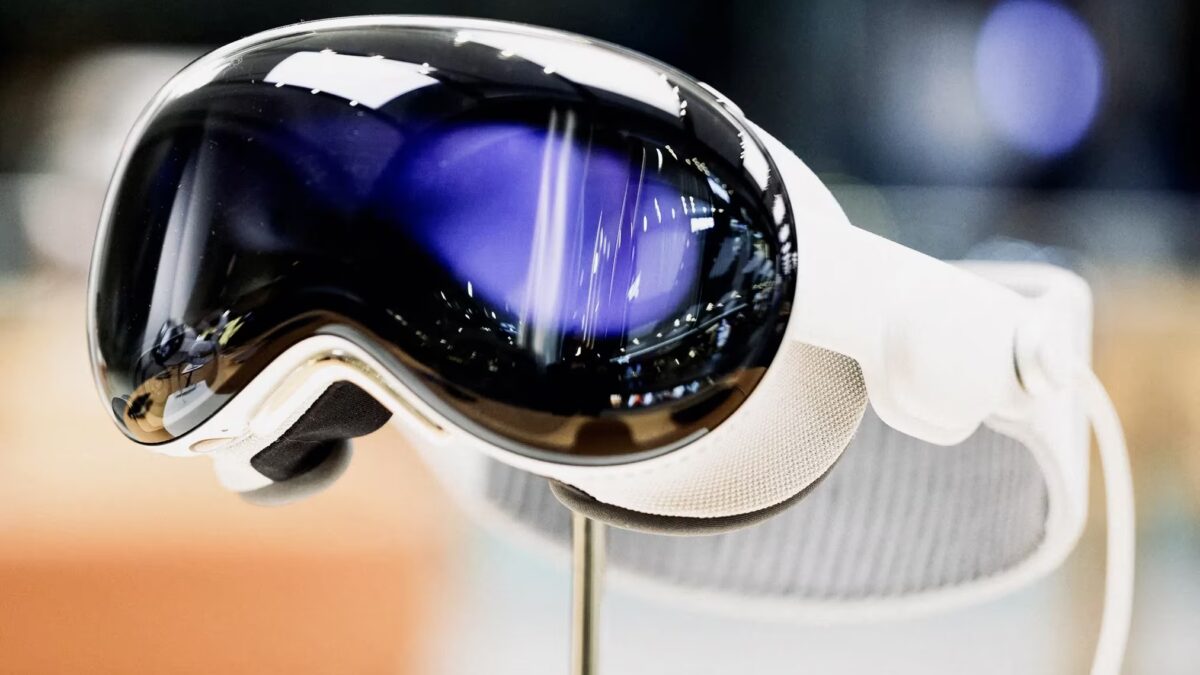
Apple’s plan for a more affordable Vision Pro headset is hitting a major roadblock as Samsung Display pulls out of developing the micro-OLED screen, with sources in South Korea saying the project will be shut down by September. This move signals Apple is shelving its low-cost Vision Pro ambitions and shifting focus toward smart glasses instead.
The screen Samsung was working on was a micro-OLED panel on a glass substrate with a pixel density of 1600-1700 PPI. In contrast, the current Vision Pro uses much higher-resolution OLEDoS displays on silicon substrates, boasting an impressive 3386 PPI. The idea was straightforward: simplify the screen tech to cut costs and reduce the headset’s weight. But displays remain the priciest component in mixed reality headsets, making savings here far tougher than in smartphones or tablets.
Rumors about a cheaper Vision Pro began circulating in early 2024, suggesting Apple might release a version with pared-down components at a significantly lower price than the current $3,499 US launch price. Now that plan looks increasingly unlikely as Samsung, the panel supplier, exits and Apple restructures its Vision division. Recently, in late June, Apple’s lead for Vision Pro development left for OpenAI, reflecting internal shakeups.
The broader AR/VR market also offers little incentive to rush a budget Vision Pro. According to IDC, global AR/VR headset shipments remain far from mainstream adoption, and Vision Pro sales so far have been modest for a premium device. Meanwhile, Meta is doubling down on more affordable Quest VR headsets, and Samsung, teaming with Google, is pushing its Android XR platform. Apple seems reluctant to launch a stripped-down Vision Pro just to offer a cheaper model if it won’t truly reach a wider audience.
Looking ahead, 2027 could be the pivotal year when major players unveil more convincing smart glasses. If Apple is indeed pivoting from mixed reality headsets toward smart glasses, canceling the cheaper Vision Pro doesn’t feel like a plan cut short but rather a strategic shift. In a market where even $1,000 price tags don’t guarantee mass appeal, Apple is possibly betting on a different form factor for its next big AR push.
* Meta is recognized as an extremist organization and banned in Russia.