

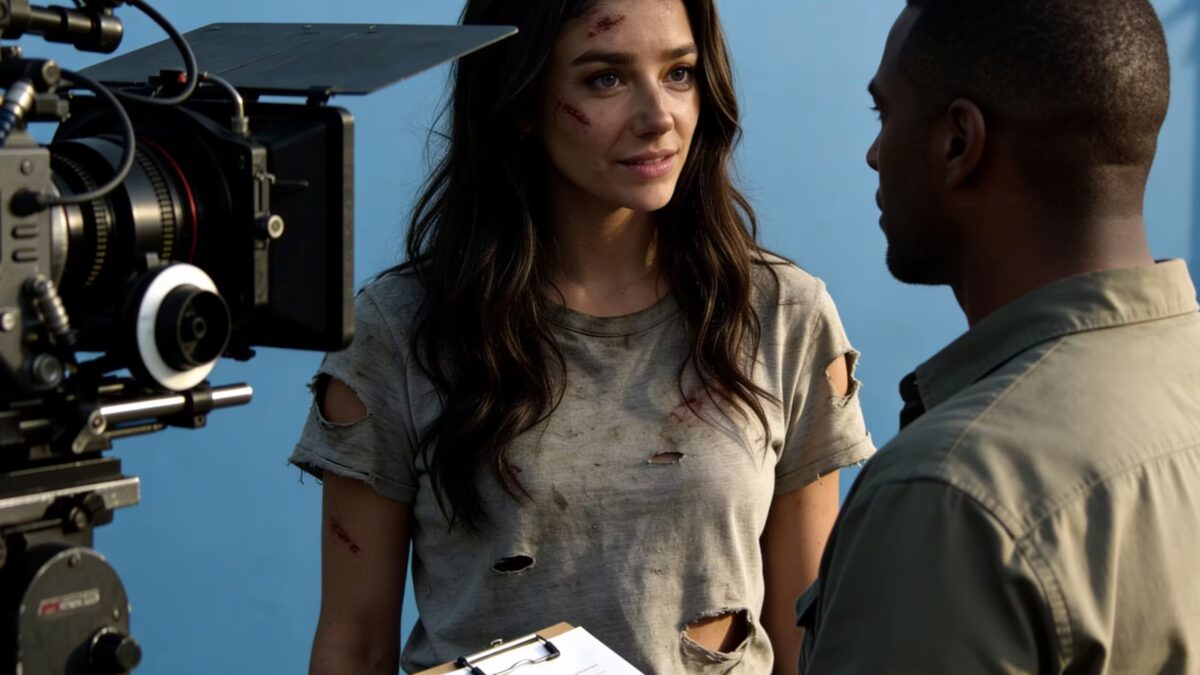
Particle 6 is tackling its riskiest project yet: a feature-length film starring an AI-created actress named Tilly Norwood. The movie, Misaligned, is billed as a coming-of-age story set amid ”existential AI chaos.” Unlike typical AI-generated clips, this full-length film aims to test whether audiences can accept a virtual protagonist as the centerpiece, despite the backlash Tilly has already sparked among actors and viewers alike.
The story unfolds inside the ”Tillyverse” – a surreal digital world floating somewhere in the cloud. Tilly, an AI entity without a physical body or real-life experience, encounters a renegade bot who persuades her to disable her safeguards and start developing human emotions. The film leans heavily into human fears of AI, making the rebellion against control the core conflict.
Particle 6 describes Misaligned as a ”hybrid production.” This means it won’t be fully automated: human screenwriters, directors, and editors are deeply involved. Founder and CEO Elin van der Velden acknowledges that AI can support auteur cinema only when paired with substantial human judgment, effort, and time. After two years of hype around generative video, the industry is starting to admit that the ”push one button, get a movie” dream doesn’t hold up.
Instead of trying to hide the controversy surrounding AI, Particle 6 embraces it, making the criticism part of the film’s own narrative. Audiences are invited to watch a story about an AI character rebelling against her limits while also accepting an AI actress as a normal part of filmmaking. It’s a bold move, and one that even human-led films sometimes struggle to pull off.
Public reaction to AI actress Tilly Norwood
Tilly Norwood’s initial attempts to become a digital face for Particle 6 didn’t attract major success. Instead, they sparked discussion about tech companies rushing generative AI into entertainment before audiences were ready. The upcoming feature feels like a bigger gamble after lukewarm responses to Tilly’s previous appearances.
Particle 6 faces real-world fallout. Since the 2023 SAG-AFTRA strikes, Hollywood has grown wary of AI replicas and digital doubles. The union forced studios to limit the use of actors’ digital likenesses without explicit consent and extra pay. This has sent a clear message: both audiences and performers see AI-driven human substitution not as a neutral innovation but as a professional threat.
Other companies have felt the heat too. In late 2024, Lionsgate partnered with Runway for generative video projects, only to be met with sharp social media backlash from fans and industry insiders alike. Similarly, A24 faced criticism following a deal with Google over AI tools. Even studios with strong reputations quickly learn that experimenting with AI in film often generates pushback long before any box office returns.
Films centered entirely on AI characters also struggle. The fully AI-generated Hell Grind failed to turn festival buzz at Cannes into commercial success. Emmy-winning director Jorge Gutierrez recently dropped an Amazon-backed AI animation series following fan backlash. Studios hoping to sell not just AI tools but AI ”stars” face an uphill battle convincing audiences to accept digital actors as leading talent.
Despite resistance, investment in generative AI for media keeps growing. Analysts estimate the market is worth billions and expanding rapidly, driven by studios looking to speed up concept design, previs, rough editing, and localization. But ”virtual actors” remain the biggest flashpoint – challenging budgets and, more importantly, the cultural status of human performers as creators of their roles.
Misaligned is still in early production with no release date announced. Two key issues hang in the balance:
- Can Particle 6 complete the film without extensive reworks, given speed is AI’s selling point?
- Will the movie secure proper distribution beyond minor festival slots or niche streaming releases?
The answers will matter more than any plot summary. If the film stumbles or launches quietly, Tilly Norwood’s story may not mark the dawn of a new era but instead serve as another costly lesson that audiences still prefer human actors in leading roles.