

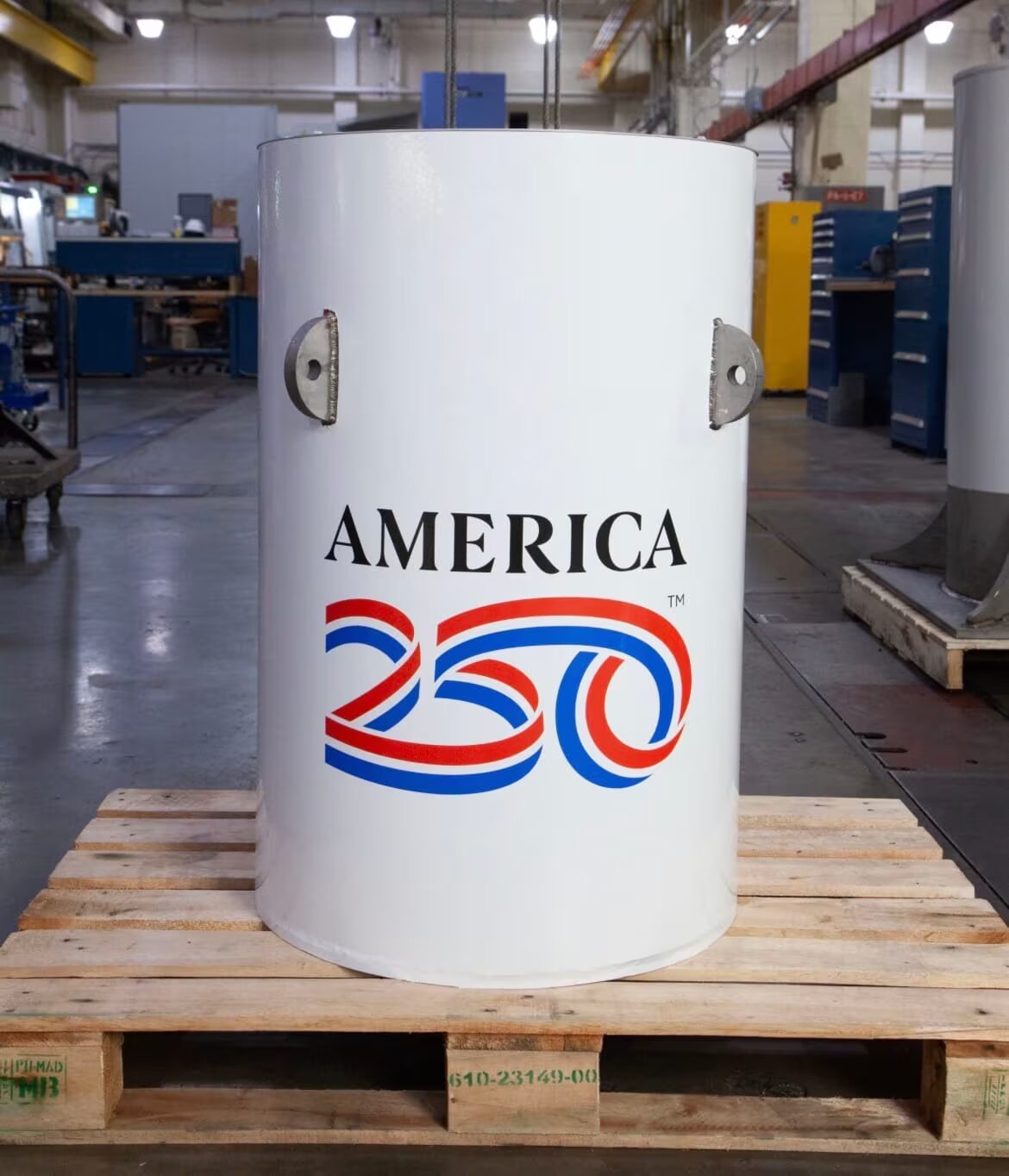
Apple’s iPhone 17 Pro Max has been locked away in a time capsule intended to remain unopened for 250 years – until 2276, the 500th anniversary of the United States. The ceremony took place July 4 in Philadelphia, where the device was chosen as a symbol of mid-2020s technology.
The capsule contains a Cosmic Orange iPhone 17 Pro Max loaded with digital artifacts stored in the Notes app, preserving a snapshot of daily life in 2026. The project, overseen by America Innovates and timed to the US’s 250th birthday, aims to show future generations what technology and culture looked like in the early 21st century, according to MacRumors.
Built in collaboration with the National Institute of Standards and Technology, the time capsule resembles an industrial safe. It’s a stainless steel cylinder weighing around 400 kilograms, sealed with indium to keep moisture out. A 500-kilogram steel dome sits on top to preserve an air pocket inside, ensuring long-term protection for its contents.
The iPhone isn’t alone inside. The capsule also holds artifacts from every US state and territory, including an eagle feather from the Civil War era and fabric from the Wright brothers’ aircraft. One notable inclusion is a text about California’s future generated by the AI model Claude – blending American history, current tech, and 2026’s growing faith in artificial intelligence.
Time capsules are nothing new. The iconic Westinghouse Time Capsule, sealed at New York’s 1939 World’s Fair, is designed to last 5,000 years. In that context, the choice of an iPhone makes sense: since its 2007 debut, Apple has sold over two billion iPhones, which have become the personal computing device for hundreds of millions, defining our digital era.
This capsule raises questions about how technology will evolve – and whether devices as iconic as the iPhone will still resonate centuries from now. Will future archaeologists see this phone as a relic of innovation, or a curiosity from the smartphone’s heyday? The answer lies buried in the future, waiting to be uncovered in 2276.