

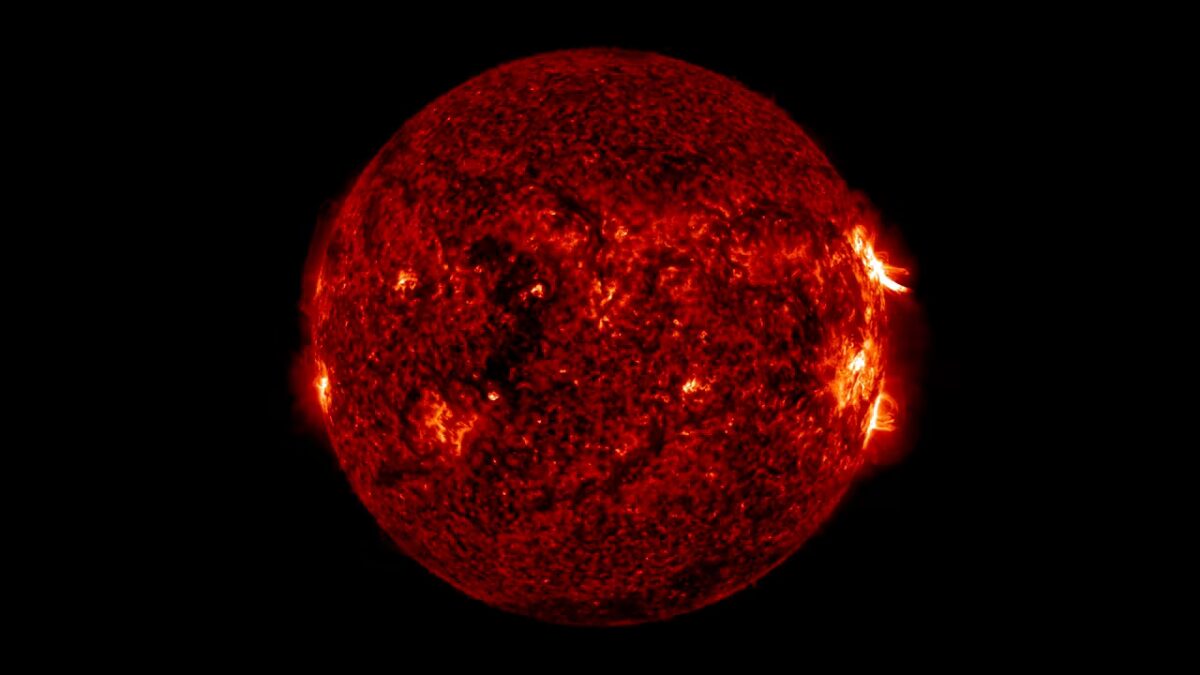
On July 5, Russian solar astronomy labs recorded a staggering 26 solar flares within 24 hours, marking the highest daily total for 2025-2026 so far. The powerhouse behind this burst of activity was sunspot region 4478, one of the largest spot groups visible in the last decade.
Counting in universal time, scientists logged 24 flares of class C or higher, while Moscow time registered 26. Despite the impressive number, not all solar flares pose a threat to Earth. Their impact depends on the flare’s intensity, the direction of plasma ejection, and the active region’s position on the Sun’s disk.
Right now, solar activity is winding down. The active regions are shifting toward the Sun’s western edge and will rotate out of view in the coming days, reducing their influence on Earth. Researchers estimate that the elevated X-ray radiation-recently tens of times above normal-will soon decrease.
Recent solar flare activity and the Solar Cycle 25 maximum
This surge of solar flare activity aligns with the rise of Solar Cycle 25. Both NASA and NOAA have noted that the cycle hit its maximum phase earlier than initially predicted. However, these recent flares don’t yet set new records for this cycle; earlier months already saw class X flares, the most powerful category. Just yesterday, a strong geomagnetic storm-the second most intense of 2026-finally subsided.
Impact of solar flares on Earth and global monitoring efforts
For international readers, solar activity like these flares can disrupt satellite communications, GPS signals, and even power grids during stronger events. While Russia’s solar observatories provide valuable data, this activity fits into a broader global monitoring effort, with agencies like NASA and NOAA closely tracking the Sun’s influence. Compared to giant cycles in the past, this maximum is relatively moderate but still demands attention from the space weather community.
Outlook for Solar Cycle 25 and future space weather
As Solar Cycle 25 progresses, scientists will be watching to see if the Sun continues to exceed expectations or settles into a quieter phase. The balance between smaller flares and rare extreme events will shape how space weather impacts technology on Earth and beyond over the coming years.