

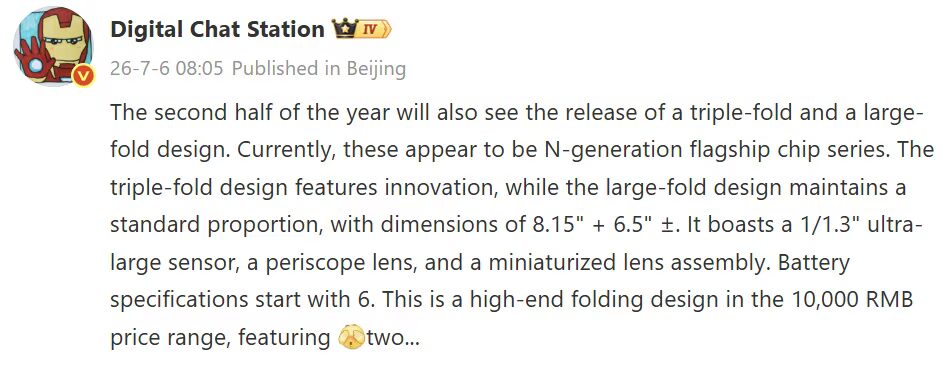
Huawei is reportedly preparing two new foldable smartphones-the tri-fold Mate XT 2 and the traditional foldable Mate X9-set to arrive in the second half of 2024. The most notable upgrade won’t be in design but under the hood: both are expected to debut Huawei’s flagship Kirin 9050 chipset, potentially marking a significant leap forward for the brand’s foldable lineup.
According to insider Digital Chat Station, Huawei will skip the Kirin 9030 and jump straight to the Kirin 9050 series, with the Mate XT 2 possibly featuring a Kirin 9050 Pro variant. Previous reports from Chinese sources suggest the new chip will utilize a dual-layer vertical logic architecture aimed at improving performance and power efficiency without shrinking the manufacturing process node. This approach is key since Huawei still faces restrictions accessing cutting-edge semiconductor fabs.
Huawei Mate XT 2 and Mate X9 foldable display and design features
On the hardware front, the clamshell-style Mate X9 is rumored to sport an 8.15-inch internal display paired with a 6.5-inch external screen. Meanwhile, the tri-fold Mate XT 2 is expected to improve upon the folding mechanism introduced by the original Mate XT, Huawei’s uniquely engineered foldable that stands apart from Samsung’s Galaxy Fold lineup. While Samsung focuses on dual-screen folds, Huawei is committed to more complex folding form factors.
Camera and battery upgrades on Huawei’s new foldables
Camera and battery improvements are also anticipated. The new foldables may feature a large 1/1.3-inch primary sensor, a periscope telephoto lens, and a more compact camera module overall. Battery capacity reportedly starts at 6000 mAh, which is a substantial increase compared to typical foldable rivals that usually range from 4400 to 5600 mAh.
Pricing and release timeline for Huawei Mate XT 2 and Mate X9
The anticipated price is about 10,000 yuan (around $1,470), positioning these devices as premium products on par with Samsung’s Galaxy Z Fold series, which features even higher prices in China and globally. Foldables with tri-fold designs remain rare, so Huawei’s move signals a willingness to push design boundaries despite the cost.
If Huawei sticks to its schedule, these devices could launch as soon as September alongside HarmonyOS 7, which the Mate XT 2 is also expected to debut with. Huawei’s continued innovations come as the company struggles to regain prominence in premium smartphones amid geopolitical restrictions and intense competition from Apple, Samsung, and Chinese rivals like Xiaomi.
Huawei’s strategic bet on foldables with Kirin 9050 chipset
For international tech watchers, Huawei’s shift toward a tri-fold design powered by a next-generation in-house chip presents an interesting bet on the future of foldables, especially as Samsung largely refines its dual-folds and Apple remains silent on folding phones. The Kirin 9050’s success will be critical-if it delivers the promised performance and efficiency gains, Huawei could regain some lost ground in flagship smartphones just as foldables start gaining wider market traction worldwide.