

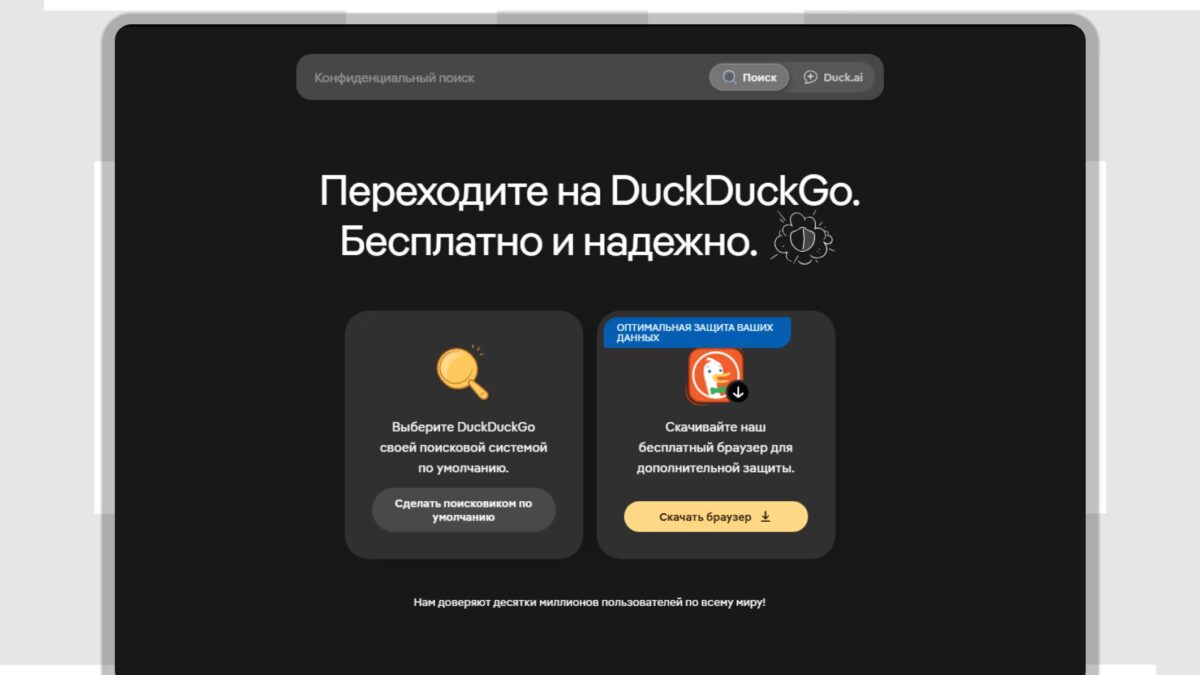
After Google I/O 2026, DuckDuckGo’s popularity surged in the US, with weekly installs jumping nearly 30%. The reason is simple: as major search engines lean harder into AI and personalized results, more users seek a quieter alternative that doesn’t harvest their data at every turn.
Since its 2008 launch, DuckDuckGo (DDG) has stuck to one principle: privacy-focused searching without building invasive user profiles. It doesn’t store search history like Google or Yandex, doesn’t tie queries to ad profiles, and serves less personalized results by default. The trade-off? It lags behind the giants on local queries, breaking news, and some specialized search tasks.
Put simply, DuckDuckGo reduces everyday online tracking but isn’t about disappearing off the grid. It helps keep your data out of ad systems but doesn’t make you invisible online – it’s no substitute for VPNs or Tor.
How DuckDuckGo’s privacy-focused search works compared to Google and Yandex
Created by American entrepreneur Gabriel Weinberg, DuckDuckGo’s name nods to the children’s game ”duck, duck, goose.” Originally a simple search engine promising ”privacy without complicated settings,” it has expanded into a suite of products: Android, iOS, Windows, and macOS browsers; browser extensions; email protection; a private AI chat called Duck.ai; and a paid subscription with extra security tools.
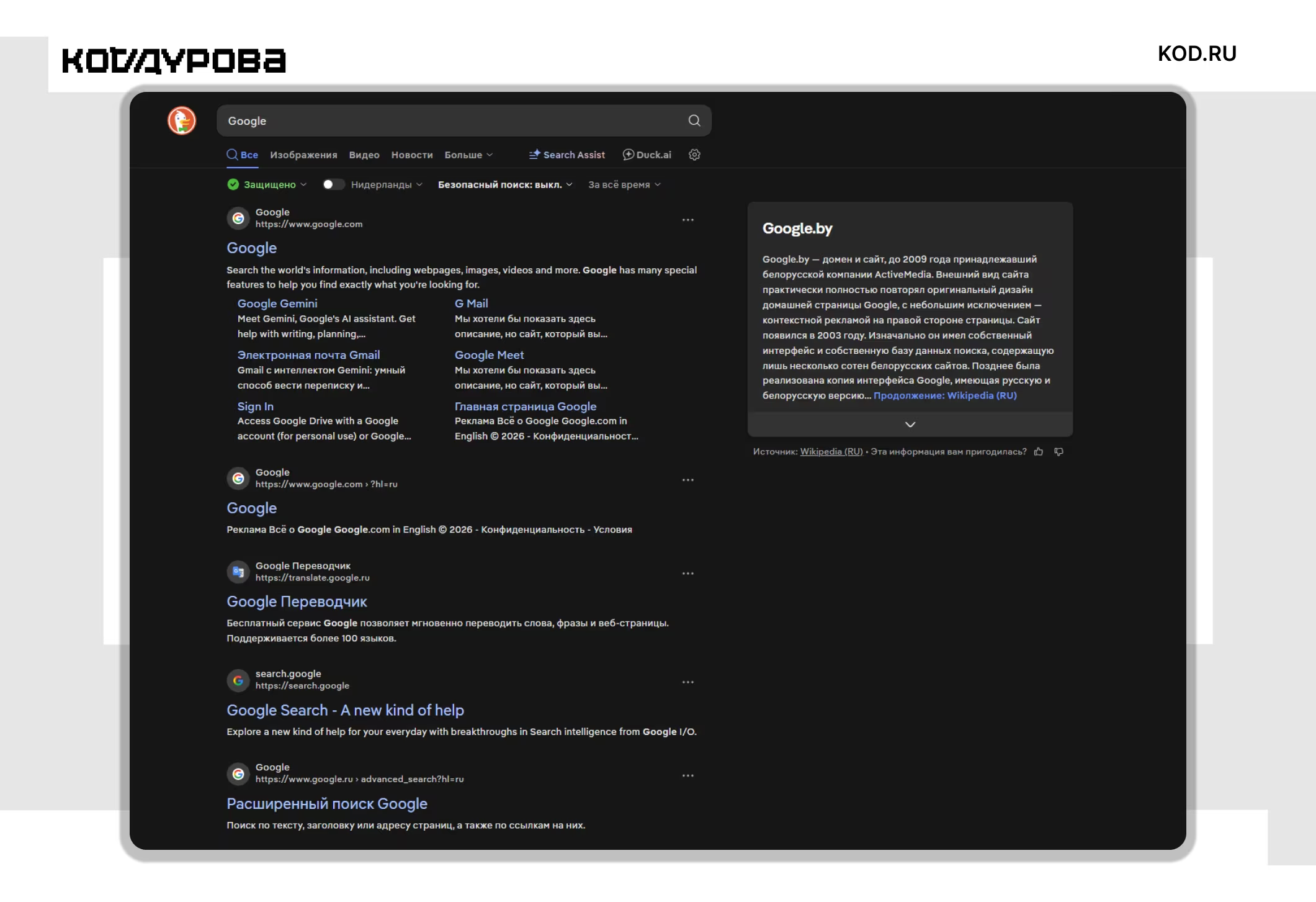
Unlike Google or Yandex, DuckDuckGo doesn’t build its own search index from scratch. Instead, it relies on Microsoft Bing’s index as a foundation, layering in its own sources and tools like DuckDuckBot, Wikipedia data, Wolfram Alpha answers, and Apple Maps. This is the core compromise: DuckDuckGo protects privacy and keeps costs low but depends on another company’s infrastructure and can’t dig as deep into the web as market leaders.
The biggest difference is whether a user profile shapes your results. Google and Yandex connect search closely to accounts, location, browsing history, and ad systems. DuckDuckGo’s advertising is contextual, triggered only by the current query, not a long-standing profile. That means less ”filter bubble” effect, where the search engine pre-decides what you prefer.
In 2026, this distinction stands out sharply as Google and Microsoft weave AI answers directly into their search engines. DuckDuckGo offers AI too-but with a twist: you can switch it off. For some users, that choice became key after Google’s May announcements.
DuckDuckGo also has unique features. Its best-known is the !bangs system-short commands to jump straight to search within specific sites. For example, type !w for Wikipedia, !yt for YouTube, !g for Google, or !maps for maps. By 2026, there are over 13,500 such commands.
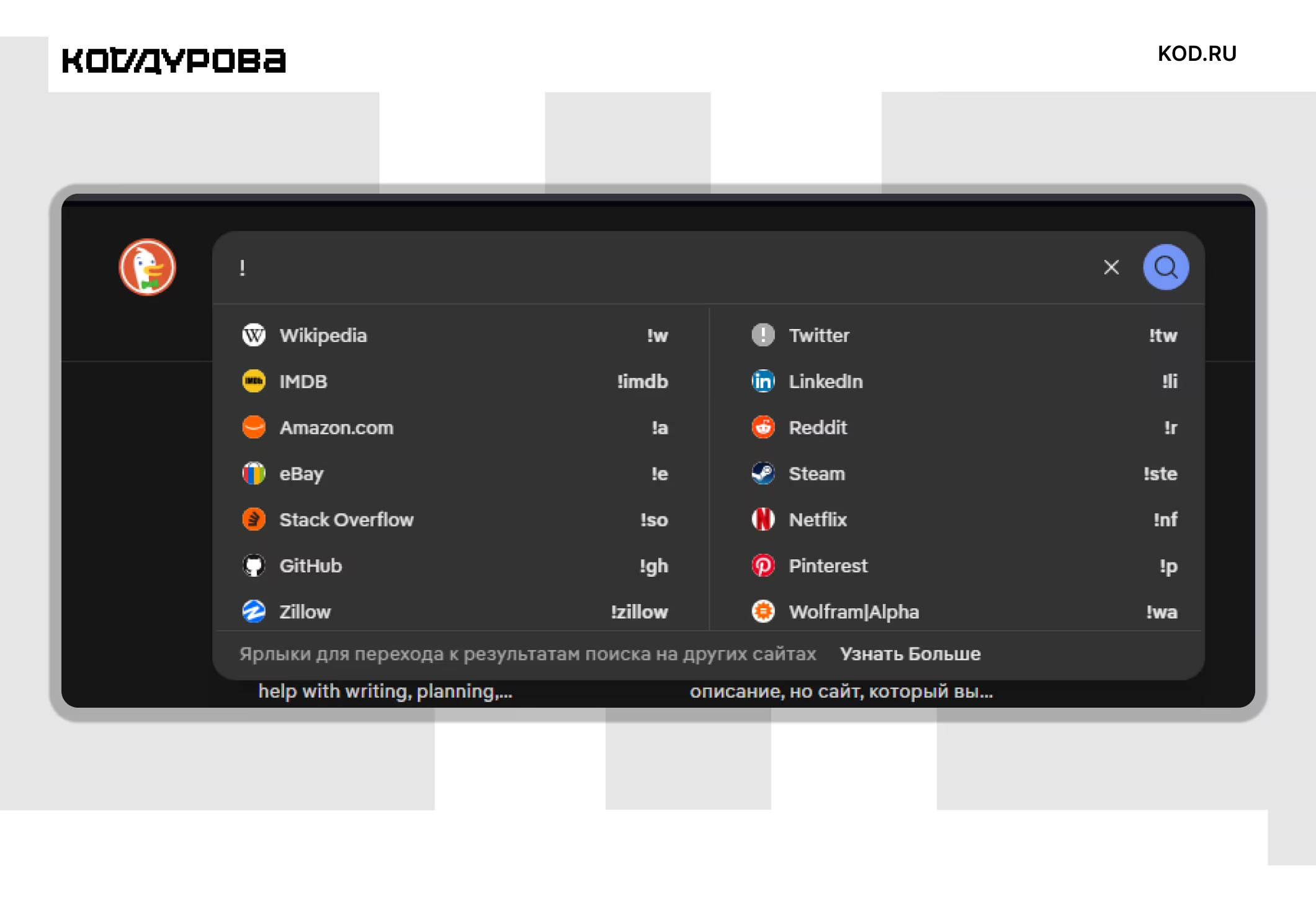
- !w query – search Wikipedia
- !yt query – search YouTube
- !g query – send query to Google
- !maps query – search maps
If DuckDuckGo’s results don’t quite cut it, !bangs let you instantly send your search to a better source without rewriting the query or opening a new tab manually. But privacy stops once you leave DuckDuckGo-the target site sets its own rules.
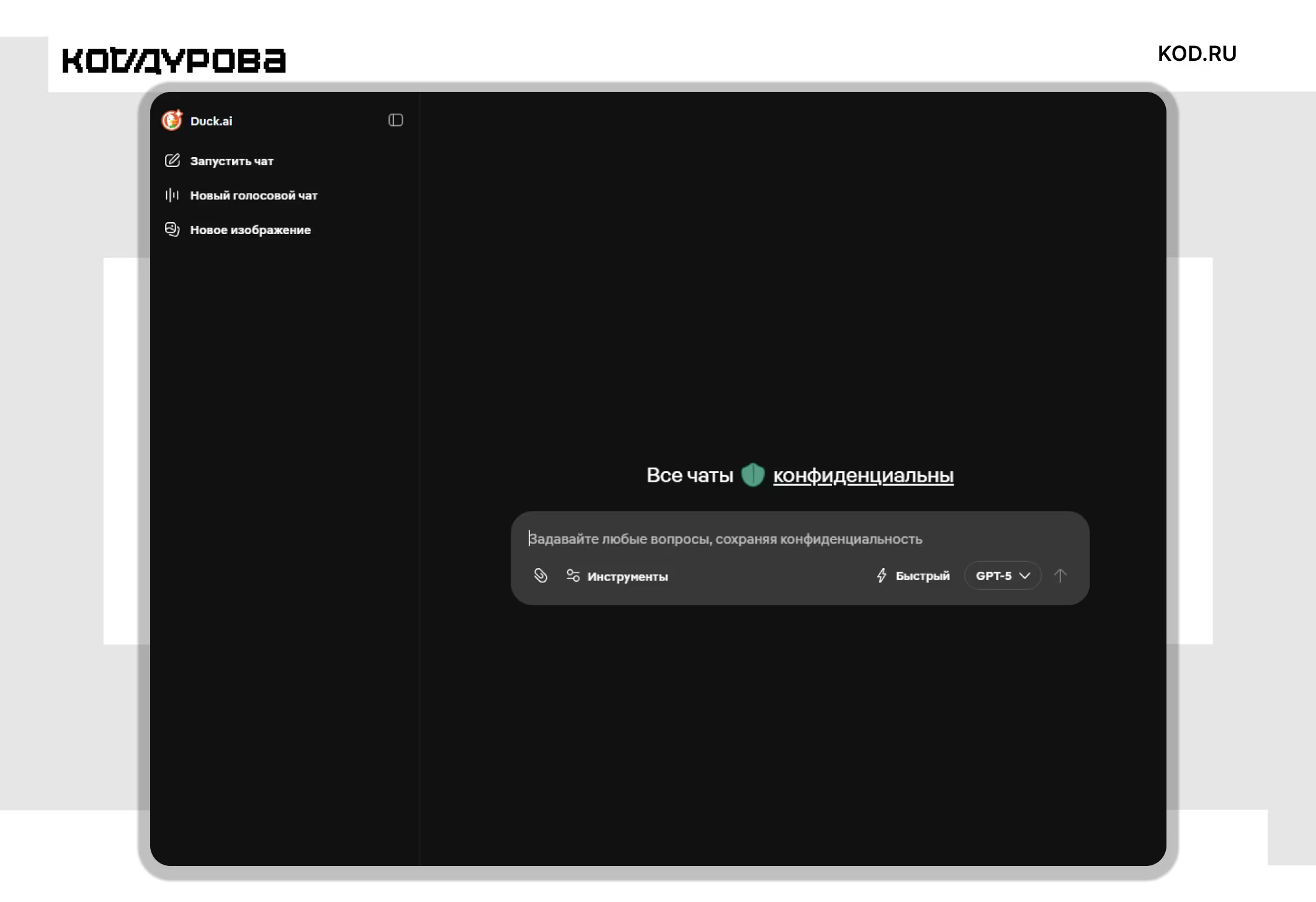
AI support is now standard for major search engines. DuckDuckGo offers two modes: Search Assist, which surfaces brief AI-generated answers in results; and Duck.ai, a standalone chat without mandatory registration. Free access includes AI models from OpenAI, Anthropic, Mistral, and Meta*-the latter banned in Russia as extremist. Stronger AI features are part of a paid subscription.
DuckDuckGo promises to anonymize AI requests, avoid storing chat logs on servers, and save conversation history locally on the user’s device. This makes Duck.ai a convenient way to experiment with current AI models without signing up for accounts. Yet limitations remain: the chat can’t fully browse the web, and its Russian-language handling lags behind specialized AI services.
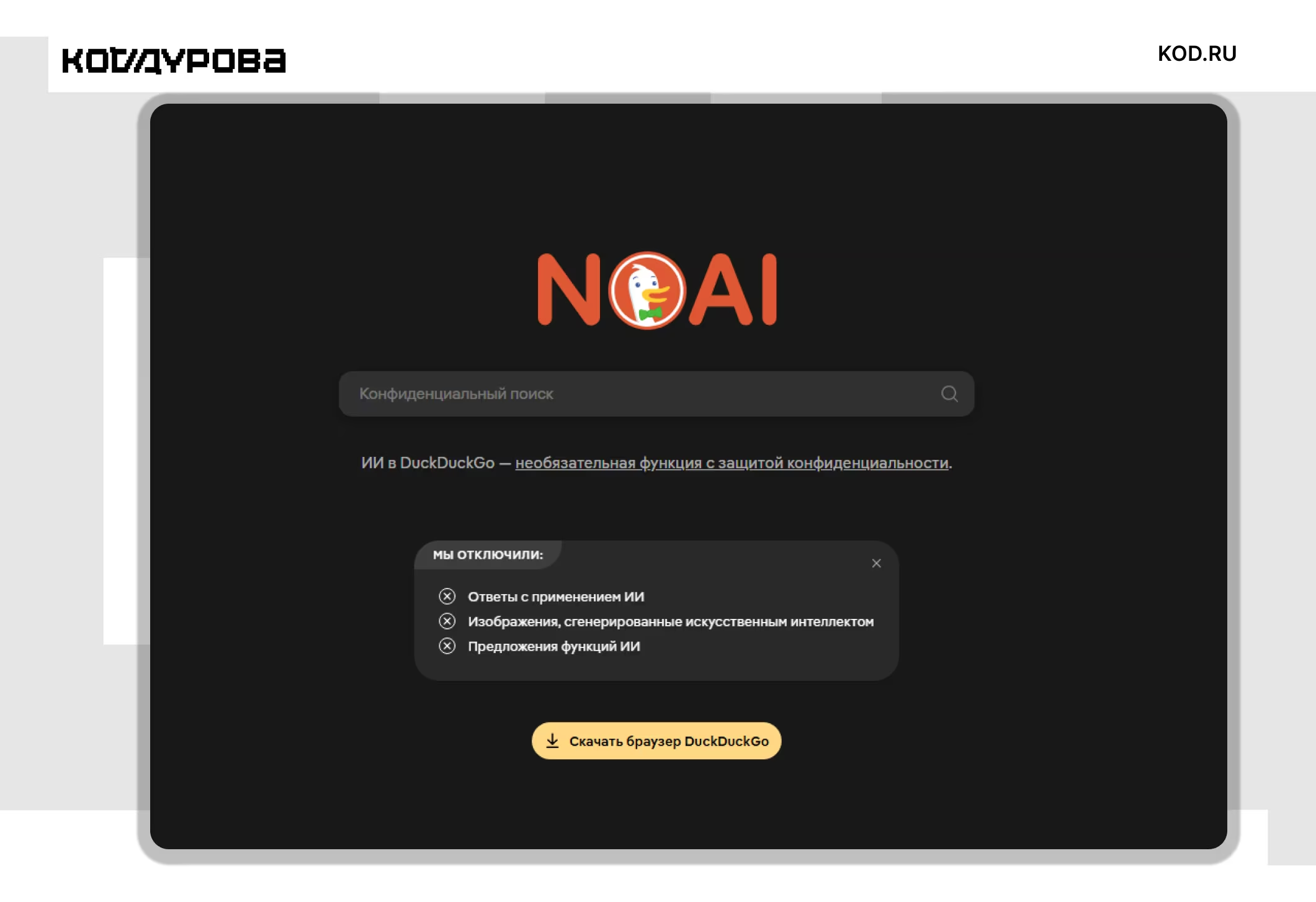
For users who want no AI at all, there’s noai.duckduckgo.com, where AI features are off by default and neural-generated clutter is filtered out upfront. In an era of default-on AI on major platforms, having an easy AI off-switch stands out as a plus.
DuckDuckGo also offers a privacy-focused browser on mobile and desktop, featuring tracker blocking, forced HTTPS, quick tab and cookie clearing (”Fire” button), and @duck.com email aliases to mask your real address. On Android, it adds tracker protection across other apps. It aims to be a ”browser without fuss” more than a hardcore privacy tool like Tor.
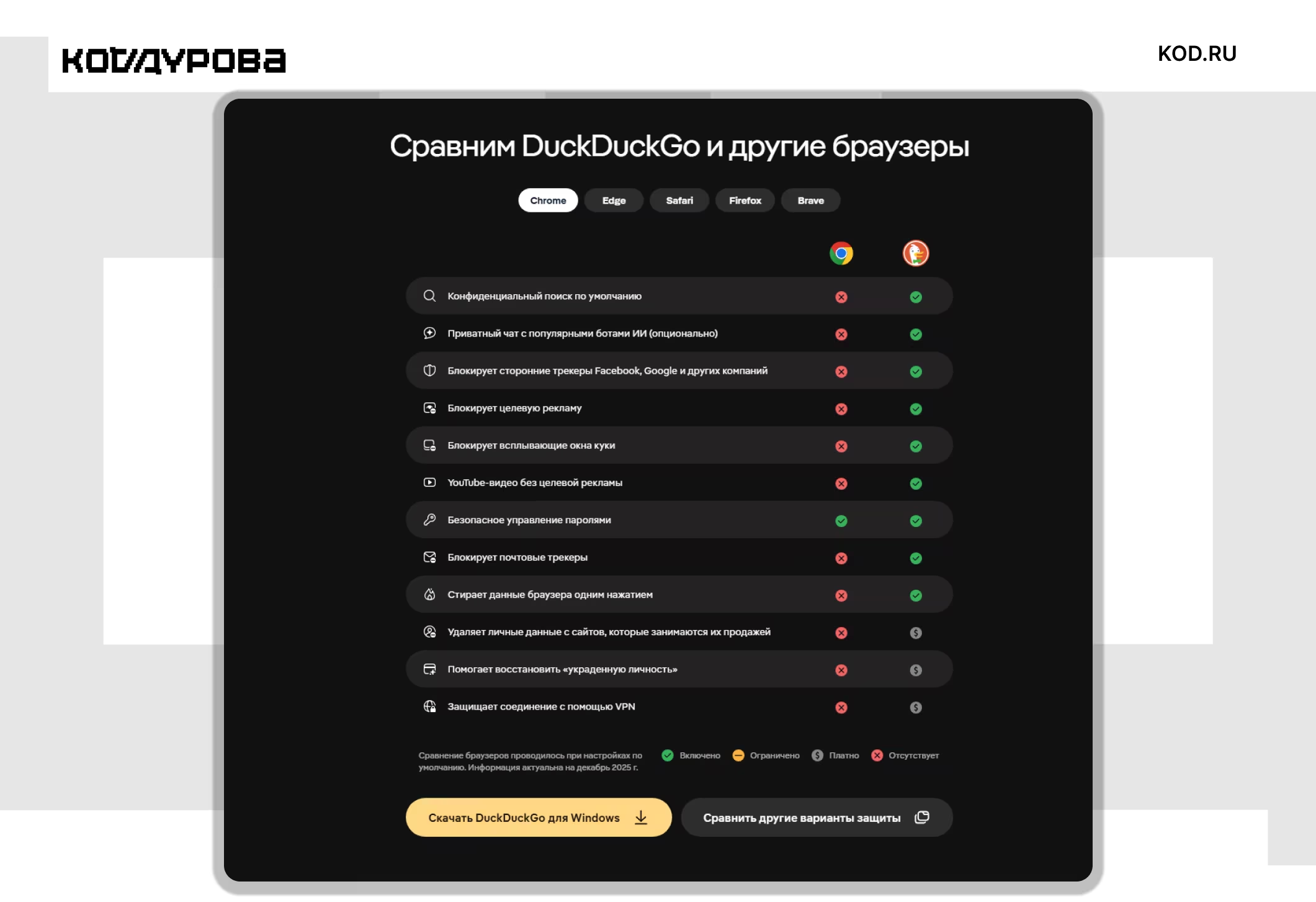
But here’s the catch: your internet provider still sees you’re online, and websites get your IP unless you use a VPN or Tor. Tracker blocking isn’t perfect-known scripts get cut, but new bypass methods appear faster than anyone likes. DuckDuckGo’s dependence on Microsoft also raises eyebrows. Back in 2022, a controversy emerged when some Microsoft trackers weren’t blocked in DDG’s mobile browser due to ad deals. The company has since updated its policy, but the lesson about trust remains.
Globally, DuckDuckGo isn’t a Google killer-its market share hovers below 1%, compared to Google’s 89% and Bing’s 4% as of 2026, according to Statcounter. Competitors like Brave Search tout independent indexes, and subscription service Kagi sells ad-free search. DuckDuckGo occupies a clear middle ground: free, simple, and private enough for everyday use.
DuckDuckGo availability and appeal in Russia
For Russian users, the practical question in 2026 is whether DuckDuckGo works without juggling VPNs or foreign cards. The short answer: yes. The main site and noai.duckduckgo.com are accessible without VPN, the search engine functions normally, and the browser is officially available in app stores.
Mobile support is smooth. DuckDuckGo’s app can be downloaded via RuStore, and the iPhone app is offered in the Russian App Store. It’s rare for a Western privacy service to be this straightforward to access domestically. This alone makes it a convenient second browser for users curious about privacy behavior in daily use.
Duck.ai’s AI chat is open in Russia without registration or VPN. This stands out against many Western AI services requiring payment or foreign accounts. DuckDuckGo provides a near ”backdoor” legal route to current AI models. But don’t expect miracles: its Russian language capabilities trail major AI specialists, and tackling queries that need up-to-date internet data is a weak spot.
Some features remain limited. Paid subscriptions are officially sold only in the US, Canada, UK, and EU. Russian users can’t subscribe with local bank cards, blocking access to built-in VPN, enhanced data removal tools, and premium AI models. So for now, DuckDuckGo in Russia is mainly free search, the browser, and basic private AI chat.
Getting started is frictionless. No install required to try: just visit duckduckgo.com in any browser. On desktop, adding official extensions for Chrome, Firefox, or Edge and setting DDG as the default search engine is recommended. On mobile, download the app to get an integrated browser with tracker blocking, search, and a quick-clean button.
- No install: open duckduckgo.com in any browser
- Desktop: install extensions for Chrome, Firefox, or Edge
- Android: download browser via RuStore, Google Play, or AppGallery
- iPhone: install app from App Store
DuckDuckGo shines where personalization hurts more than helps-searching sensitive health, finance, or personal topics users don’t want turned into ad profiles. It’s also handy for juggling multiple projects and wanting a neutral feed without the sense that ”they know what you like.” Plus, it serves as a welcome alternative for those tired of mandatory AI summaries cluttering search results.
For highly local searches-places nearby, city services, breaking news-Google and Yandex still hold an edge. They boast larger, fresher indexes, stronger local infrastructure, and tighter integration with their own services. A practical 2026 setup is to use DuckDuckGo for everyday queries, then jump to Google or Yandex via !g or !ya for more specialized needs.
The post-Google I/O bump doesn’t signal a mass fleeing of big search engines but a habit shift: users increasingly want not the ”smartest” search but one that invades their lives less. If this trend continues, DuckDuckGo probably won’t snag double-digit market share from Google but can cement itself as the go-to second search engine and browser for those craving less noise, less profiling, and more control.
*Meta is listed as an extremist organization in Russia and banned there.