

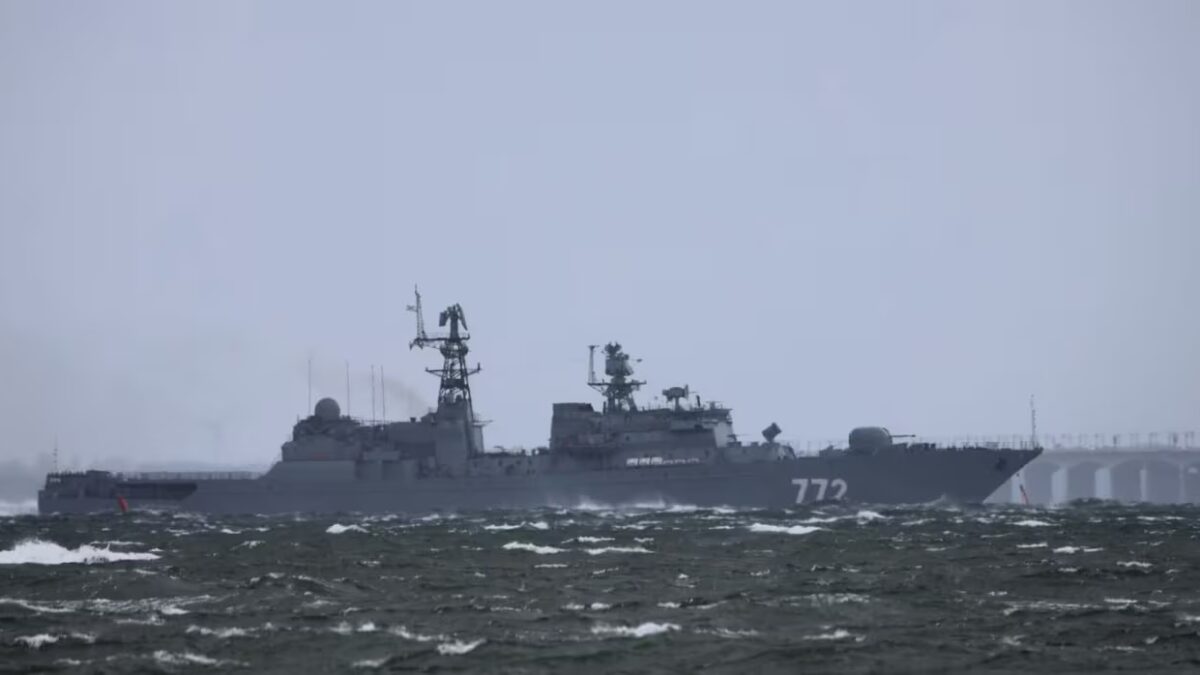
The Russian Baltic Fleet has upgraded the frigate Neustrashimy with the Peroed-M electronic warfare system to defend against small drones, specifically FPV (first-person view) drones and reconnaissance quadcopters. This upgrade highlights a shift in naval defense tactics as inexpensive unmanned aerial vehicles (UAVs) increasingly challenge traditional shipboard protection methods focused on aerial or missile threats.
Peroed-M combines two critical functions: it first detects hostile drones, then jams their control and data transmission links. This capability is especially important for compact drones that fly low and evade early detection. Since FPV drones depend heavily on stable video and control signals for targeting, disrupting these connections renders them ineffective.
Neustrashimy’s defense capabilities have improved significantly with this addition. The Project 11540 Yastreb-class frigate was originally designed during an era when primary threats included aircraft, helicopters, and anti-ship missiles. Today, swarms of small drones add a new and challenging dimension to maritime threats. Although these UAVs carry lighter payloads than traditional weapons, their large numbers, cost-effectiveness, and stealthy profiles complicate early detection and interception.
Western analysts estimate that a combat-modified FPV drone costs only a few hundred dollars, making it economically impractical to counter them using expensive traditional anti-aircraft systems. This cheap but numerous threat has forced navies around the world to rethink layered defense strategies.
Neustrashimy remains one of the Baltic Fleet’s most prominent vessels. As the lead ship of its class, it displaces over 4,000 tons, measures about 130 meters in length, and can reach speeds up to 30 knots. After a lengthy repair and modernization period, the frigate rejoined the fleet in 2022. Adding the Peroed-M system continues the process of upgrading the ship to meet modern threats rather than being a one-off retrofit.
This trend is not unique to Russia. Navies worldwide have accelerated the acquisition of counter-UAV (C-UAS) systems over the past two years to protect bases, ships, and support vessels. The anti-drone market is booming, valued in the billions of dollars and growing rapidly. In this environment, naval electronic warfare suites like Peroed-M have evolved from experimental add-ons into essential defense layers for ships expected to operate in fast-changing threat environments.
Looking ahead, the proliferation of affordable drones in naval conflicts will likely drive further innovation in compact, automated electronic warfare systems. Navies will require solutions capable of quickly identifying and neutralizing drone swarms without overstretching existing air defense resources. The Peroed-M installation on Neustrashimy represents a clear step in adapting large surface combatants to this new era of maritime threats.
Capabilities of the Peroed-M electronic warfare system
- Detects and locates hostile FPV drones and reconnaissance quadcopters
- Jams control and data transmission links to disable drones
- Effective against low-flying, small, and stealthy UAVs
Neustrashimy frigate specifications and upgrades
- Class: Project 11540 Yastreb-class frigate
- Displacement: over 4,000 tons
- Length: approximately 130 meters
- Maximum speed: up to 30 knots
- Modernization completed with Peroed-M system installation in 2022
Global trends in naval counter-UAV systems
Navies worldwide are incorporating electronic warfare systems like Peroed-M to counter the growing threat of cheap and numerous FPV drones. This shift reflects the need for efficient, layered defense mechanisms that address new aerial threats without burdening existing air defense assets.