

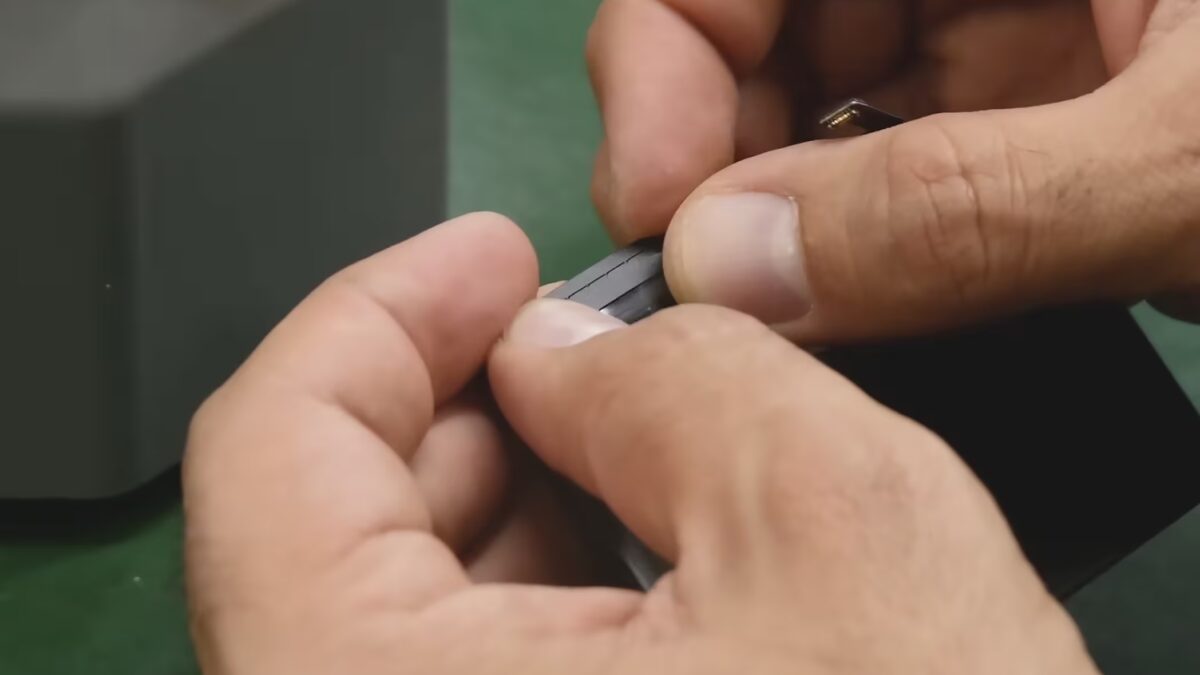
At a major factory in Weiyao, China, iFixit filmed the step-by-step assembly of an iPhone battery, capturing how a lithium-polymer cell transforms into a finished smartphone component. The factory churns out around 13 million battery cells every month, highlighting the scale behind a part consumers often take for granted. The video reveals why replacing an iPhone battery isn’t the simple 10-minute job it looks like from the outside.
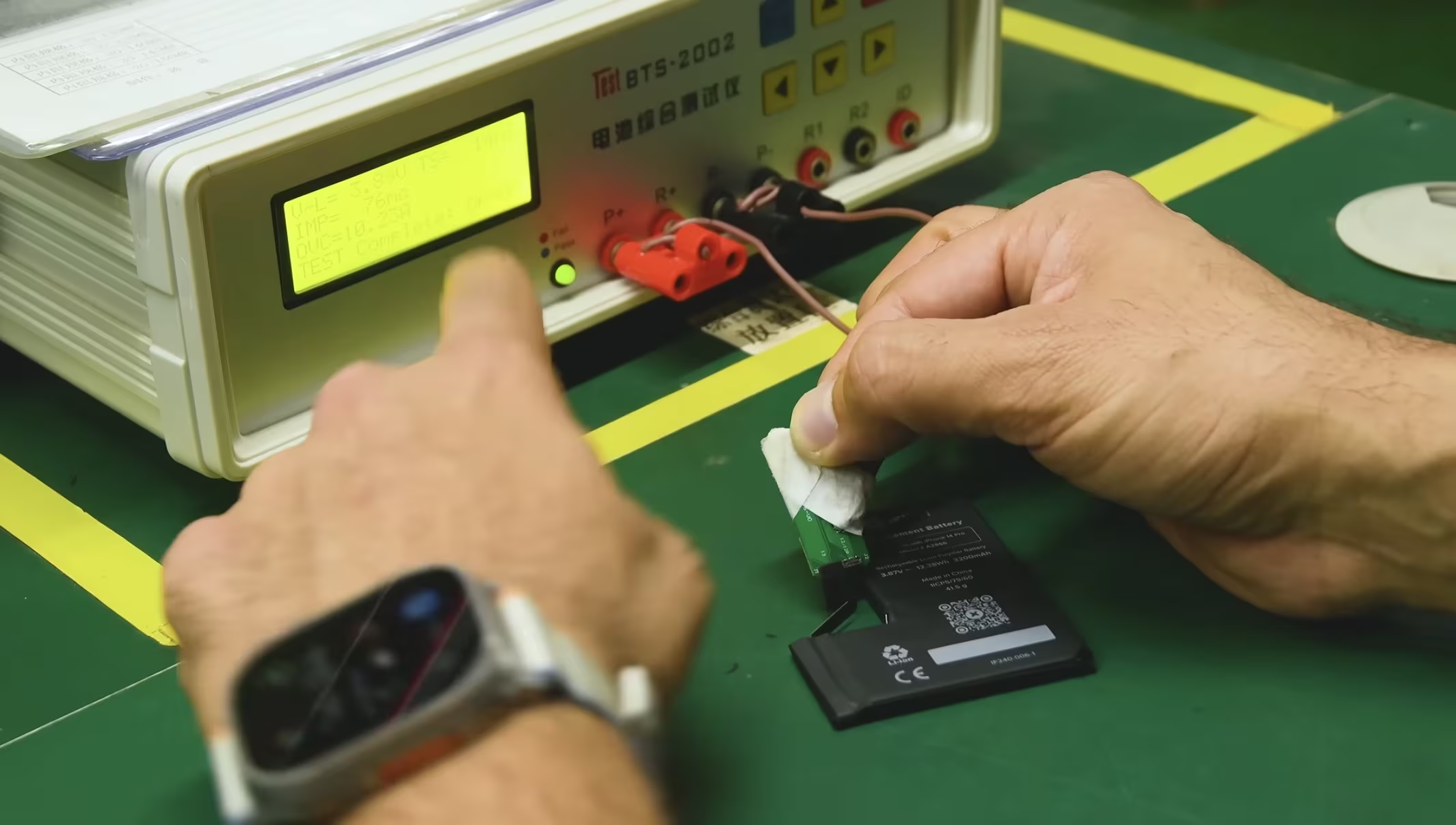
The lithium-polymer battery cell starts as a raw block of materials. Afterward, a Battery Management System (BMS) board is integrated. This circuit manages charging and discharging, preventing overcharge or deep discharge scenarios that degrade the battery’s lifespan or cause it to overheat.
Each BMS board is individually programmed using specialized equipment before being attached to its cell along with a flex cable. The assembly is folded into a compact battery pack, and the electrical contacts are taped over. A final bend is locked down with a sticker to keep everything secure inside the iPhone’s tight chassis.
Automated testing then measures parameters such as internal resistance, capacity, and current overload protection. Engineers download data from the BMS-state of charge, temperature, design capacity, and overall battery health. Only after passing these checks are Apple’s signature adhesive strips applied for mounting inside the iPhone. The fully assembled battery is then tested again once installed.
iFixit is well known for detailed teardowns and repair guides for Apple devices, shining a light on how repairability is slowly improving in new iPhone models. This video arrives amid growing regulatory pressure, especially from the European Union, which has introduced stringent battery and electronics serviceability standards. Additionally, with smartphone ownership cycles stretching past three years in many markets-according to Counterpoint Research-battery longevity has become a critical factor in device lifespan.
Videos exposing the entire production of iPhone batteries are rare, but this one effectively conveys the massive scale involved. At a production rate of 13 million cells per month, even minor defects can translate into thousands of faulty batteries. Behind the seemingly simple ”battery” lies a complex blend of chemistry, electronics, firmware, and multiple quality control steps.
Compared to Apple’s rivals like Samsung and Google, which also emphasize battery efficiency and longevity, Apple’s approach integrates tightly controlled hardware and software management to optimize performance and safety. This meticulous assembly and testing process underscores why genuine Apple battery replacements are more costly and complicated than off-the-shelf alternatives.
Going forward, watch how Apple adapts its battery design and repair processes in response to stricter environmental regulations and longer smartphone ownership trends. The company’s balance between product slimness, battery lifespan, and repairability will continue to shape both user experience and secondary markets for replacement batteries.