

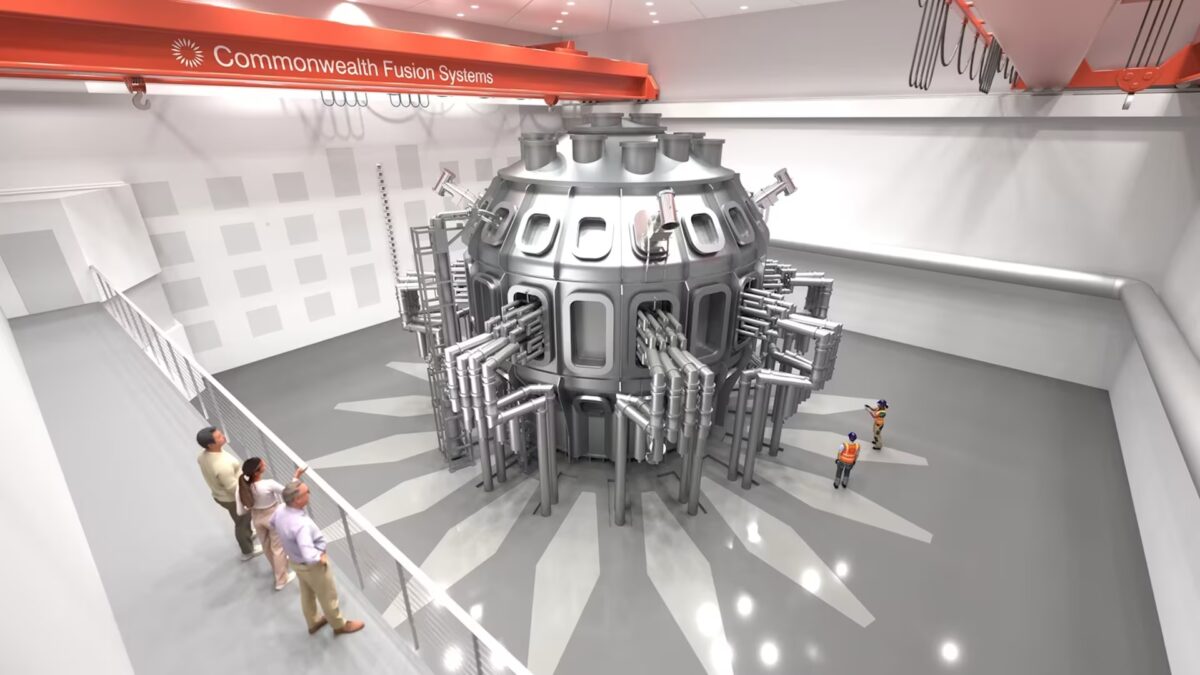
Commonwealth Fusion Systems (CFS), one of the wealthiest startups in fusion energy, has joined the UK’s Atomic Energy Authority (UKAEA) initiative to test tritium production technology. CFS is set to become the first international partner in the LIBRTI project at Culham, where researchers will evaluate reactor components designed to generate tritium from lithium during operation. Tritium production remains a major practical hurdle for fusion reactors-without a self-sustaining supply of this fuel, even the most promising designs risk running out of fuel.
The focus is on ”blankets,” the reactor parts encasing the fusion zone that convert lithium into tritium under neutron bombardment. In theory, the process is straightforward: the reactor burns a deuterium-tritium mix and replenishes its tritium supply inside the blanket. But in reality, engineering a reliable tritium-producing blanket is one of the toughest challenges for commercial fusion.
Under the agreement with UKAEA, CFS will collaborate on test protocols, produce experimental blanket samples, and validate them at the LIBRTI facility under neutron flux conditions that closely mimic a working fusion device. UKAEA has recently acquired a powerful neutron source for these tests. Such experiments are critical-not just to create attractive fusion power plant renderings-but to answer a fundamental question: can a reactor generate enough tritium to sustain its own fuel cycle?
Founded in 2018 by MIT alumni, CFS has raised over $3 billion across multiple funding rounds, making it the largest private player in fusion alongside competitors such as Helion Energy, TAE Technologies, Tokamak Energy, and General Fusion. To put this in perspective, private investment in fusion enterprises worldwide surpassed $7 billion by the mid-2020s, with a significant portion aimed at transitioning fusion technologies from laboratories to commercial power generation.
Meanwhile, CFS is building its demonstration reactor SPARC and aims to launch its first commercial fusion power plant, ARC, in Virginia in the early 2030s. But tritium supply is a bottleneck: current global tritium stocks are mostly byproducts of heavy-water nuclear reactors and measured in mere tens of kilograms per year-not tons. That’s why testing and proving tritium-producing blankets isn’t just a routine step; it’s a crossroads for the industry. Failing to close the fuel cycle could make scaling fusion plants even more challenging than building tokamak reactors themselves.