

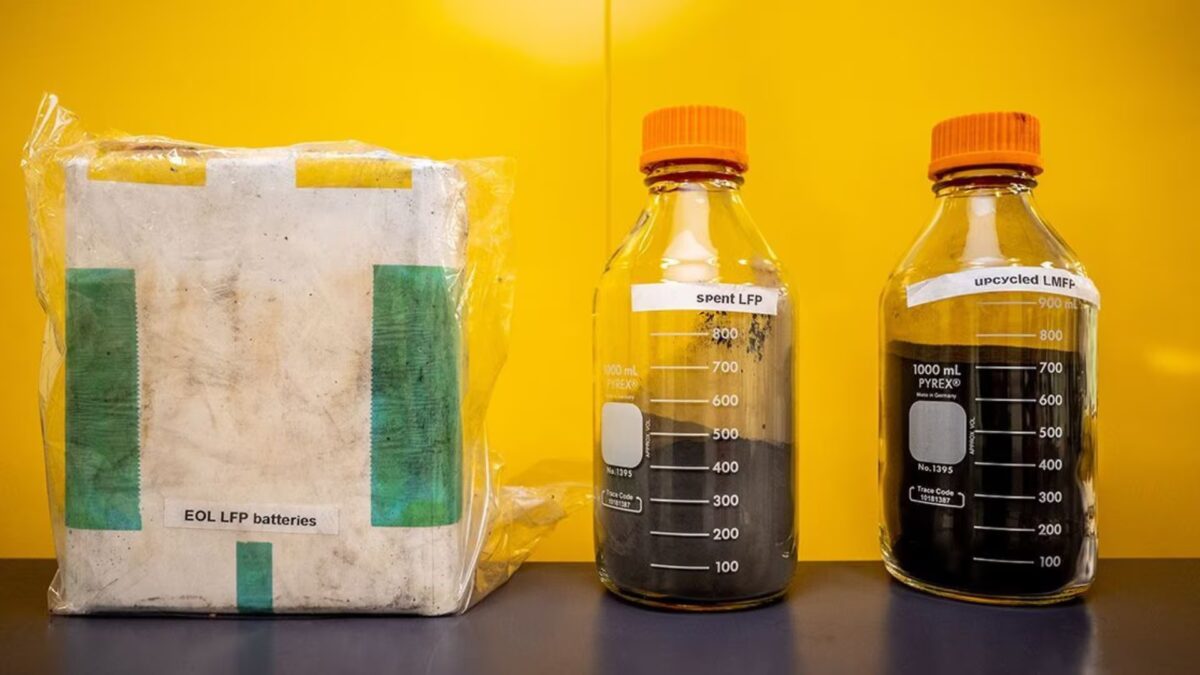
Researchers at the University of California, San Diego have developed a recycling method that doesn’t just restore old lithium iron phosphate (LFP) batteries but upgrades them into lithium manganese iron phosphate (LMFP) cells. LMFP cathodes store more energy while retaining LFP’s trusted traits: safety, long lifespan, and relatively low cost.
Traditional battery recycling usually involves breaking down cells into raw materials, then remaking cathodes from scratch. The UC San Diego team takes a different route: they chemically modify the existing LFP cathode by adding lithium, manganese, and phosphate elements, transforming it into LMFP without full dismantling.
The biggest challenge was evenly incorporating manganese into the cathode’s crystal structure. The researchers first synthesize an intermediate lithium manganese phosphate (LMP) compound, then convert it into a uniform LMFP cathode. To boost conductivity and durability, particles are coated with a thin carbon layer, helping the battery endure many charge-discharge cycles.
This recycling approach avoids energy-intensive melting and harsh hydrometallurgical processes, significantly cutting energy use and waste output. That’s especially important for LFP batteries, which rely on cheaper, more abundant materials than nickel-cobalt alternatives. Because LFP recycling often struggles economically, finding a cost-effective reuse method for the millions of LFP cathodes powering Tesla, BYD, and other affordable electric vehicle models has been a longstanding industry goal.
LMFP battery chemistry boosts energy density and safety
Interest in LMFP chemistry itself has surged recently among battery makers like CATL and Gotion, who see it as a middle ground between LFP and pricier nickel-rich cathodes. LMFP can boost energy density by 10-20% over LFP without needing cobalt or nickel. Should UC San Diego’s process scale beyond the lab, it could give manufacturers an unusual edge: turning end-of-life batteries into next-generation cells for mass-market electric vehicles.
Testing shows higher energy density in recycled LMFP cathodes
The team tested the chemical conversion on LFP batteries from various brands, confirming higher energy density in the resulting LMFP cathodes. These upgraded materials performed well not only in small lab cells but also in larger formats closer to real electric vehicle battery sizes. The next hurdles are scaling production and controlling costs – factors that will decide if this method ever reaches commercial factories.
Potential impact of LMFP recycling on electric vehicle sustainability
With electric vehicles driving accelerating demand for battery materials, innovations like this one provide fresh options for improving sustainability and performance without relying on expensive, scarce metals. Watch for how this chemical upgrade path competes with other recycling and battery technology advances as automakers seek greener, more affordable powertrains worldwide.