

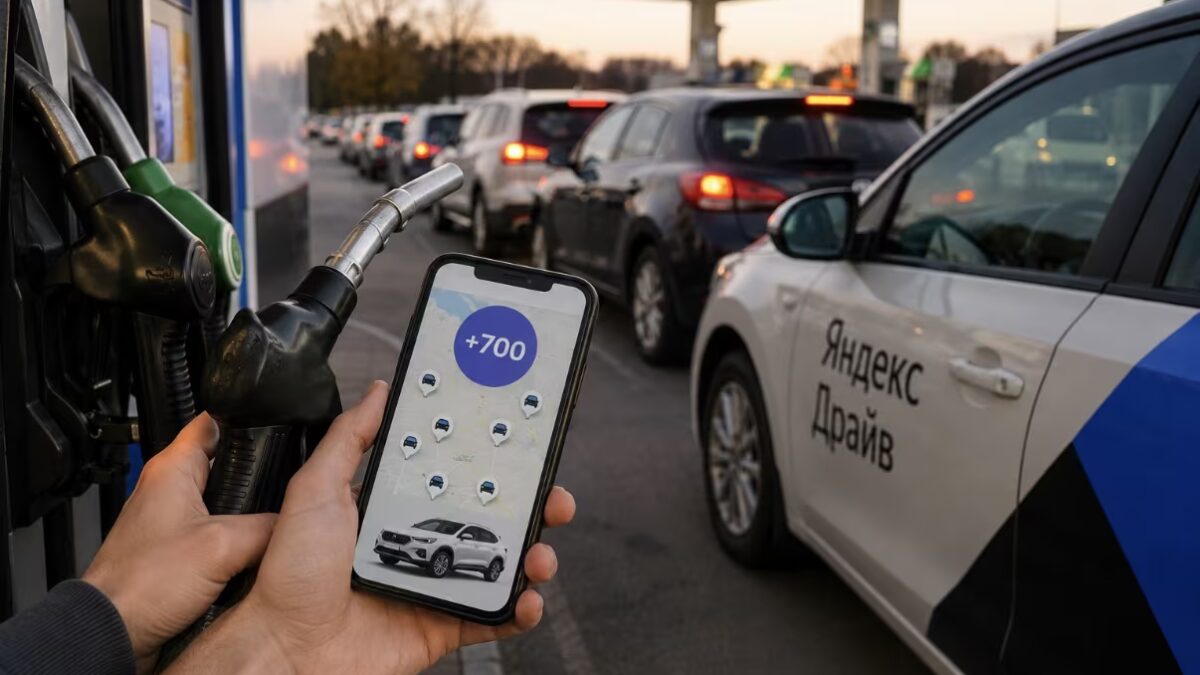
Russian carsharing services are increasingly rewarding users for refueling rented vehicles. The reason is straightforward: more drivers pick up cars with full tanks and dislike stopping for gas before their next trip. Operators are tackling this issue by offering bonus points instead of relying solely on internal logistics.
Yandex Drive offers 700 points when a user fills at least 20 liters in a rented car. This promotion runs in six Russian cities. The logic is simple: customers don’t pay for fuel out of pocket when using the service’s fuel card, but they still spend time stopping, finding a pump, and waiting in line. The bonus compensates for that lost time.
BelkaCar reports a shift in demand patterns. Over the past two weeks in Moscow, trip numbers have stayed flat, but interest in weekend getaways outside the city has risen. Users increasingly take cars for short trips under bundled plans. In these cases, fuel level matters much more than for a quick 20-30 minute city ride-because an almost empty tank from the start inevitably means an unwanted stop.
For carsharing operators, this is a financial concern. Vehicles returned with low fuel require more resources from repositioning drivers and service teams to ready the fleet. In major markets like Moscow, a car’s turnaround speed directly impacts revenue: a vehicle without gas may appear available in the app but is effectively off the road. So, paying a few hundred bonus points is often cheaper than losing a subsequent rental.
Still, carsharing remains an expensive option for long trips. Market estimates put the cost of renting a gasoline car for three days on a route over 1,000 km one-way at around 40,000 rubles (~$480), plus roughly 50,000 rubles (~$600) held as a deposit. Against this backdrop, carsharing competes less with taxis and more with traditional car rentals, which might be less convenient but often cheaper for extended use.
Russian carsharing faces unique challenges unseen in Western markets, where full-to-full fuel policies dominate and more developed refueling infrastructure reduces downtime. As Russian operators experiment with bonus incentives to optimize fleet readiness, it’s clear that user convenience and operational efficiency must align more closely. Watching how these rewards evolve-and whether they effectively curb low-fuel returns-will reveal if this approach sets a new standard for managing shared vehicles.