

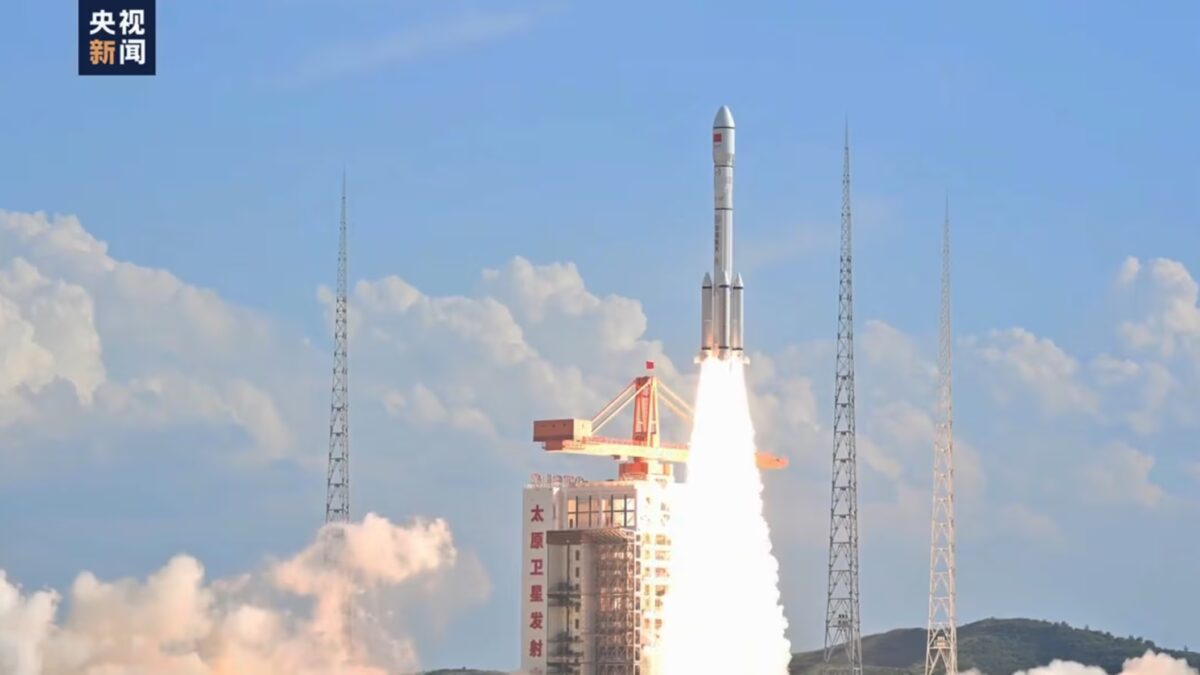
China is rapidly expanding its satellite internet constellation. On July 4, a Long March 6A rocket took off from the Taiyuan launch center, deploying 13 new Qianfan satellites into orbit. Developed as Beijing’s answer to SpaceX’s Starlink, the Qianfan project now has over 190 satellites in space. This launch marked the 655th flight for the Long March rocket family.
According to Chinese state media, all 13 satellites successfully reached their planned orbits. Just a month prior, on June 5, China added another batch of 12 Qianfan satellites. These rapid-fire launches highlight Beijing’s ambition to aggressively scale its low Earth orbit (LEO) internet system.
Qianfan satellite constellation and future plans
The Qianfan constellation is managed by Shanghai Yuanxin Satellite Technology and follows a phased rollout: first deploying 648 satellites to provide regional coverage, then expanding to 1,296 satellites, with long-term plans exceeding 15,000 spacecraft. This mirrors global trends in LEO broadband networks, aiming to deliver wide coverage with low latency and support emerging communication standards such as 6G.
Capabilities of the Long March 6A rocket for satellite deployment
The Long March 6A is China’s latest medium-lift launch vehicle, featuring a liquid-fueled first stage paired with solid rocket boosters. It can carry payloads up to 6.5 tons into a 500 km sun-synchronous orbit, making it well suited for mass satellite deployment runs like this one.
Qianfan compared to Starlink and other LEO constellations
Compared to its competition, Qianfan is still smaller in scale. SpaceX’s Starlink now operates over 7,000 active satellites, while Amazon’s Project Kuiper started its full deployment in 2025. However, China is building multiple LEO communications systems simultaneously, with Qianfan among the fastest growing.
Outlook for China’s LEO satellite internet growth
If these launch rates continue, China could complete the first phase of 648 Qianfan satellites relatively quickly. However, the real test against Starlink won’t be launch numbers alone-it will be about commercial performance and coverage reach. These aspects should become clearer with upcoming missions planned for the latter half of 2026.