

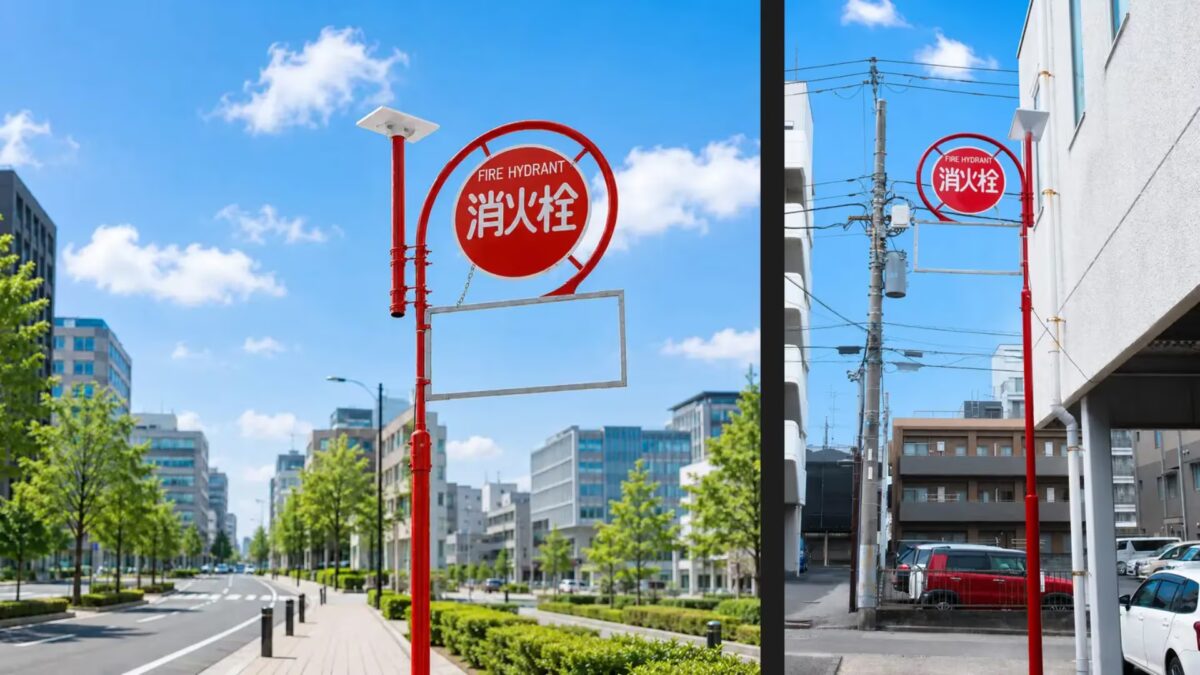
In a practical twist on disaster preparedness, Japan’s Fire Hydrant Sign Co. has transformed street fire hydrant markers into satellite-connected Wi-Fi access points using Starlink. The idea is straightforward: if earthquakes, typhoons, or tsunamis take down fiber-optic cables and cellular networks, cities can restore internet connectivity through existing urban infrastructure without deploying new equipment.
This innovation leverages Starlink satellite internet technology to provide outdoor Wi-Fi hotspots from these fire hydrants. By installing a Starlink antenna near each fire hydrant sign, Wi-Fi can be broadcast in the surrounding area. Japan reportedly has around 120,000 such hydrant markers, meaning a pilot project can use these familiar locations without erecting new poles or disrupting the cityscape.
The demonstration took place near Fire Hydrant Sign Co.’s office in Kanagawa Prefecture, just outside Tokyo. Beyond disaster scenarios, the system could also improve connectivity during large public events or prolonged power outages when conventional networks become overloaded or fail entirely.
Japan’s frequent encounters with significant earthquakes and typhoons make this Starlink-powered emergency Wi-Fi especially relevant. After the 2024 Noto Peninsula earthquake, Starlink terminals were deployed to help restore communication in affected regions. Similarly, in the US, satellite internet has been widely used following hurricanes and wildfires when terrestrial infrastructure was compromised.
Currently, this pilot remains a proof of concept. Fire Hydrant Sign Co. has yet to announce plans for a large-scale rollout, and SpaceX is not officially involved. The success of such initiatives will depend on interest from local governments, telecom providers, and civil defense agencies. Considering Japan’s long-standing commitment to backup communication systems for emergencies, this experiment could evolve into a vital urban resource.