

Hyundai has officially introduced the IONIQ 3, a new electric hatchback designed specifically for the European market. Positioned to compete in the highly contested compact EV segment, the IONIQ 3 aims to balance range, price, and style to appeal to city drivers and corporate fleets alike. The release signals Hyundai’s push to strengthen its foothold amid rivals like Volkswagen’s ID.3 and Renault’s Megane E-Tech.
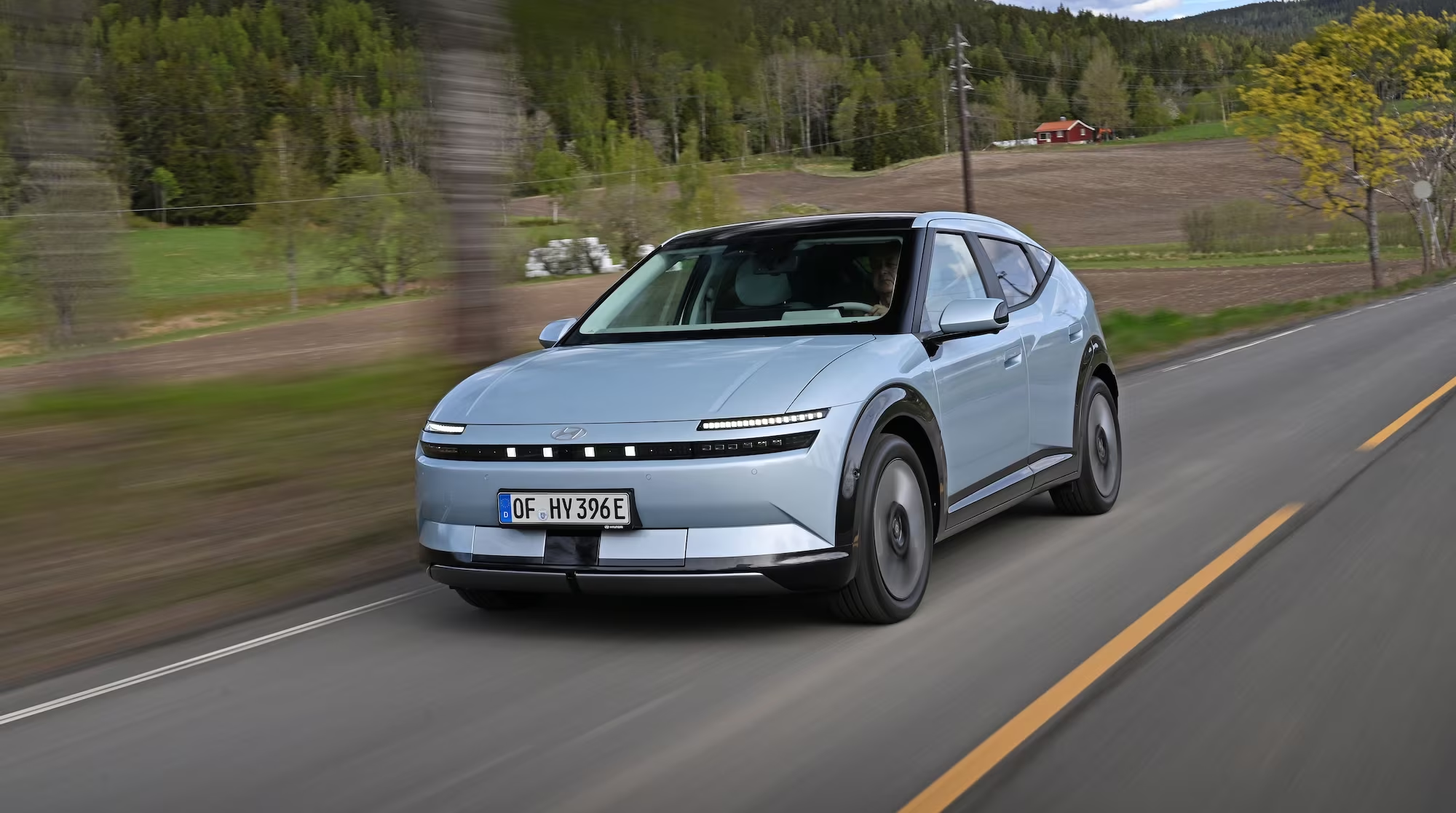
Stylistically, the IONIQ 3 takes on two distinct personalities. The base trims present a smooth, streamlined body with wheel options ranging from 16 to 18 inches and a light, spacious cabin. In contrast, the sportier N Line variant ups the aggression with 19-inch wheels, sharper bodywork, and a driver-focused interior.
Compact electric hatchbacks remain one of Europe’s few car segments still growing without shifting to pricier crossovers. This makes the IONIQ 3’s segment choice strategic. Direct competitors include the Volkswagen ID.3, Renault Megane E-Tech, and Cupra Born. According to the European Automobile Manufacturers Association, battery electric vehicle sales in the EU saw double-digit growth in 2025, with compact EVs holding a strong share boosted by corporate fleets and urban demand.
Hyundai IONIQ 3 electric hatchback specs
At launch, Hyundai offers two front-wheel-drive variants for Europe, each powered by a single electric motor. The base model targets budget-conscious buyers, while the Long Range trim prioritizes maximum driving distance, even dialing down motor power for efficiency.
- Base version: 42.2 kWh battery
- Base power output: 144 horsepower
- Base estimated range: up to 344 km (WLTP)
- Long Range: 61 kWh battery
- Long Range power output: 133 horsepower
- Long Range estimated range: up to 496 km (WLTP)
- Both versions: front-wheel drive
The range figures are based on the European WLTP testing cycle. While they don’t set new records, they position the IONIQ 3 comfortably between affordability and distance. For comparison, the Volkswagen ID.3’s latest variants reach up to about 550 km, and the Renault Megane E-Tech tops out near 470 km. Hyundai appears focused on offering a solid middle ground.
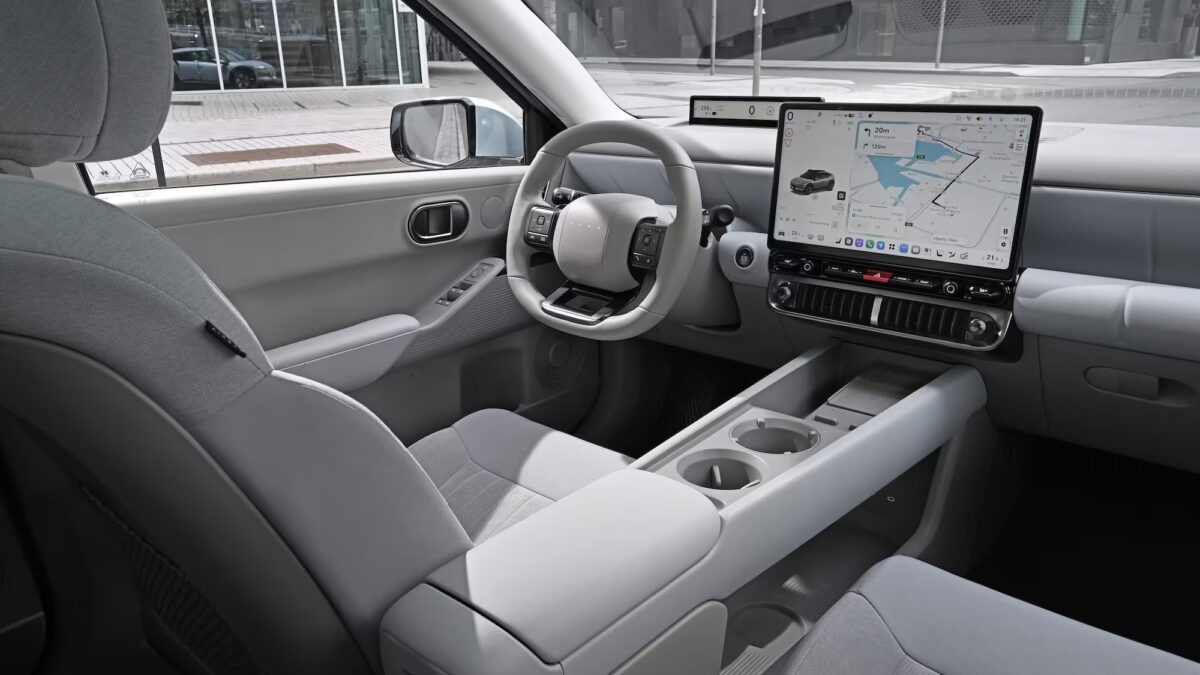
The IONIQ 3 also debuts Hyundai’s new infotainment platform in Europe: PLEOS Connect. Powered by Android Automotive OS, it runs on a central touchscreen available in either 12.9- or 14.6-inch sizes depending on the trim.
The system includes a dedicated app store supporting native services like Spotify and YouTube, plus Hyundai’s Gleo AI voice assistant, built on a large language model. This reflects a growing trend among automakers-including Volvo, Polestar, and Renault-to embed full-fledged operating systems directly in vehicles rather than relying on smartphone integration.
IONIQ 3 pricing and production details
Hyundai hasn’t released exact European pricing or launch dates by country, but production is slated for its Izmit plant in Turkey. This location gives Hyundai a logistical edge, enabling easier supply to major EU markets without long shipping routes from Asia. Local assembly is a growing trend among automakers in 2025 and 2026 to manage costs amid tariff fluctuations and battery supply uncertainties.
The key question remains how ”affordable” the IONIQ 3 will be. If Hyundai can keep the base model under €35,000, it will directly tackle the core of Europe’s compact EV demand. Price slip above that point, however, and the IONIQ 3 will face competition not only from hatchbacks but also from Hyundai and Kia’s own compact electric SUVs.
Overall, the Hyundai IONIQ 3 electric hatchback seems poised to carve out a balanced spot in Europe’s competitive compact EV market by blending practical range, fresh tech, and tailored styling. Watch closely how Hyundai prices it – this will be important for carving out space against well-established rivals dominating the segment.