

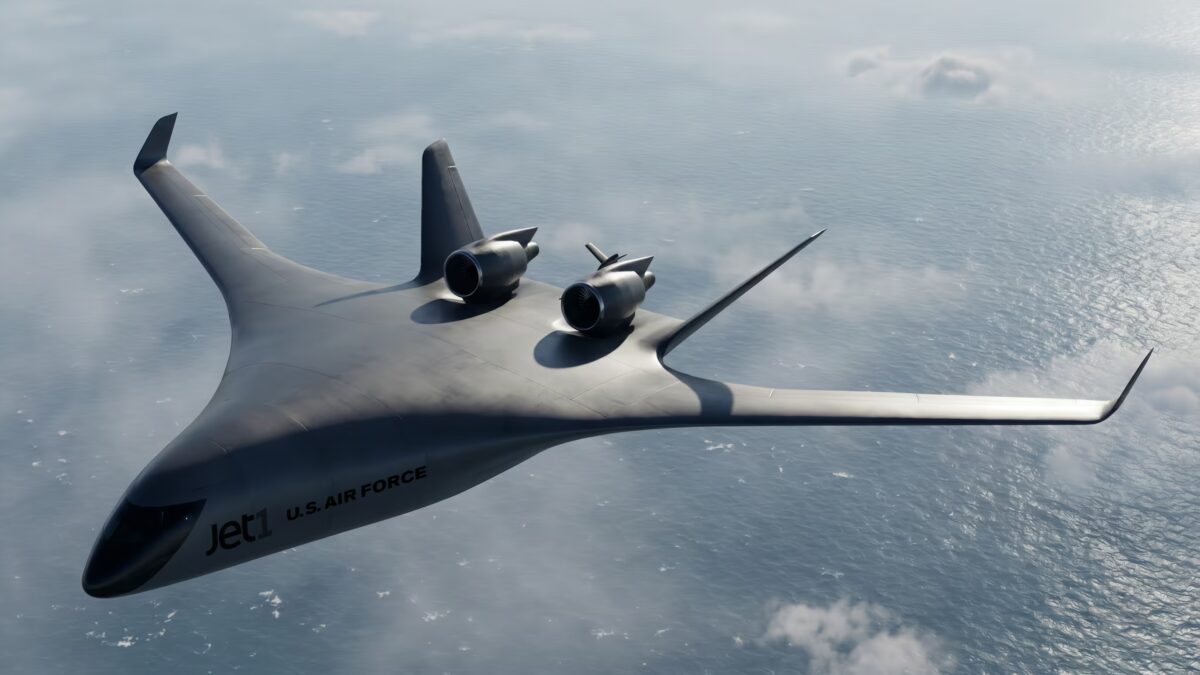
JetZero has begun assembling its full-size flying demonstrator Jet1, designed to test technologies for the upcoming Z4 passenger aircraft. Targeting the 200-250 seat segment once dominated by Boeing’s 757 and smaller 767 models, this marks JetZero’s shift from concept and mockups to actual hardware-and signals a critical regulatory step toward certification.
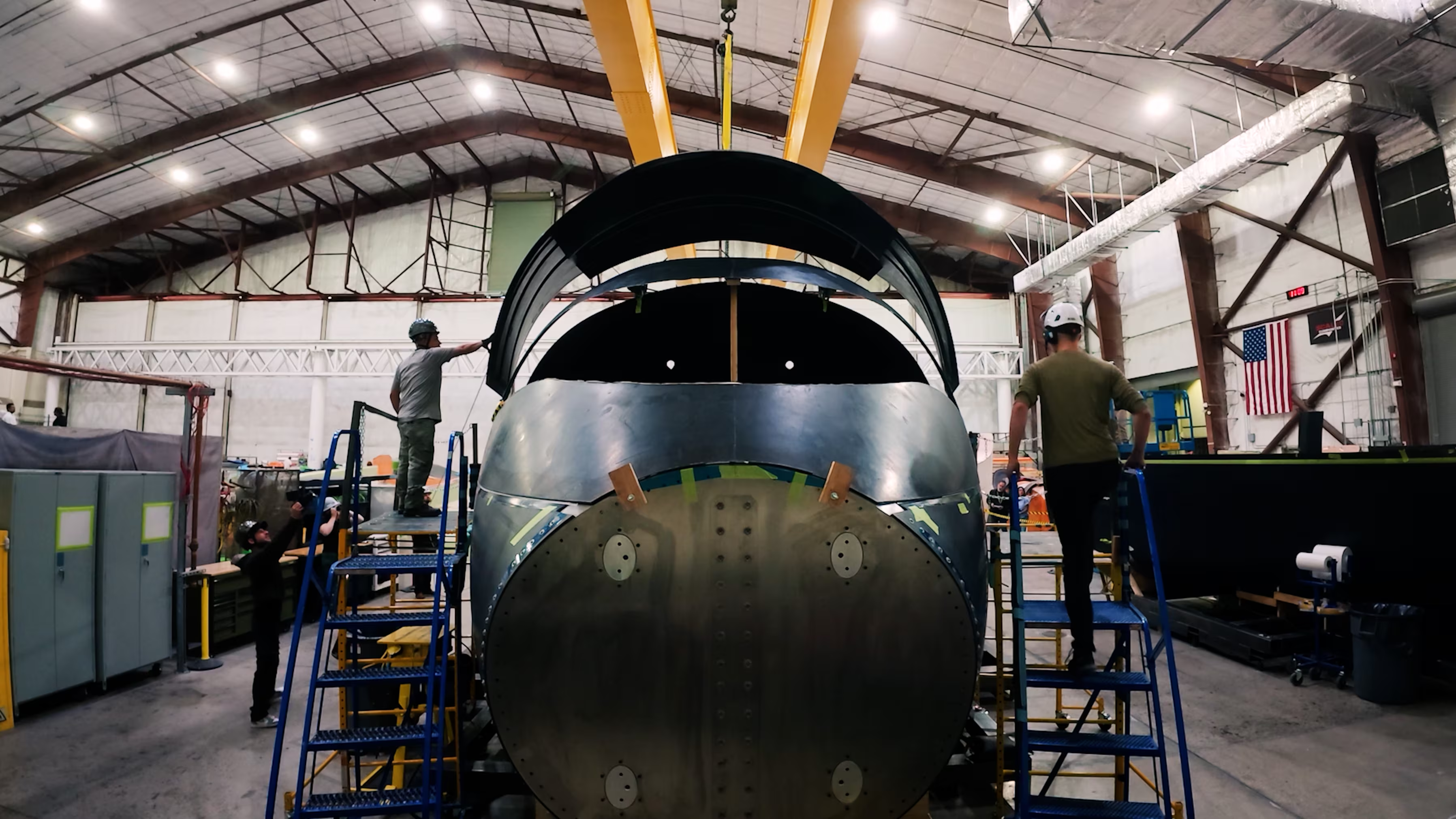
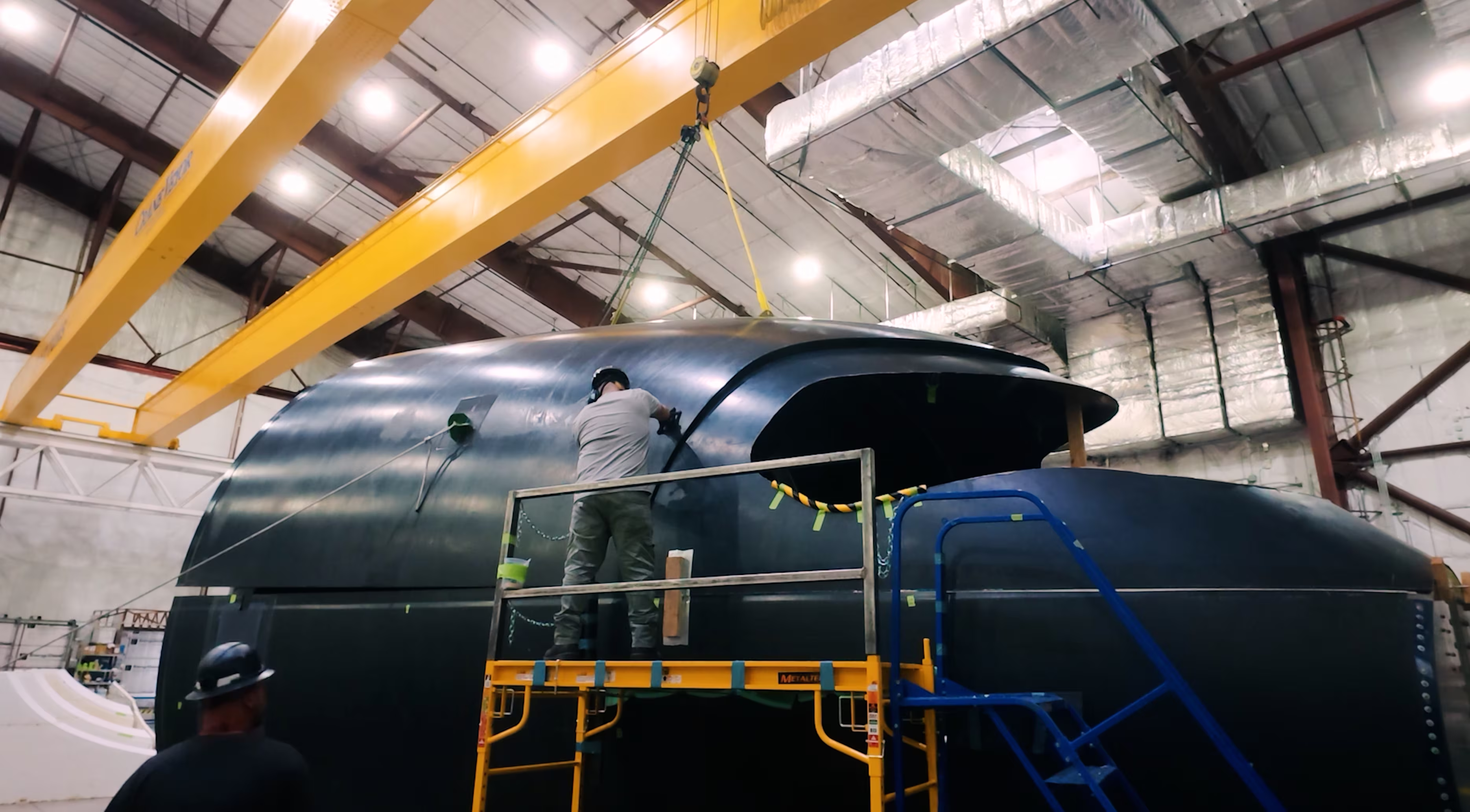
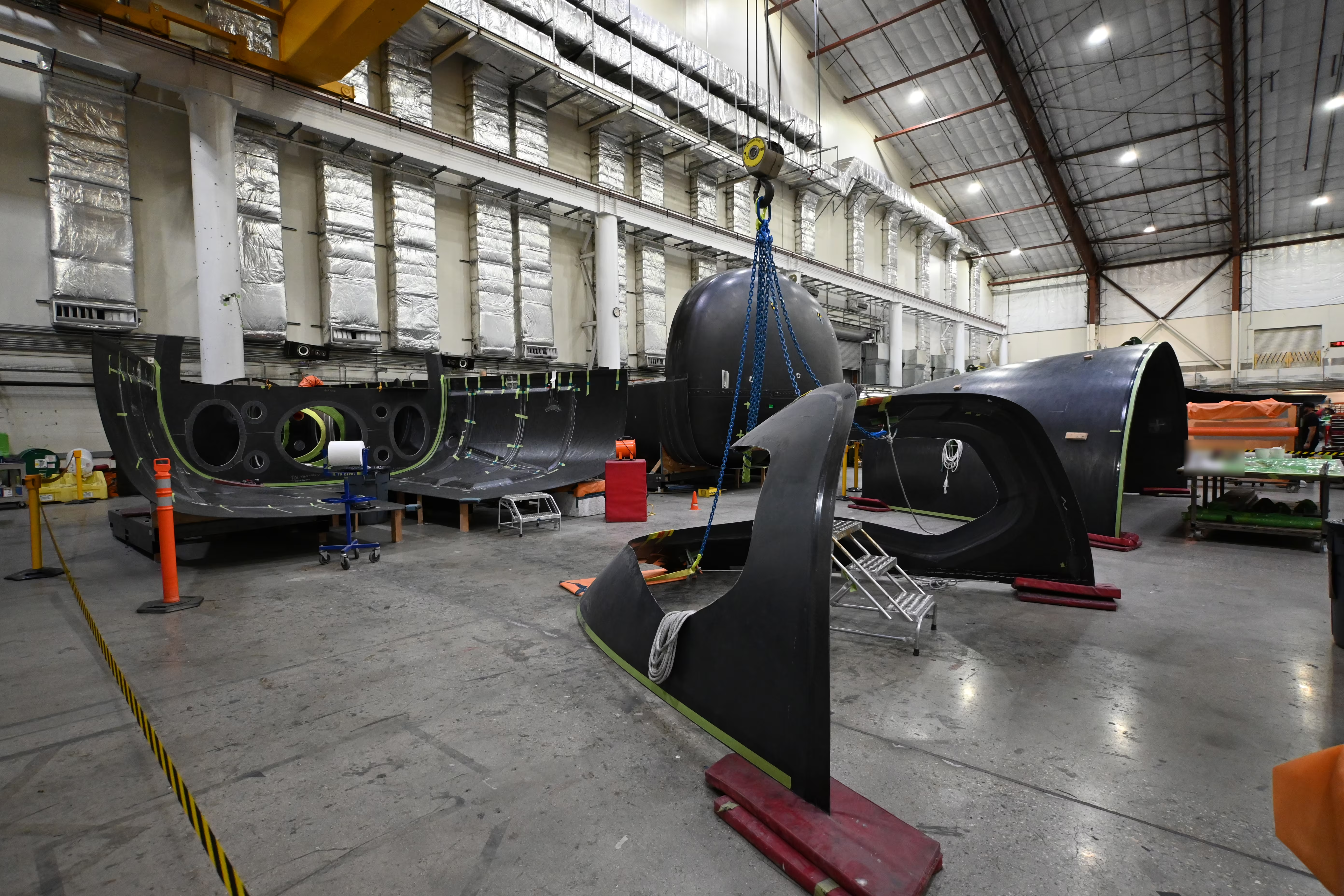
The Jet1 demonstrator is being built at Scaled Composites’ California facility, with the team currently fabricating the central fuselage section, wing, and cockpit. It will be powered by two Pratt & Whitney PW2040 turbofan engines, previously used on Boeing 757 aircraft. JetZero aims for Jet1’s first flight by late 2027.
The Z4’s defining feature is its blended wing body (BWB) design, which fuses the fuselage and wing into a single lifting surface instead of the conventional tube-shaped body. This configuration offers higher aerodynamic efficiency and significantly lower fuel burn. JetZero claims its Z4 design can save fuel substantially compared to traditional narrow-body and mid-body aircraft. In aerospace circles, BWBs have been estimated to reduce fuel consumption per passenger-kilometer by up to 50%, assuming real-world validation of these projections.
On the regulatory front, the FAA recently promoted the Z4 program from an early review to their AIR-500 division, which handles commercial plane certification. While this is not a type certification phase, it signals a move to a more detailed examination of design, systems, and testing requirements. For an unconventional aircraft like the Z4, the FAA must assess not only components but also develop new certification approaches tailored to its radical aerodynamic layout.
JetZero Z4’s blended wing body design and advantages
Blended wing body is hardly a new concept. NASA and Boeing experimented with BWB aircraft for over two decades, flying NASA’s X-48 prototype between 2007 and 2012. Airbus demonstrated its own BWB demonstrator, MAVERIC, in 2020. But none of the major aerospace players have yet turned this design into a production passenger aircraft. The key challenge remains marrying aerodynamic gains with practical concerns such as certification, airport compatibility, and passenger experience.
JetZero is targeting a clear gap left by the absence of Boeing’s New Midsize Airplane-a long-discussed but never-launched project to succeed the 757. The 757 ceased production in 2004, and the average age of these planes in active fleets has exceeded 20 years. Meanwhile, 767s are gradually being retired or shifted to cargo roles. The industry lacks a modern aircraft between single-aisle and widebody categories-precisely the niche JetZero aims to fill with the Z4.
JetZero plans to start serial production by the end of 2030 at a $4.7 billion new factory in North Carolina. Interest already comes from major US carriers including Delta Air Lines, United Airlines, and Alaska Airlines. A consortium of 15 airlines is also advising on design criteria-covering cabin layouts, airport turnaround times, baggage handling, and gate compatibility. This early carrier engagement is important for a startup, providing practical feedback beyond promotional materials.
Key expected pricing and timeline details:
- Serial production start: End of 2030
- Factory investment: $4.7 billion in North Carolina
- Target seating capacity: 200-250 passengers
- First demonstrator flight: Late 2027
Still, the Z4 project faces significant hurdles. The unusual fuselage shape complicates evacuation planning, cabin design, and passenger perception-especially since many seats will be far from windows and near the aircraft center. Manufacturing costs and certification timelines are unknown; conventional aircraft programs often experience multiyear delays and multibillion-dollar overruns. The regulatory process for such a radical design will add to these challenges.
If Jet1 completes its first flight by 2027 and meets performance targets, JetZero could move from experimental status toward signing firm orders. Industry observers expect clearer commercial prospects to emerge in 2028 and 2029, when flight test data and FAA certification pathways become more concrete. With Boeing stepping back from the 757/767 replacement race, JetZero’s Z4 could seize a rare window of opportunity to enter this mid-sized passenger aircraft sector.
As the program advances, the biggest questions remain whether JetZero can deliver on the ambitious promises of blended wing body economics without compromising airline operations and passenger comfort-and whether the FAA certification framework can keep pace with this unconventional aircraft design. The coming years will reveal if JetZero can turn decades of BWB theory into a viable next-generation airliner.