

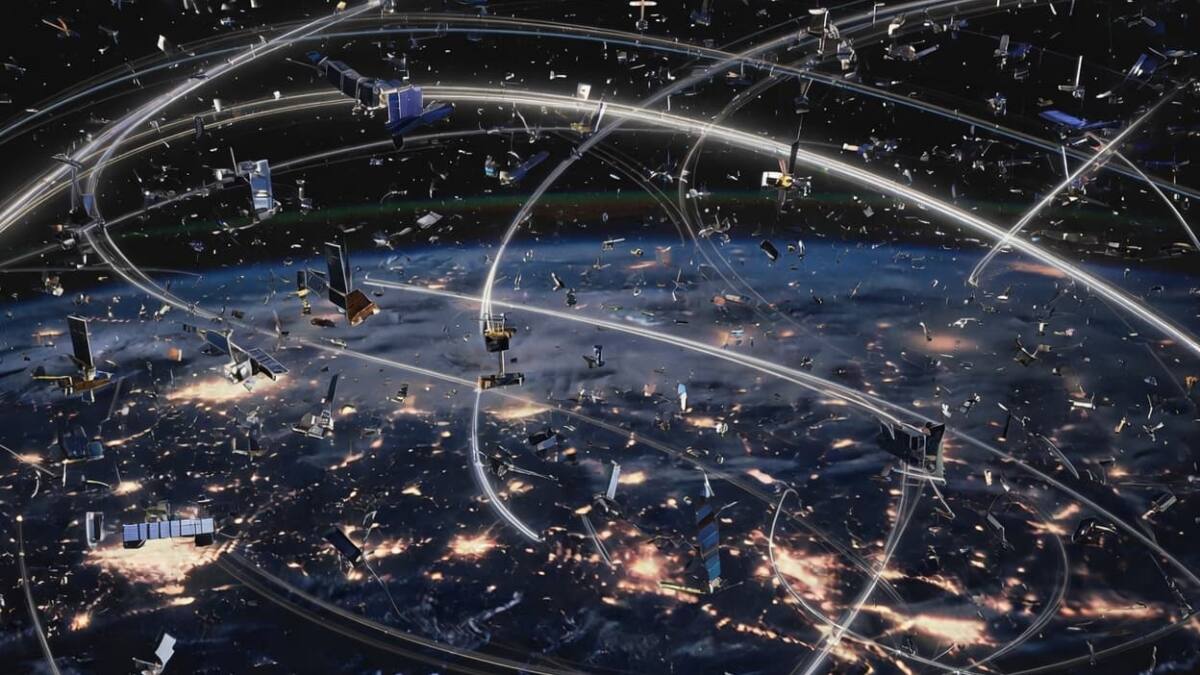
Europe’s astronomers are putting a hard question to the satellite boom: how many spacecraft in low Earth orbit are too many before the night sky becomes a bad joke? A new warning from the European Southern Observatory and the Centre for the Protection of the Dark and Quiet Sky from Satellite Constellation Interference says the answer may be around 100,000, far below the 1.7 million satellites already planned by operators including Starlink, Leo, and GuoWang.
The concern is not just about pretty pictures ruined by streaks. The same networks that promise global connectivity are also brightening the sky, scattering sunlight, and making faint galaxies harder to study from the ground. That is a growing problem for a field that still depends heavily on huge terrestrial observatories, even as the industry keeps acting like orbit is an infinite parking lot.
What ESO’s model says about satellite numbers
Researchers built a computer model that looked at both direct hits on telescope images and the overall rise in sky brightness. Their estimate is blunt: up to 60,000 satellites, they do not expect a noticeable drop in observing quality. Beyond that, the damage grows fast, and by the time the low-orbit population reaches about 100,000, the impact becomes comparable to technical failures in telescopes themselves.
That is a more practical warning than a moral one. Nobody is saying 99,999 is fine and 100,000 is disaster; the point is that astronomy starts losing useful observing time and image quality long before the current launch ambitions are exhausted. If you run a business model on thousands of bright objects in the sky, somebody else gets to pay for the mess.
Why faint objects are getting harder to see
The damage lands hardest on deep-sky work: distant galaxies, clusters, and other dim targets that already push ground-based instruments to their limits. Satellite trails are the visible nuisance, but the broader light pollution is the quieter killer, because it lifts the background glow that astronomers need to keep low.
That is especially awkward for major new facilities such as the Vera Rubin Observatory, which is designed to survey the sky at scale. The more crowded and brighter low Earth orbit becomes, the more expensive each observation gets in wasted data, extra processing, and missed targets. Astronomers have spent years warning about this; the satellite industry has mostly responded with ”we’ll make them dimmer” and a fresh launch schedule.
Reflect Orbital could make the problem worse
The newest headache comes from Reflect Orbital, which plans satellites with reflective surfaces to redirect sunlight. ESO-linked researchers say even 10% of the proposed fleet could raise night-sky brightness by 20% to 30%, while the satellites themselves would shine almost as brightly as Venus.
That is the sort of idea that sounds clever in a pitch deck and immediately terrible to anyone who studies the sky. If launch plans keep scaling while regulations stay fuzzy, astronomy may end up negotiating with private constellations one streak at a time rather than with an actual global ceiling.