

Chinese automakers are moving faster to replace foreign chips with homegrown alternatives, and the reason is less patriotism than self-preservation. Sanctions risk, supply-chain control, and the economics of electric vehicles are pushing the industry toward a future where more of the silicon inside Chinese cars is designed in China, even if the most advanced parts still come from abroad for now.
That shift matters because China has already turned batteries into a strategic advantage in EVs, and semiconductors look like the next battleground. The country has more than 50 million electric vehicles on the road, including plug-in hybrids, and another 14 million are expected to join them this year despite slower growth. Each new EV can contain nearly twice as many chips as a petrol car, with chip content reaching $2,000 per vehicle, which turns every local design win into real money at scale.
BYD pushes the local chip stack further
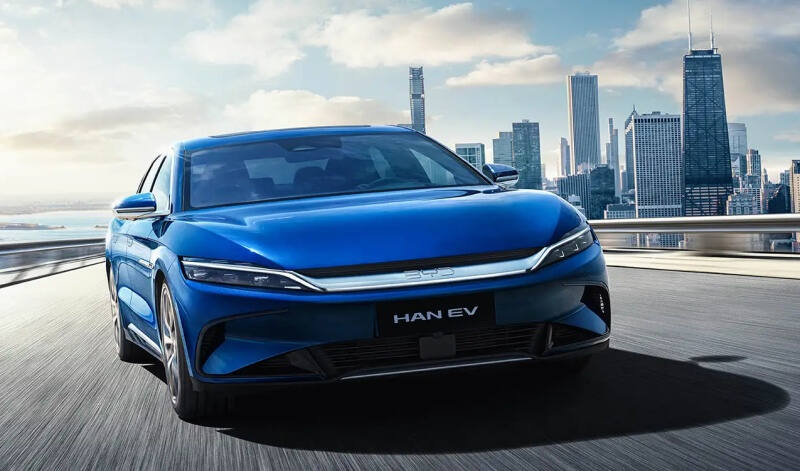
BYD is the clearest example of where this is heading. In May, the company unveiled its Xuanji A3 chip for autonomous driving, built by a research team of 7,000 people, and said it can now supply all the key chips needed for smart cars. That is a bold claim, but it fits BYD’s broader playbook: own the batteries, own the motors, own more of the software stack, then keep the savings for yourself.
The same strategy is spreading across the sector. Nio, Xpeng, SAIC, Changan, Great Wall Motor, Li Auto, and Geely are all developing AI-focused chips, while Chinese carmakers are signing more partnerships with local chip designers such as Huawei, Horizon Robotics, Black Sesame, and Oritek. UBS estimates Chinese-designed semiconductors still account for about 15% of the components in use, which means foreign suppliers are still deeply embedded, but no longer untouchable.
Nvidia still leads, but the cost gap is shrinking
The biggest global names are not being pushed out overnight. American, European, and Japanese chipmakers still dominate advanced parts such as AI accelerators, and most Chinese EV makers adding self-driving features still rely on Nvidia chips. But the economics are changing: once mass production kicks in, automakers want chips tuned to their own software and cheaper than imported alternatives, which is exactly the sort of argument procurement teams love and suppliers hate.
- BYD says Xuanji A3 uses 20% less energy at the same computing performance as comparable chips, including Nvidia products.
- Nio says its in-house AI chip could save about $1,480 per vehicle.
- UBS puts the share of Chinese-developed semiconductor components at about 15%.
There is a bigger industrial pattern here. China’s chip makers are still behind in cutting-edge computing hardware, but car electronics are a friendlier entry point because the volumes are huge, the margins are meaningful, and the product cycles are faster than in many other semiconductor markets. That is why automotive applications are expected to become a major growth driver for China’s chip industry over the next three to five years.
The winners will be the vertically integrated
The likely winners are the manufacturers that can absorb the cost and complexity of doing more themselves. BYD’s rise has already shown how vertical integration across batteries, motors, and now autonomy chips can lower costs and speed up development, while weaker players may find in-house chip design a very expensive vanity project. The next question is not whether more Chinese automakers will try this, but how many will be able to turn chip ambitions into a real competitive edge instead of a very costly science experiment.