

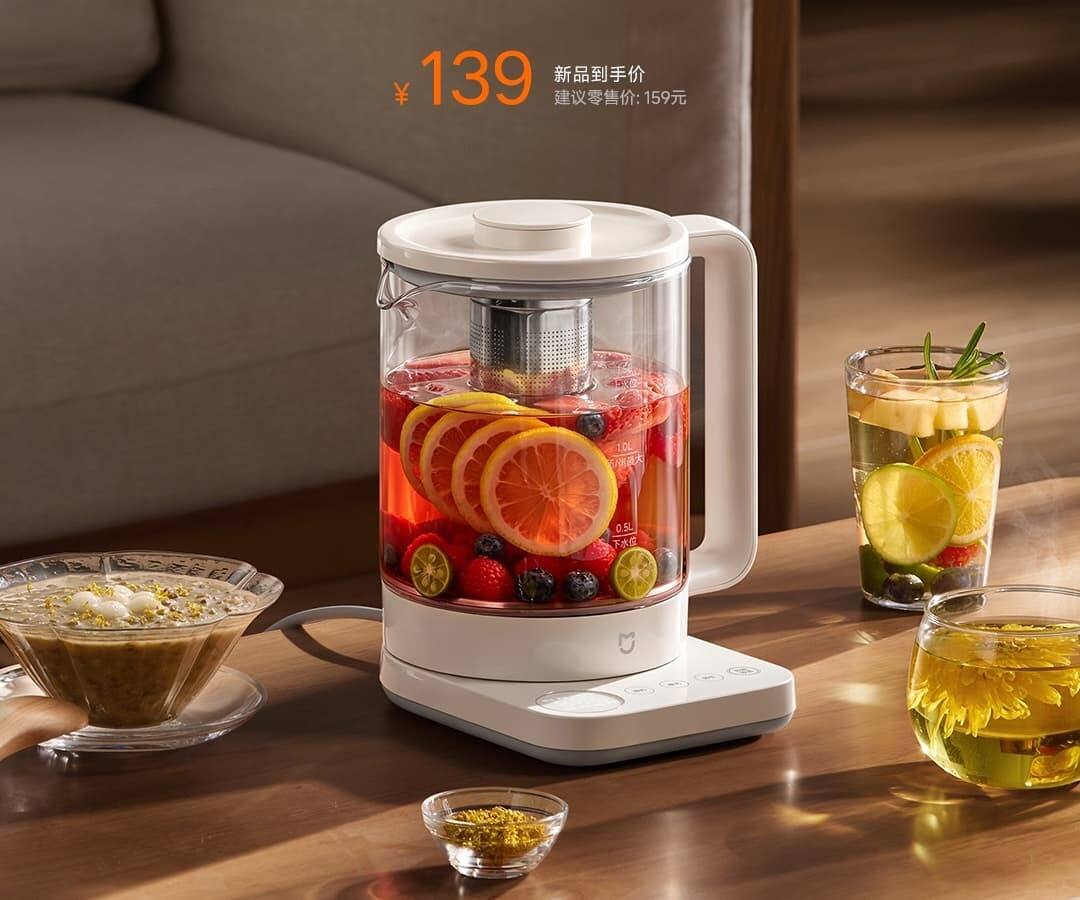
Xiaomi has added another gadget to its already absurdly busy kitchen lineup: the Mijia Health Pot 2, an electric kettle that can choose its own heating mode for tea, herbal drinks, and other hot beverages. It goes on sale in China on 1 July for 139 yuan, or about $20, making it cheaper than many smart kettles on the market.
The headline feature is not the price, though that helps. The kettle supports eight operating modes and automatically adjusts heating intensity depending on what you are making, so it is trying to be both a kettle and a lightweight drink specialist. Xiaomi is leaning hard into the ”set it and forget it” pitch, a sensible move in a category where most rivals still ask you to do the thinking yourself.
Mijia Health Pot 2 features and heating modes
Inside, Xiaomi uses 316L stainless steel, a material chosen for corrosion resistance, while the outer body is made from materials that meet child-product safety standards. That mix suggests the company is aiming for a safer-feeling appliance rather than a flashy one, which is probably the right bet for a kitchen device that lives near water, heat, and hurried mornings.
- Eight operating modes for boiling water, tea, and herbal infusions
- Temperature holding range from 40 to 90 °C
- Scheduled start up to 12 hours in advance
- Warm-keep mode lasts up to 12 hours after brewing
- 1200 W heating element
Those specs put it in the same broad territory as other budget smart kettles and multipurpose heating pots from Chinese appliance brands, but Xiaomi’s selling point is simplicity rather than an app circus. There is no need to overthink tea at $20; the market has plenty of expensive gear already trying that trick.
How Xiaomi handles safety and temperature control
Safety features include a temperature sensor plus protection against overheating and dry-boil operation. If the tank runs low on water or the heating element gets too hot, the kettle cuts power automatically, which is the kind of unglamorous feature you only appreciate after the first disaster.
The 1200 W heater is not trying to win a speed contest, and that is fine. Xiaomi appears more interested in consistent brewing and holding a chosen temperature than in turning water into chaos as fast as possible, which fits the product’s tea-first positioning.
A cheap bet on smarter kitchen basics
The interesting part is not that Xiaomi made a connected or semi-intelligent kettle. It is that the company keeps pushing low-cost appliances that sound more premium than they are, then pricing them low enough to make the experiment easy to justify. If this formula works, expect more Xiaomi kitchen gear to borrow the same playbook: modest hardware, a few genuinely useful presets, and a price that undercuts the safer, blander competition.