

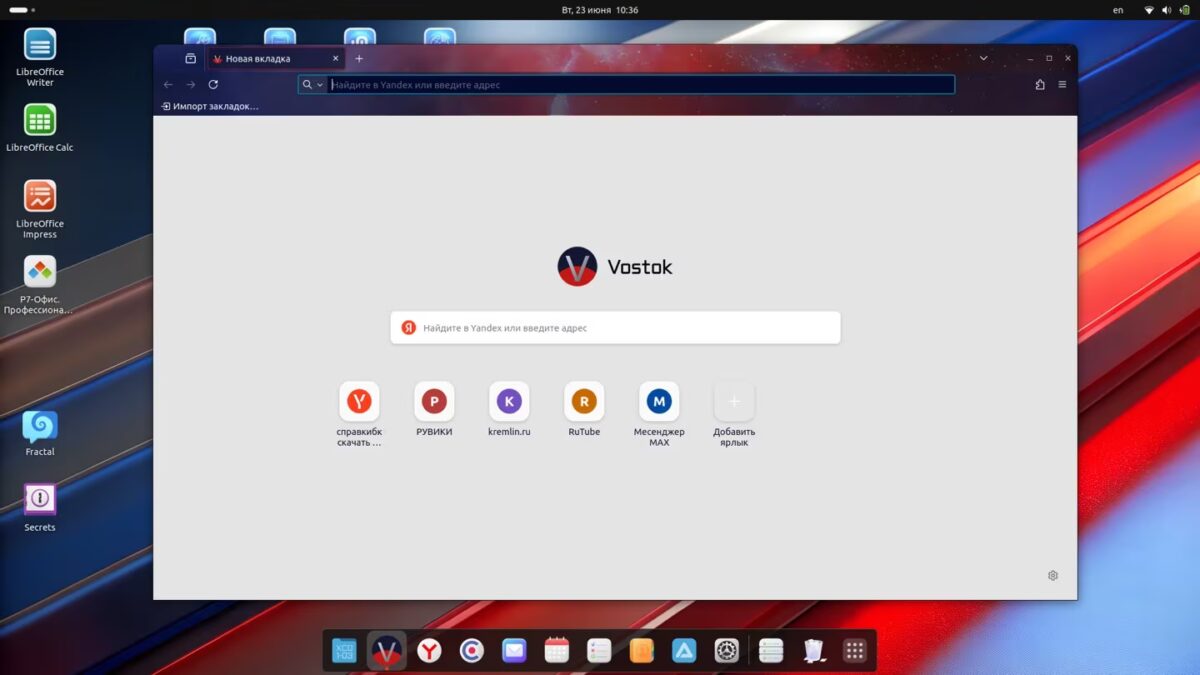
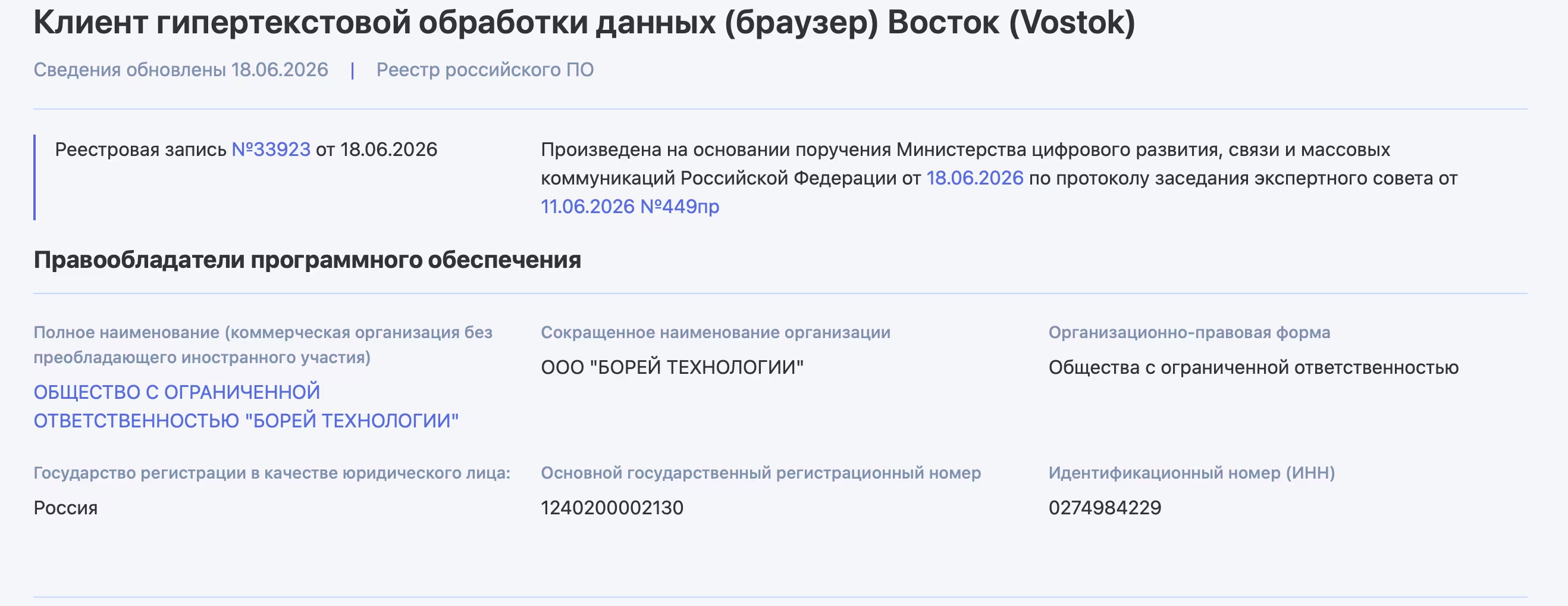
Russian firm Borey Technologies has officially registered the Vostok browser in the country’s software registry. Built in collaboration with Advilabs-Rus, Vostok stands out as the first general-purpose browser based on open source that does not rely on Chromium’s engine yet seamlessly supports both Russian and international encryption protocols without any extra configuration.
- Supports Russian cryptographic algorithms alongside the global TLS standard by default.
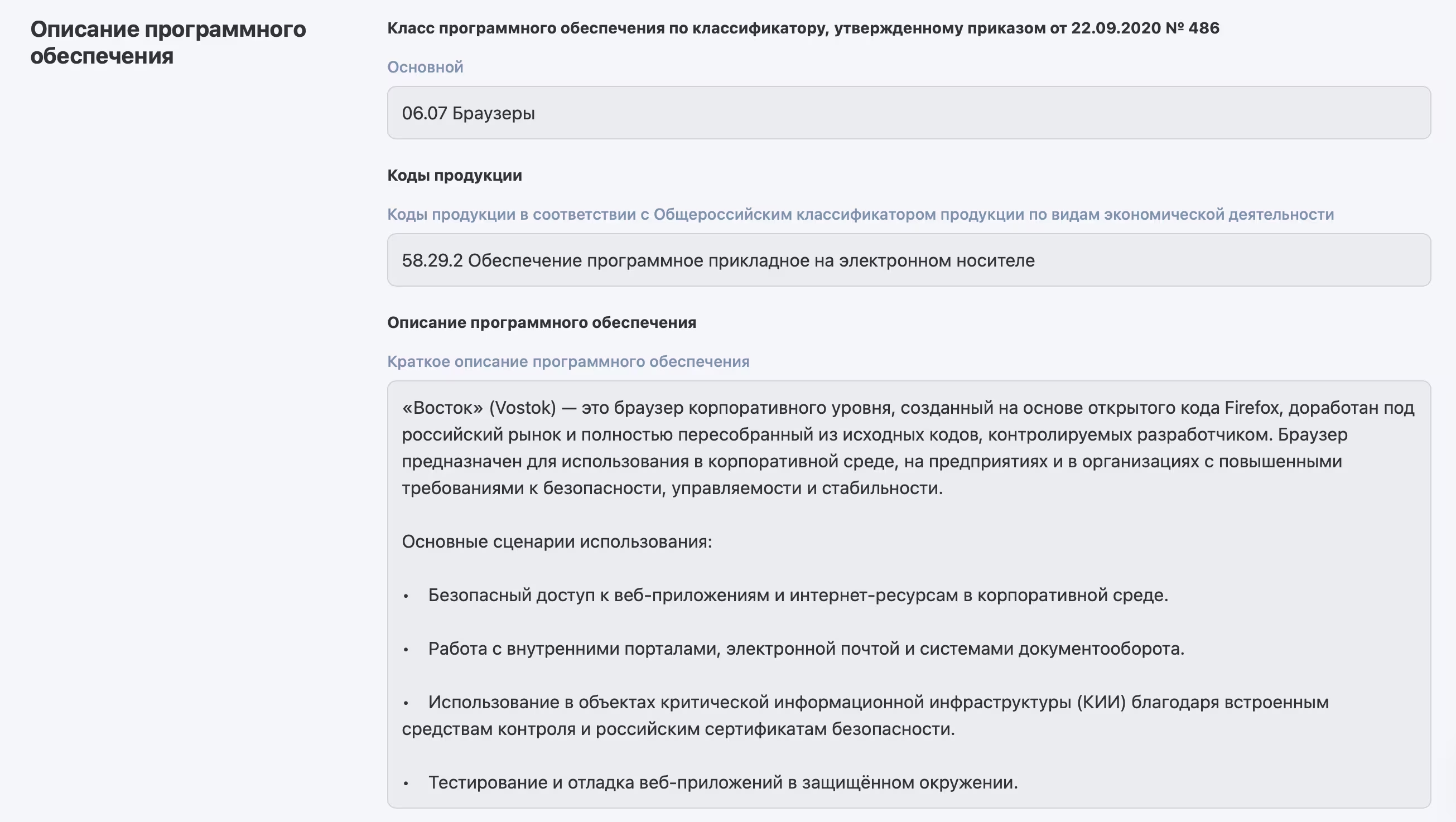
- Built on Firefox’s codebase with all libraries rebuilt; test code and uncontrolled binary dependencies removed.
- Developers plan to release a mobile version and port to Windows soon.
Why most browsers fail to open Russian websites
Major browsers running on Chromium don’t trust root certificates issued by Russian certification authorities. This causes security errors when users try to access many corporate or government websites secured with those certificates. Vostok addresses this out of the box by supporting both Russian and international encryption standards, eliminating the need for manual adjustments by system administrators.
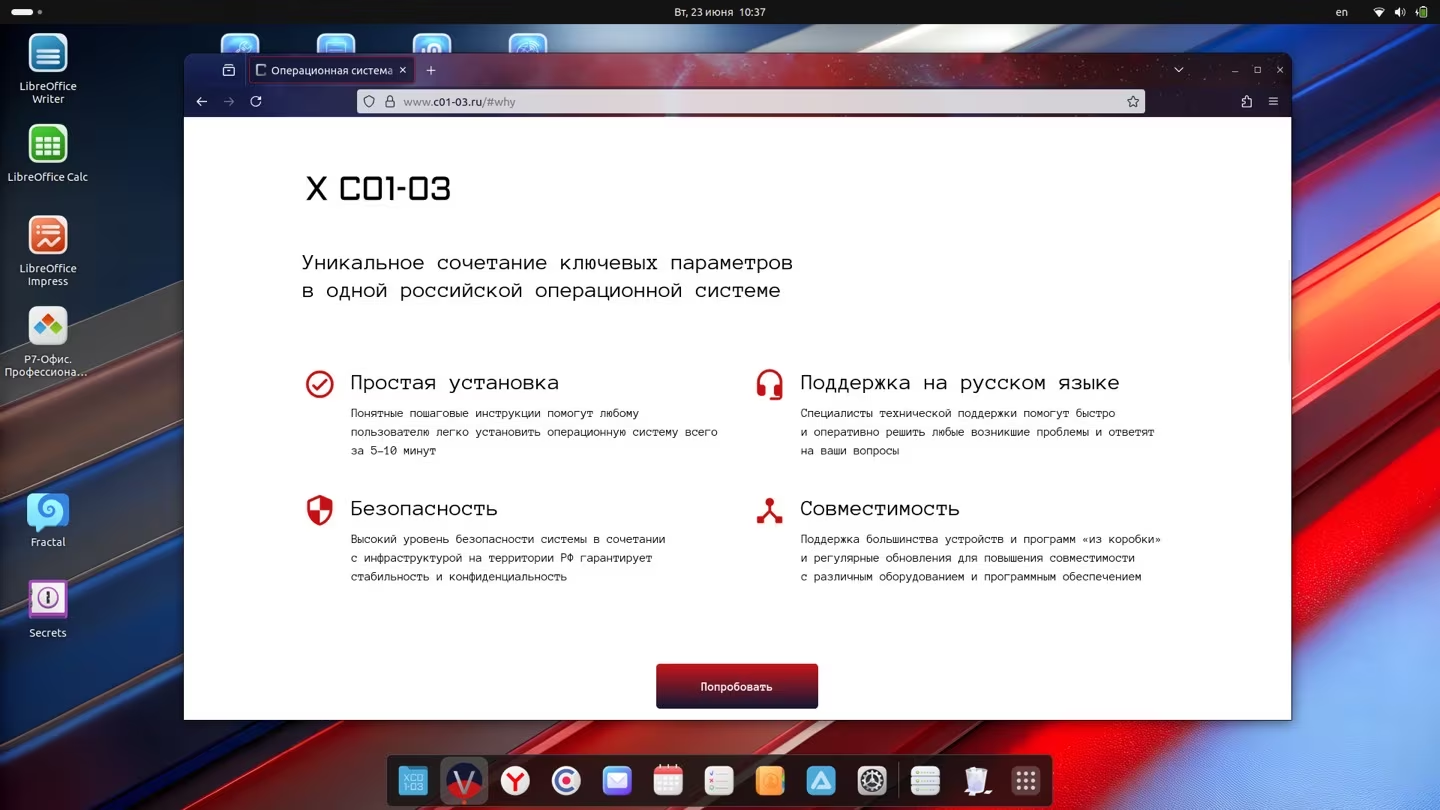
Unlike specialized niche browsers already on the market, Vostok targets a broad audience. Its creators see key users as enterprises managing critical infrastructure as well as everyday individuals seeking safer internet access.
How Vostok supports Russia’s digital sovereignty strategy
Borey Technologies CEO Viktor Makin commented on the browser’s release:
”Vostok is the first general-purpose open-source browser not built on Chromium that enables unrestricted use of both Russian and international segments of the internet. It demonstrates that users can fully work online-accessing foreign web resources for information as well as Russia’s domestic infrastructure. Crucially, it completes a triad for Russia’s digital sovereignty: domestic certificates, a national operating system, and now a browser built entirely on verified open-source code.”
Viktor Makin, CEO of Borey Technologies
The developer plans to launch a mobile version of Vostok and adapt it for Windows users in the near future.
Russia’s push for digital sovereignty aims to reduce reliance on foreign technology by creating a stack of domestically controlled infrastructure-from certification authorities and operating systems to browsers like Vostok. This effort contrasts with Western dominance of the browser space, where Chromium-based browsers like Google Chrome and Microsoft Edge prevail, often sidelining regional encryption practices.
Vostok’s Firefox-based foundation and removal of uncontrolled binaries set it apart from typical browsers that integrate proprietary components. By merging a trusted cryptographic suite with an open codebase, it offers a rare combination tailored to Russia’s unique internet ecosystem-responsive to both internal security demands and global compatibility.
What’s next for Vostok is how well it balances usability with strict security protocols, and whether it can gain traction beyond government and enterprise users. Watching its performance against established browsers and its reception in international contexts will reveal if Vostok can carve out a niche or remain largely a regional solution.