

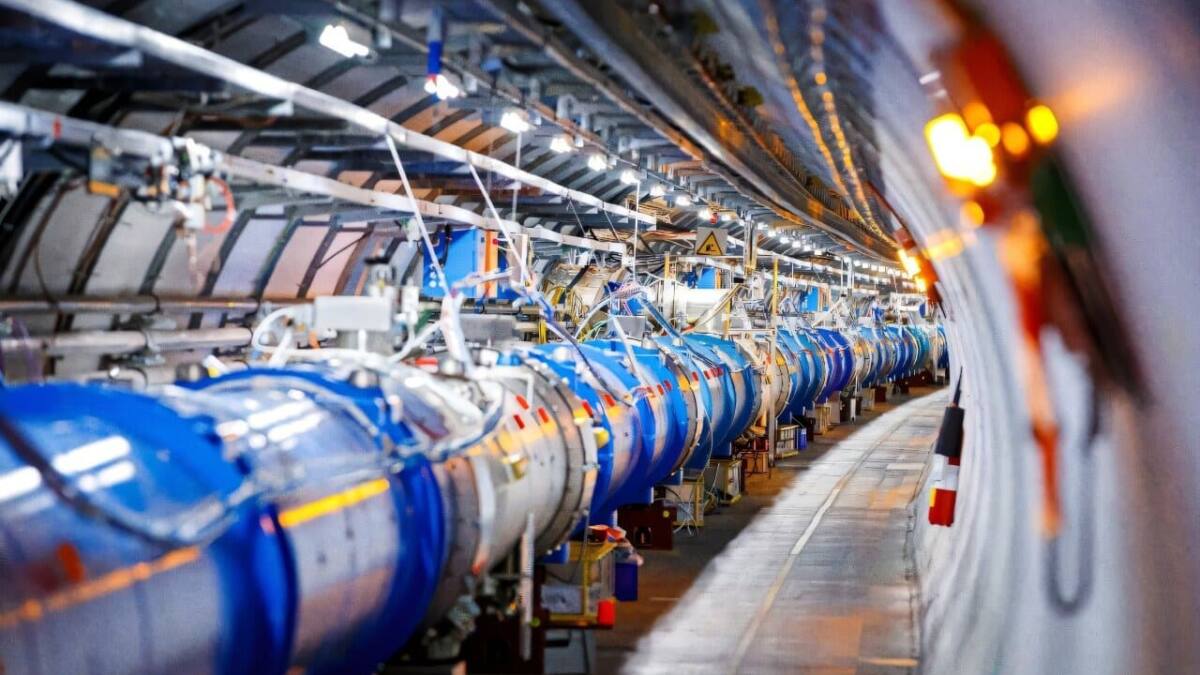
The Large Hadron Collider has gone quiet for four years, and CERN is betting that the pause will buy something particle physicists always want more of: collisions. After the overhaul, the machine will return as the High Luminosity Large Hadron Collider, with up to 10 times more collisions per unit time and a flood of data that should sharpen the hunt for dark matter, rare processes, and anything else that refuses to fit the Standard Model.
This is not a cosmetic upgrade. CERN is replacing about 1.2 kilometres of the accelerator ring and installing new superconducting magnets designed to squeeze proton beams more tightly together. That matters because the original LHC already delivered one of the biggest prizes in modern physics – the Higgs boson in 2012 – and the next round is about doing that kind of work at a much higher statistical volume.
What changes in the High Luminosity LHC
The upgraded collider is scheduled to start running in June 2030 and is expected to operate for roughly 10 years. CERN says the key metric here is luminosity, which is physics-speak for how many collisions you can pack into a given period. The target is ambitious even by CERN standards: 10 times the current LHC luminosity and up to 100 times more data than today.
- Current LHC collisions at the interaction point: about 60 per event
- After the upgrade: 140-200 collisions per event
- Expected Higgs bosons over the full HL-LHC run: about 380 million
- Higgs bosons recorded since 2008: about 55 million
That jump creates its own headache. With billions of events arriving every second, CERN cannot store everything, so the lab will rely on AI systems to filter the most promising collisions in real time. The human physicists are not being replaced; they are being spared from drowning in data.
The dark matter search just got more patient
For all the talk of magnets and magnets-and-more-magnets engineering, the real prize is still basic: more chances to catch rare phenomena. The current cosmological picture says ordinary matter makes up only about 5% of the universe, while dark matter and dark energy account for the rest. If that breakdown is even roughly right, the frustrating part is obvious – the biggest pieces are also the hardest to see.
That is why the HL-LHC matters beyond the usual ”bigger machine, bigger data” pitch. More collisions mean a better shot at producing unusual particles, studying the Higgs boson in more detail, and, with some luck, finding cracks in the Standard Model that the current collider statistics simply cannot expose.
Why this long shutdown is worth the pain
A four-year shutdown sounds brutal, but accelerator physics rarely rewards impatience. Rivals in high-energy physics have spent years trying to nibble at CERN’s lead, yet the LHC still owns the attention because no other machine combines this energy, this scale, and this experimental ecosystem. The upgrade is CERN’s way of stretching that advantage rather than surrendering it to the next shiny proposal.
The smarter question now is not whether HL-LHC will collect more data – it will – but what kind of surprise that data might hide. Double Higgs production is one target, and a very nerdy one at that, but the real upside is that a collider this loud can make the universe confess something it has been stubbornly withholding since 2008.