

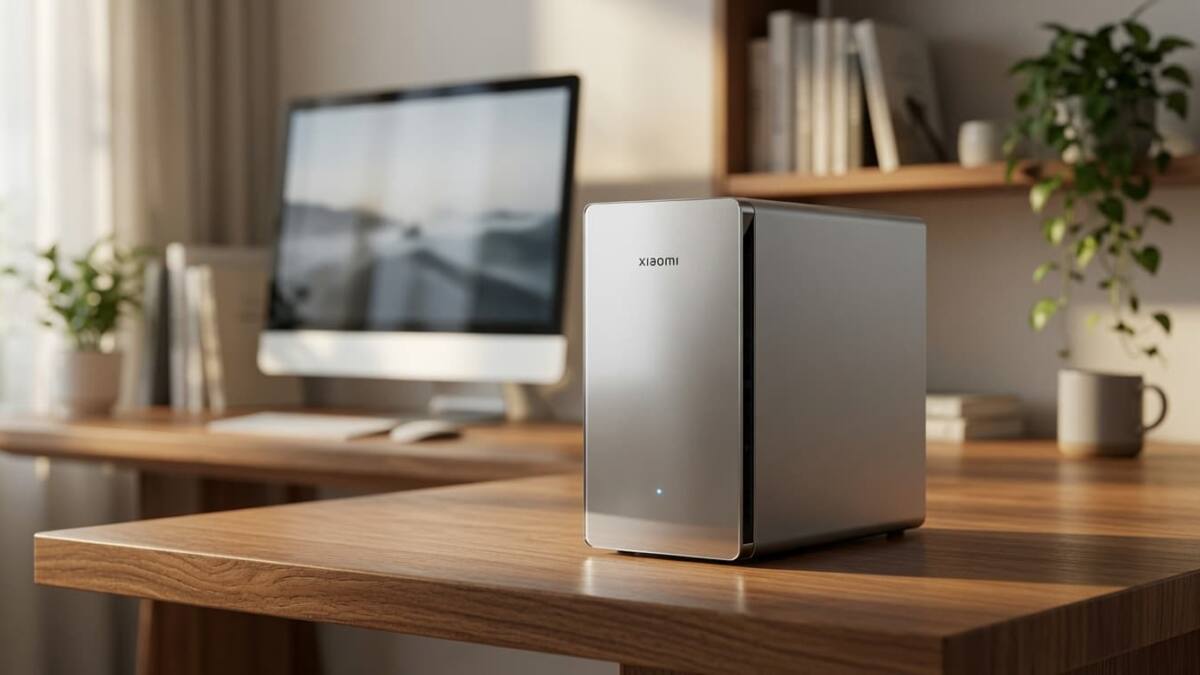
Xiaomi’s first network-attached storage box is almost here, and the early specs make it look less like a toy and more like a serious small-office or home media server. An engineering sample of the Xiaomi Smart Storage has surfaced with 2 GB of RAM, 8 GB of flash storage, dual drive bays for up to 40 TB total, and a Realtek RTD1619B chip, ahead of open sales starting on 1 July.
That hardware mix tells you exactly where Xiaomi is aiming: basic NAS duties, media streaming, and general file sharing rather than heavy enterprise workloads. The 2 GB memory ceiling is modest, but the 40 TB capacity claim puts it in the same conversation as more established consumer NAS boxes from brands such as Synology and QNAP, which have long used the ”good enough hardware, big storage” formula to win over non-corporate buyers.
Xiaomi Smart Storage engineering sample specs
- 2 GB of RAM
- 8 GB of built-in flash storage
- Two drive bays
- Up to 40 TB total storage
- Realtek RTD1619B processor
- USB-A 3.0 port
- HDMI 1.4 output
The engineering sample is also listed under the RP05 index, with certification documents pointing to 12 V power at 3.5 A and an AD-D2131200350CN01 power adapter. That part matters because it shows Xiaomi is already deep enough into production planning to have regulatory paperwork in place, even if the final retail configuration still shifts before launch.
A familiar Xiaomi playbook for a first NAS
Xiaomi opened crowdfunding for the device last week, then moved toward broader availability almost immediately, which is classic Xiaomi: test demand, then scale fast if the numbers look friendly. The wrinkle is that the company is not making the unit itself; the NAS is reportedly produced by Hangzhou Hikvision Electronics, a reminder that many consumer storage brands are now as much software-and-brand outfits as hardware factories.
One caution flag: these are engineering-sample specs, not necessarily the final retail spec sheet. Xiaomi may still trim, tweak, or quietly upgrade parts before the commercial version lands on shelves, and buyers will care more about software, RAID support, and app quality than about a clean-looking spec table.
What to watch on 1 July
The big question is whether Xiaomi prices the Smart Storage aggressively enough to shake up the entry-level NAS market. If it does, the company could steal attention from the usual suspects by pairing familiar Xiaomi distribution muscle with a product category that is still far less crowded than phones, watches, or earbuds. If it doesn’t, the first Xiaomi NAS may end up doing what a lot of first-generation storage boxes do: looking promising, then waiting for version two to get interesting.