

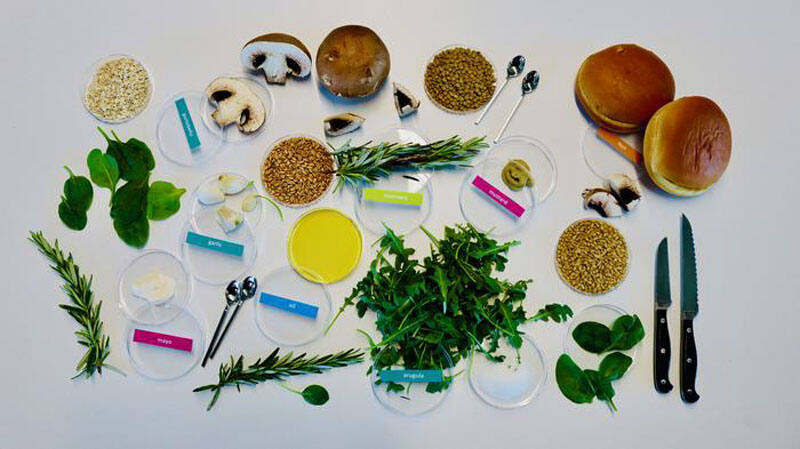
A research team has built BurgerAI, a generative system designed to do what humans usually mess up: create a burger recipe that balances taste, nutrition, and environmental impact at the same time. In tests, the system produced burgers that matched or beat a Big Mac on flavor while also uncovering versions that were far greener or far more nutritious.
The obvious question is whether AI is really needed to assemble something as familiar as a burger. The researchers say yes, because the recipe space is bigger than it looks: they identified 1,043 known ingredient combinations, and that is before you start optimizing for individual preferences, health targets, and climate impact. Humans can improvise a decent burger. Asking one person to juggle all those variables at once is a different job.
How BurgerAI was trained
BurgerAI is built around a specialized diffusion model rather than a standard text generator that simply spits out recipe prose. The system was trained on 2,216 burger recipes from Food.com, covering 146 unique ingredients and their quantities. It works on two layers: one selects ingredients, the other calculates how much of each to use.
After training, the model generated one million candidate recipes and scored them by taste, nutritional value, and environmental footprint. That is the sort of brute-force search a person would never finish before the bun went stale.
Big Mac as the benchmark
To see whether the AI was merely making abstractly ”better” burgers, the researchers used the Big Mac as a benchmark for flavor appeal. In a blind tasting at a restaurant in San Francisco, 101 people sampled five professionally cooked burgers designed by BurgerAI. Two of them scored at or above the benchmark on overall impression, taste, and texture.
The system also managed to ”rediscover” the Big Mac recipe without being directly trained on it. On average, it took 7.3 million randomly generated recipes to land on a close match, which suggests the model learned how burgers are constructed rather than memorizing a fast-food icon. That distinction matters, especially now that generative systems are being pushed beyond chatbots and into design tasks.
The healthiest and greenest burger
The most environmentally friendly version was mushroom-based. Its impact measured 0.06 units versus 0.93 for the benchmark Big Mac, a gap of more than an order of magnitude once land use, greenhouse gas emissions, and water consumption were included. In other words, the planet would clearly prefer the fungi.
The most nutritious version was built around beans and achieved a healthy-eating index of 63.12, compared with 33.71 for the Big Mac. Taste was the trade-off: the tasters rated it below the benchmark. Apparently even AI has not solved the ancient problem of making ”good for you” also mean ”please order a second one.”
A recipe engine for more than burgers
The burger project is really a proof of concept for something bigger: a platform that can learn to design new materials, chemicals, medicines, and other products where multiple constraints collide. That is the more interesting story here. Food is just the friendly demo; the real target is industrial design, where the payoff from better search can be much larger.
If BurgerAI keeps improving, the next contest will not be between fast-food chains and home cooks. It will be between AI systems trying to out-design each other on flavor, cost, sustainability, and nutrition all at once. And unlike a menu board, that could actually change how recipes get invented.