

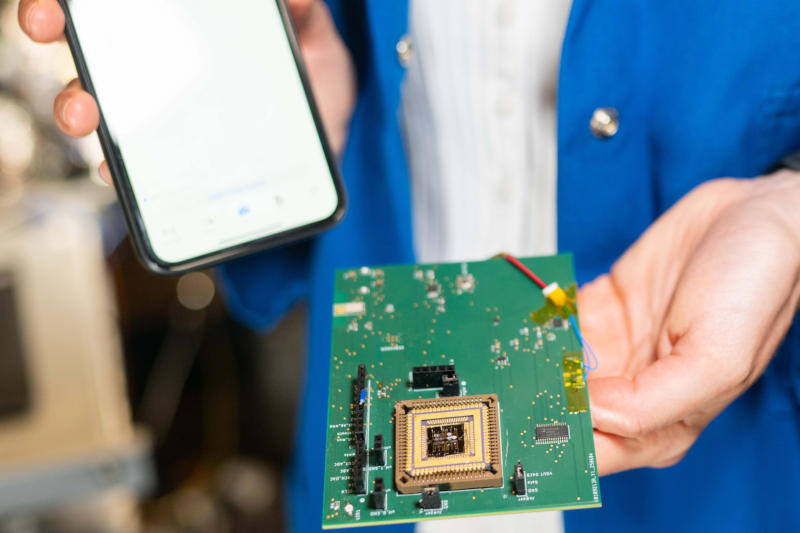
Researchers at the University of California, Berkeley, have built an electronic nose that can detect gases released by spoiled food and common allergens, and they say it outperforms the human nose. The device is still a lab project, but the pitch is obvious: give fridges a sense of smell before a bad apple, or worse, a bad nut, makes the mistake for you.
The system uses 16 tiny sensors designed to pick up faint traces of gases linked to foods such as walnuts and peanuts. That kind of multi-sensor setup is usually messy to package on a single chip, so the team used carbon nanotubes as the conductive material, building layers just one-hundredth the width of a human hair. The payoff is sensitivity at room temperature, which matters because some gas-sensitive materials fall apart when heated.
How the electronic nose identifies food
A machine-learning model records how each material responds to specific food-related odors, then compares those reaction patterns with stored profiles. The training set includes strawberries, blueberries, bananas, walnuts, hazelnuts, cashews, and peanuts, plus fresh raw chicken, milk, and eggs – along with the smell of those same items after 24 and 48 hours at room temperature.
- 16 gas sensors on one chip
- Carbon nanotube layers for room-temperature operation
- Profiles trained on fruit, nuts, meat, milk, and eggs
- Detection of a 0.05 g fragment of walnut
What it can detect, and what it cannot yet
In tests, the device could detect a 0.05 g piece of walnut, which is a respectable result for something aimed at food safety rather than a chemistry exam. But the researchers have not yet shown whether it stays reliable when other gases are in the mix, such as inside a cake or salad, or when contaminated foods sit in a refrigerator alongside everything else.
That limitation is the real story here. Plenty of sensors work in clean lab conditions; fewer survive contact with a crowded kitchen. Still, the idea of plugging this into a smart refrigerator is not far-fetched, and food-safety companies have been circling similar sensor tech for years because the prize is simple: catch spoilage and allergens before they cause trouble.
Smart refrigerators are the obvious target
The Berkeley team suggests putting the system inside smart fridges that could react to spoiled food automatically. That would fit a broader shift in home appliances, where cameras, weights, and now chemical sensors are being asked to do the jobs people ignore until the smell becomes impossible to debate.
The next question is whether the sensor can hold up outside the lab and detect allergens in messy real-world environments with enough confidence to matter. If it can, refrigerators may get a lot smarter very quickly. If not, this stays where many promising prototypes live: impressive, clever, and still waiting for the kitchen test.