

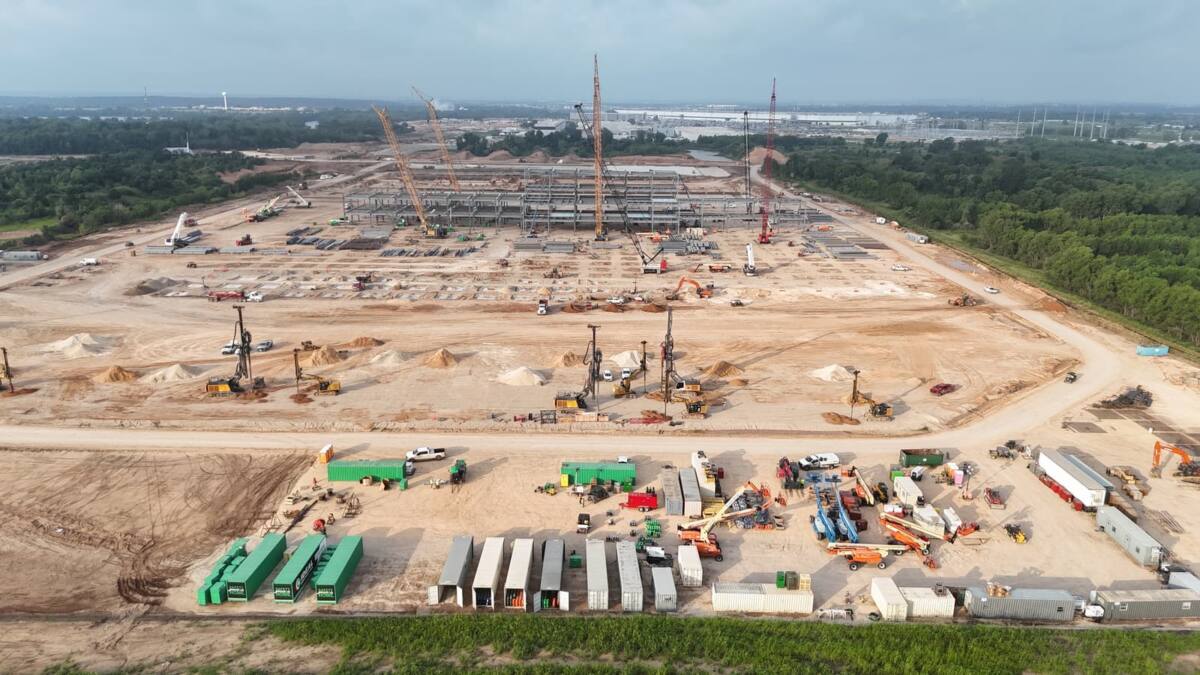
Tesla is building a dedicated Optimus production facility at Giga Texas, and drone footage shows the structure already up to four floors as the company prepares for a robot program it says could eventually scale far beyond cars. The site still looks like a construction zone, but the message is clear: this is no side project, and Tesla is betting that humanoid robots can become a mass-market business rather than a demo reel with legs.
Tesla says first Optimus sales are planned for the end of 2027, with a price target of 20,000-30,000 dollars. The company’s stated long-term goal is up to 10 million robots a year, which would make Optimus one of the most ambitious manufacturing programs Tesla has ever discussed.
What is being built at Giga Texas
The new structure is taking shape on Tesla’s Giga Texas campus, where the work includes completed foundations, ground leveling on the southern side, and ongoing land reclamation to expand the site. Cranes and material storage areas are already in place, which usually means the job has moved well past the drawing-board stage and into the expensive, noisy part of real life.
That matters because Tesla is not starting from zero on humanoid robots. The company said in its first-quarter 2026 report that serial production of first-generation Optimus robots has already begun at its Fremont factory, with that pilot line designed for as many as 1 million units a year. In other words, Fremont is the warm-up act; Texas is supposed to be the big stage.
Optimus production targets and timeline
- Full production target: 10 million robots a year
- First sales target: by the end of 2027
- Expected price range: 20,000-30,000 dollars
- Fremont pilot line capacity: up to 1 million units a year
For Tesla, the harder job is not assembling the hardware; it is proving that humanoid robots can move from eye-catching prototype to repeatable industrial product. Rivals in the robotics world have spent years chasing the same dream, but most have stayed stuck in limited deployments or research showcases. Tesla is trying to skip a few of those painful middle steps by brute force.
The long-term bet behind the robot line
Musk has floated an even more extreme long-term figure, saying production could eventually exceed 20 billion units. That number is hard to take literally as a near-term forecast, but it does show how Tesla is framing Optimus: as a possible general-purpose machine for work, not a niche industrial tool. If the company can get the cost, reliability and software right, the factory in Texas could end up being remembered as the moment the pitch stopped sounding like sci-fi.
The open question is whether Tesla can translate construction progress into dependable output on schedule. Buildings are easy to photograph; mass production is where robot plans usually get humbled. If Optimus really does hit sales by the end of 2027, the factory rising in Texas may prove more important than any slick demo ever did.