

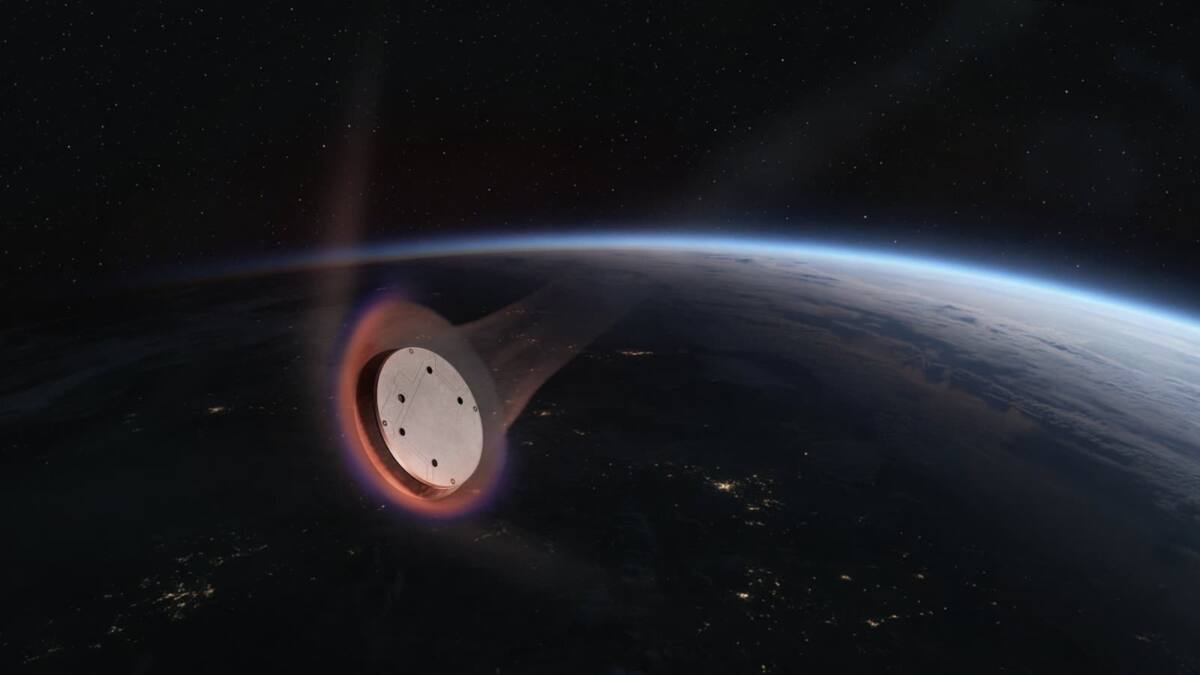
SpaceX has flown the first demo mission of Starfall, a new reusable capsule built to carry cargo to orbit and bring it back to Earth. The company launched it on 23 June atop a Falcon 9 from SLC-40 at Cape Canaveral, and the rocket’s reused first stage, B1078, landed safely on the ”A Shortfall of Gravitas” droneship after its 29th flight.
Starfall is SpaceX’s first dedicated vehicle for orbital cargo return, and its inaugural flight marks an early step toward hauling manufactured goods, research samples, and other payloads back from space. The capsule’s job is simple: take cargo to orbit and return it intact.
Starfall’s design and payload capacity
Starfall is built to return research results, pharmaceutical materials, and other payloads that need to survive the trip back from space. SpaceX says the capsule is 3.1 meters in diameter, about 75 centimeters tall, and weighs around 2.1 tonnes.
It can carry up to one tonne of cargo, which puts it ahead of smaller commercial return systems already in use. That matters because the bottleneck in orbital manufacturing is not just making things in space; it is getting enough of them back without turning the capsule into an expensive paperweight.
How the demo flight worked
For the test flight, Falcon 9’s second stage sent Starfall into orbit. After roughly one and a half loops around Earth, the stage will perform a braking burn, and the capsule will separate before making its own reentry through the atmosphere.
Reentry is expected about three hours after launch over the northeastern Pacific, with splashdown planned roughly 965 kilometers west of California. Starfall uses a carbon-fiber heat shield, a compressed-nitrogen attitude system, and parachutes for landing.
Why SpaceX wants a return capsule
Starfall is also designed with future suborbital flights, longer missions in low Earth orbit, and eventual launches aboard Starship in mind. That makes it more than a one-off experiment: SpaceX appears to be building infrastructure for a market that does not fully exist yet, which is very on brand for the company.
If the mission performs as advertised, SpaceX gets a second reusable business line beyond launch and satellite deployment. The real prize is not the capsule itself, but the idea that orbital manufacturing can become a service with a return path instead of a dead end.
What comes after the first flight
The obvious question now is whether Starfall can handle repeat missions without becoming a highly polished science fair project. If it can, SpaceX will have turned reentry from a problem into a product – and competitors will have to decide whether they want in, or whether they are happy watching the cargo come down in someone else’s capsule.