

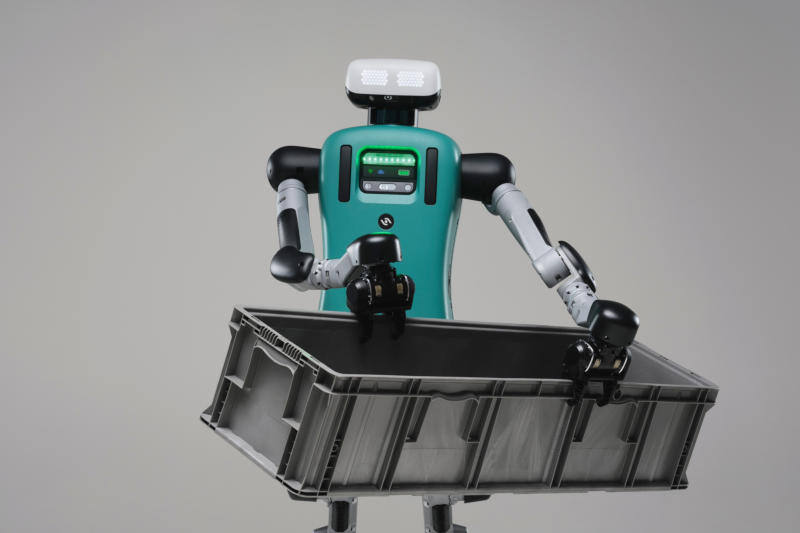
Nvidia is betting that the next big AI market will not be another chatbot, but humanoid robots that can work next to people without turning every handoff into a hazard report. The company says its Halos software, built on top of its automotive safety stack, is designed to help humanoid and industrial machines make split-second decisions about contact, force, and motion while still moving fast enough to be useful.
That pitch lands in a robotics sector that has spent years getting stuck between ambition and common sense. The hardware is improving quickly, but safety systems still tend to force machines to stop or slow down whenever a person gets too close, which is great for lawyers and terrible for productivity. Nvidia is trying to replace that blunt approach with something closer to judgment, and that is a much harder engineering problem.
Halos software on IGX Thor
The company says Halos will serve as a kind of operating system for computers on the IGX Thor platform, giving robots a better read on what is happening around them. Nvidia is also pushing special hardware to support the system, along with connections to external sensors that can widen a robot’s field of view.
One example is a warehouse machine that could tap into nearby cameras, peek around a corner, and decide whether it can keep moving at full speed or should slow down to avoid a collision. That is a more practical safety model than simply freezing every time another object appears, and it could help robots work together instead of awkwardly taking turns like nervous teenagers.
Why robot safety is harder than car autonomy
Self-driving cars mostly need to avoid people and objects. Robots have to do more than not crash: they need to know what can be touched, what must not be moved, and where force is acceptable. That is a much messier set of rules, especially when a machine is expected to lift, hand over, or support something in close quarters with a human.
Nvidia is not entering a tiny niche, either. Barclays analysts have estimated that humanoid robots could become a $200 billion segment by 2035, and the company is clearly trying to make sure its chips and software are part of the plumbing before rivals lock in the standards. If that sounds familiar, it should: Nvidia has spent years doing the same thing in AI data centers, often by lowering the barrier to adoption first and worrying about monetization later.
Where the robots are headed first
For now, the most realistic deployments are still in warehouses and logistics, where the rules are more controlled and the economics are easier to justify. Nvidia has also built a lab where robot makers and customers can test safety before filing for certifications, with its engineers helping with preliminary checks and, when needed, design tweaks.
That matters because the sector is already pushing beyond the old ”keep away from humans” era. The next phase is retail, healthcare, and construction, followed by the far more ambitious idea that industrial robots could evolve into machines that help around the house. The hard part is not making them move. It is making them decide, in fractions of a second, what they are allowed to do once a person is standing right there.
The next test for humanoid robots
The open question is whether Nvidia can turn safety into an advantage instead of a brake. If Halos really lets robots move faster without becoming dumber, the company could help define the early rules of human-robot coexistence. If not, the industry will keep doing what it has done for years: slowing down, stopping, and calling it progress.