

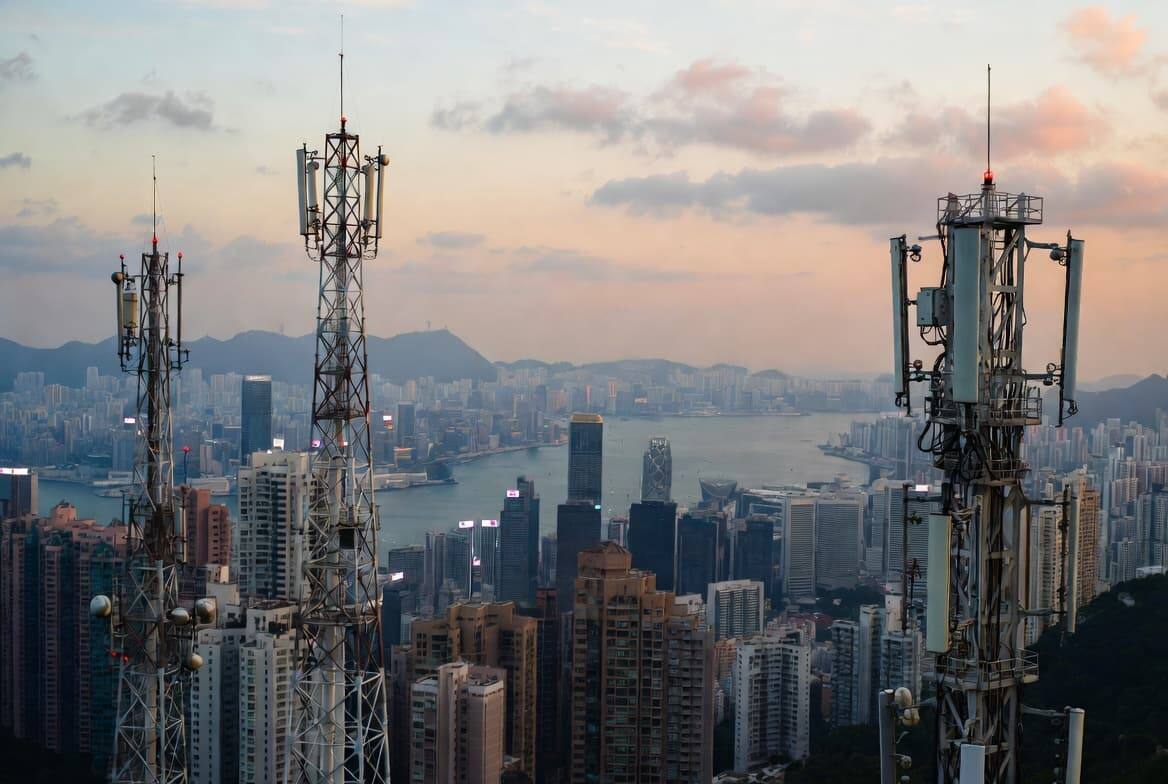
Hong Kong has finally turned off 2G for good. China Mobile Hong Kong, with approval from the city’s communications regulator, has completed the last stage of the network’s retirement, ending an era that outlived most people’s patience for old handsets.
The shutdown happened in stages. Hutchison Telephone left 2G on 30 September 2021, SmarTone followed on 14 October 2022, and HKT switched off its service on 8 November 2024. For the past two years, China Mobile Hong Kong was the only operator still carrying 2G traffic, so its exit effectively erased the standard from the city entirely.
The last operator has gone
That matters because Hong Kong is not some sleepy test market. It is a dense, advanced mobile environment where old network gear becomes expensive fast, and every extra radio technology means more maintenance for less and less demand. The city has been doing the sensible thing: clearing out legacy systems while users move to newer networks rather than trying to keep every generation alive forever.
China Mobile Hong Kong is also unusual in the local market because it operates its own base stations, while China Unicom and China Telecom act as MVNOs and rent network access from Hong Kong operators. That structure makes the disappearance of 2G even cleaner: once the host networks move on, the virtual operators lose the old layer with them.
3G is already on the same path
2G is not the only survivor getting pushed out. China Mobile Hong Kong shut down 3G on 30 June 2025, and the other operators have also been shrinking their 3G footprints. What remains is thin coverage in a few remote suburbs and islands, while urban 3G has effectively vanished. In other words: Hong Kong is not waiting around for nostalgia to become a network strategy.
The broader pattern is familiar across mature mobile markets. Once 4G and 5G become dominant, carriers stop paying to preserve older generations that mostly serve aging devices and embedded systems. Hong Kong has simply finished the job faster and more cleanly than many places, and the next question is how long the last pockets of 3G survive outside the city center.