

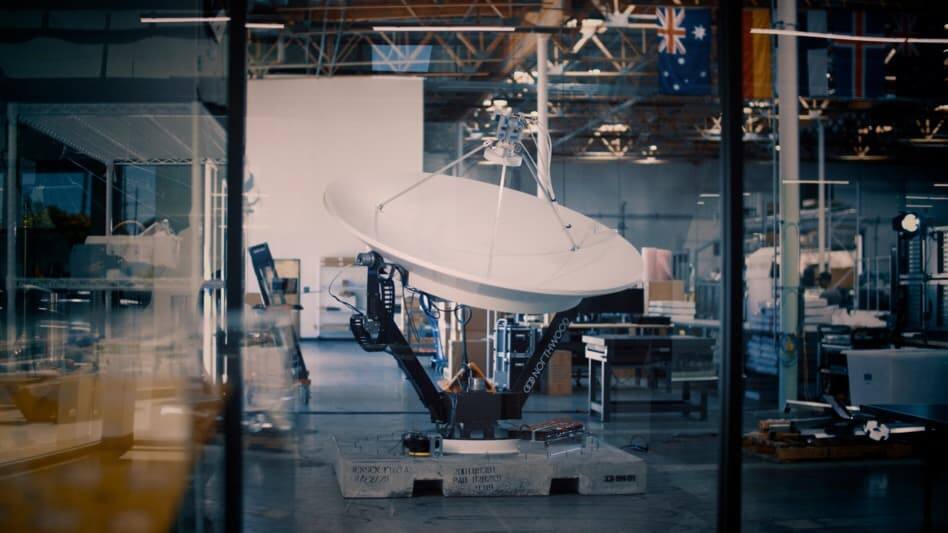
Northwood Space is betting that the next satellite boom will choke at the ground, not in orbit. The company has introduced Prism, a new ground antenna designed to push its network of satellite stations toward terabit-scale throughput, while it rapidly expands a footprint that already spans six stations across two continents.
The pitch is straightforward: treat space infrastructure less like a niche support system and more like a very demanding internet backbone. That means more stations, more antennas per site, and far denser links that can handle the kind of traffic load expected from next-generation satellite internet, direct-to-device services, and even orbital data centers.
Prism and the buildout plan
Northwood says Prism is part of a phased expansion that starts with scale and ends with serious numbers. By the end of 2026, it expects to more than double its station count to 12+ and deliver about 10 Gbit/s on each communications line. By the end of 2027, it aims for network capacity of roughly 100 Gbit/s in high-load hubs, before reaching more than 22 Tbit/s aggregated across the full network by 2028.
That last figure is the real signal. It would put Northwood in a class where the terrestrial side of space comms starts looking less like a support service and more like infrastructure built for constant congestion. Competitors in satellite ground services have spent years talking up coverage; Northwood is making throughput the headline.
- Six ground stations already operating
- 12+ stations targeted by the end of 2026
- About 10 Gbit/s per line by the end of 2026
- Roughly 100 Gbit/s in high-load nodes by the end of 2027
- More than 22 Tbit/s aggregated by 2028
$100 million and a faster factory
Northwood is funding the push with its $100 million Series B, which is being used to build manufacturing capacity for more than 100 antennas a year and to widen the ground-station network globally. The modular design is just as important as the financing: the company says antennas and stations are meant to be deployed and brought online in a matter of hours, not weeks.
That speed matters because the orbital side of the market is growing faster than old assumptions about ground infrastructure can comfortably handle. Consultancy estimates cited by the company suggest more than 43,000 satellites could reach orbit over the next ten years, a surge that would pressure every part of the downlink chain. The companies that move first on terrestrial capacity may end up owning the bottleneck.
Why the ground segment is becoming the chokepoint
The most interesting part of Northwood’s strategy is not the antenna itself, but what it assumes about the future of space business. If orbital computing, direct satellite-to-device links, and broadband constellations all scale at once, then the scarce asset is no longer the spacecraft. It is the ability to move data down to Earth fast enough, reliably enough, and at enough sites to keep up.
That is a neat reversal for an industry that usually celebrates what happens above the atmosphere. Northwood is making a less glamorous bet: the real money may sit in the dirt, where the antennas are.
The open question is whether it can turn that bet into enough installed capacity before the rest of the sector catches up. If satellite operators really do flood orbit with tens of thousands of spacecraft, the ground network that can scale quickest may become the default partner everyone else has to use.