

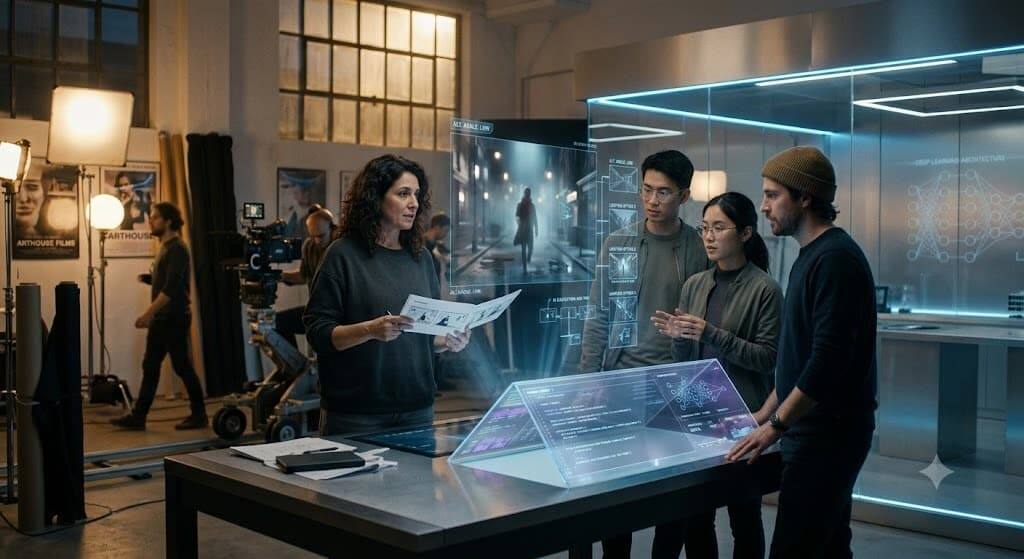
Google DeepMind and A24 are joining forces on a research program aimed at building AI tools for filmmaking, with the two sides trying to push model development closer to actual production work. The pitch is simple enough: stop inventing tools in a vacuum and see what happens when researchers sit alongside the people who have to make scenes, schedules, and edits work in the real world.
The partnership folds DeepMind’s research into A24’s day-to-day creative process, from early planning through post-production. That matters because film AI has largely been shaped either by generic productivity tools or by flashy demos that look clever until someone asks a director, editor, or producer to use them on a deadline.
What DeepMind and A24 are building
The companies say the work is exploratory rather than a product launch with a tidy roadmap. Teams from both sides will test technologies together, refine workflows, and build methods that could eventually influence multiple stages of production.
- Research will be tied directly to filmmaking needs rather than abstract lab scenarios.
- The focus spans development, production, and post-production.
- No fixed list of final products has been announced.
Why A24 is a telling partner
A24 is an interesting choice because the studio has built its reputation on auteur-driven and experimental filmmaking, not on being the safest corporate test bed in town. If AI tools can win over that crowd, they stand a much better chance of becoming genuinely useful rather than just technically impressive.
Google also invested in A24, which gives the collaboration a more strategic feel than a typical research handshake. It fits a broader pattern: AI labs are increasingly looking to creative industries for training-ground feedback, while studios are trying to shape the tools before those tools shape the jobs.
The real test for film AI tools
The hard part is not generating another demo reel. It is building software that survives the messy realities of filmmaking, where taste, timing, budget, and collaboration matter as much as raw capability. That is where most AI pitches get awkwardly quiet.
If the collaboration works, the biggest winner may be neither side alone but the category itself: AI tools that are shaped by sets, edits, and deadlines instead of assumptions from a conference slide. The open question is whether that produces genuinely better creative software, or just a more polished way to sell it.